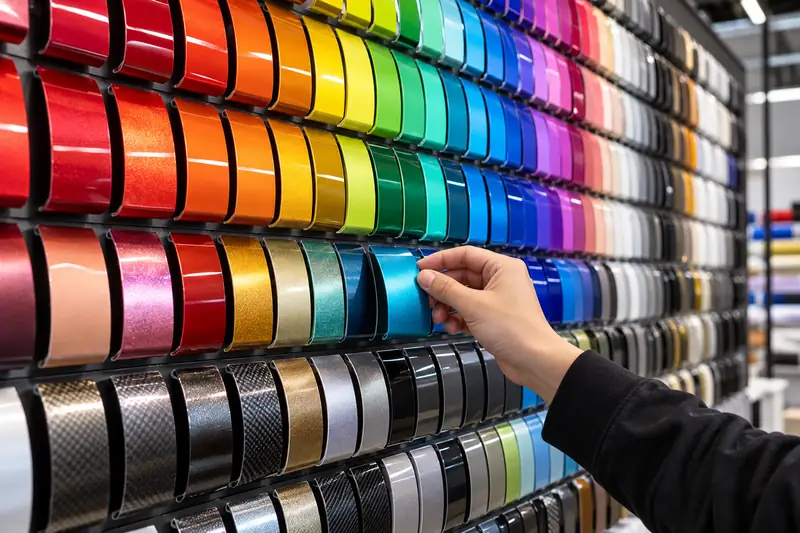
Vinyl wraps · 7 min read
Camo wraps for cars and trucks: patterns, film types and cost
Camo wraps explained for shops and owners: printed vs cast camo vinyl, truck and car patterns, full vs partial coverage, typical cost and how to install.
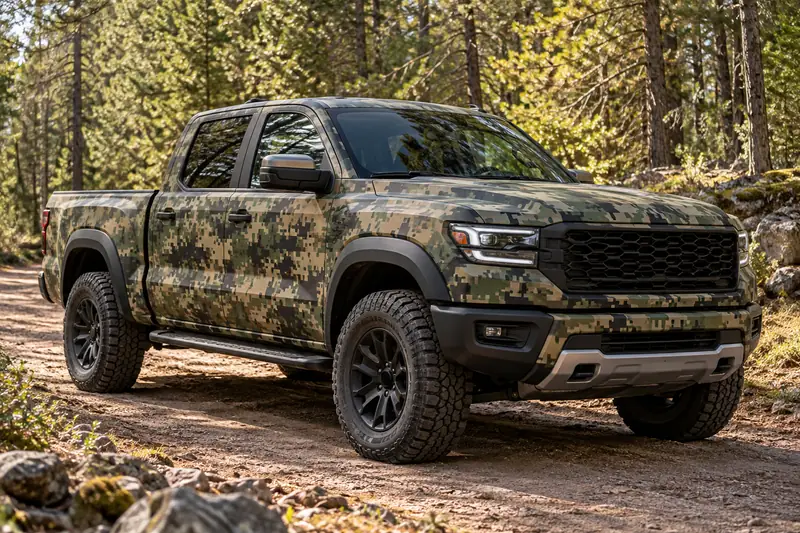
Short answer: Camo wraps are vinyl films printed or produced with a camouflage pattern and applied over a vehicle's paint like any color-change wrap. They come as printed effect vinyl or custom digital prints, in matte, satin or gloss. A full camo truck wrap typically costs roughly $2,500–5,500 installed, depending on size, film and region.
Camo wraps sit in a strong niche: hunters, off-road builds, work trucks and anyone who wants a car that looks nothing like the dealer lot. A camo vinyl wrap gives that look without paint, and it comes off when the vehicle is sold. This guide is for wrap shops and distributors deciding what camo film to stock, and for owners comparing camouflage car wrap options before they book a job.
Key takeaways
- Camo wraps are either stock printed effect vinyl (a ready-made pattern on a roll) or a custom digital print on printable vinyl with a protective laminate.
- Matte and satin finishes look most natural for woodland and hunting patterns; gloss suits urban, digital and colored camo.
- The pattern hides small alignment errors well, so camo is forgiving for installers, but large patterns still need matching across panels.
- Full camo truck wraps typically use roughly 18–25 m of 1.52 m film; partial kits (hood, tailgate, side stripes) use far less.
- Installed cost varies widely by region and vehicle; a full car or truck usually lands between roughly $2,000 and $5,500.
What camo wrap options are there?
There are two ways to put camouflage on a vehicle with film. Each has a different cost, lead time and look.
Stock camo vinyl on a roll
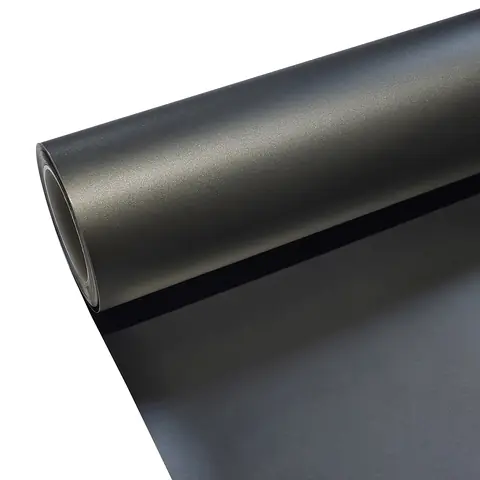
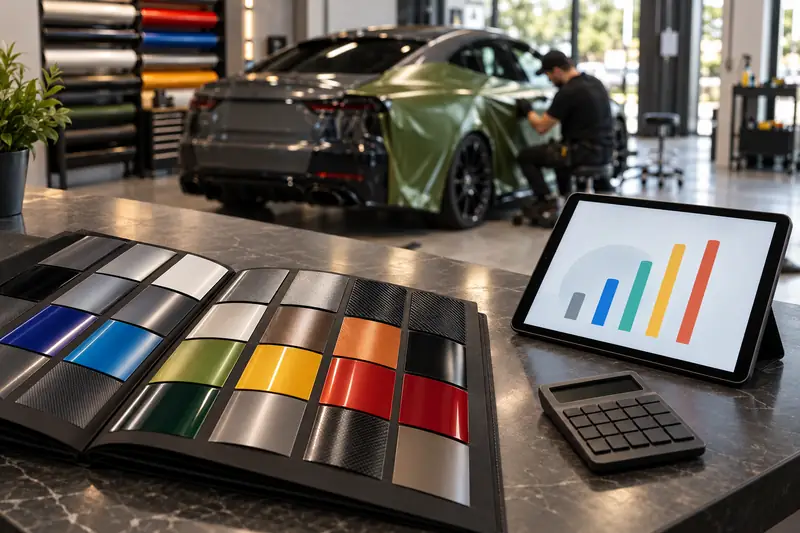
Stock camo vinyl is a pattern produced in the factory and sold by the roll like any color. It typically includes woodland, desert, arctic (white and grey), urban grey, digital pixel camo, black camo and colored versions such as purple camo or red and black camo. Because it is mass-produced, it is available quickly and in consistent batches, and many patterns come with an air-release adhesive like standard wrap films. Stock camo is listed under printed and effect vinyl, next to carbon fiber, chrome and color shift.
Custom printed camouflage wraps
For a specific hunting pattern, a brand graphic or a design with logos worked in, shops print the pattern on white printable wrap vinyl with an eco-solvent, latex or UV printer, then laminate it. This route gives full design freedom, but it needs a printer, outgassing time, lamination and careful panel layout. It also adds design hours to the quote.
| Stock camo vinyl | Custom printed camo | |
|---|---|---|
| Patterns | Fixed catalog | Any design, logos, text |
| Lead time | In stock, ships fast | Design + print + laminate time |
| Equipment needed | Standard wrap tools | Wide-format printer and laminator |
| Pattern scale | Fixed | Can be scaled to the vehicle |
| Best for | Retail jobs, quick turnaround, stock range | Unique builds, fleets, sponsored vehicles |
| Relative film cost | Lower | Higher (media + ink + laminate) |
Camo truck wraps and camo skins for trucks
Trucks are the biggest market for camouflage wraps. A camo truck wrap covers large, mostly flat panels, so it is a good project for shops getting into effect films. Common options:
- Full camouflage truck wrap: cab, bed sides, tailgate, hood and roof. The most dramatic result and the highest cost.
- Half or "skins" style coverage: camo skins for trucks usually means a fade or partial camo on the lower half or rear, often with a solid color above. It uses less film and is quick to install.
- Accent kits: hood, roof, mirror caps, tailgate or bed rails. Popular for owners who want a hint of camo on a daily driver.
- Truck decals in camo: cut graphics such as stripes, brand-style lettering or animal silhouettes made from camo vinyl or printed media.
Camouflage vinyl wrap for trucks should be a conformable grade. Bed sides and doors are easy, but bumpers, mirror housings and fender flares need a film that stretches and holds its shape after post-heating. Follow the film's data sheet for post-heat temperature, typically in the range of roughly 90–100 °C (195–210 °F) for cast films.
Camo car wraps
A camouflage car wrap works differently from a truck job. Car panels are smaller and more curved, so the pattern scale matters. A large woodland print can look odd on a compact hatchback, while a smaller digital or urban camo reads well on sports cars and coupes.
Popular car camo directions include:
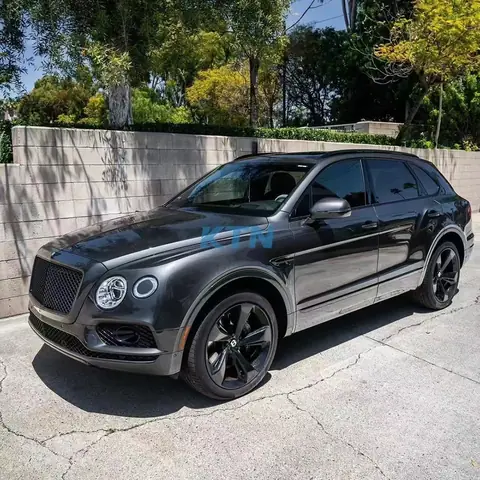
- Black camo wrap: black, charcoal and grey shapes; subtle from a distance and popular on performance cars.
- Urban grey and arctic camo: clean, modern looks that pair well with black trim.
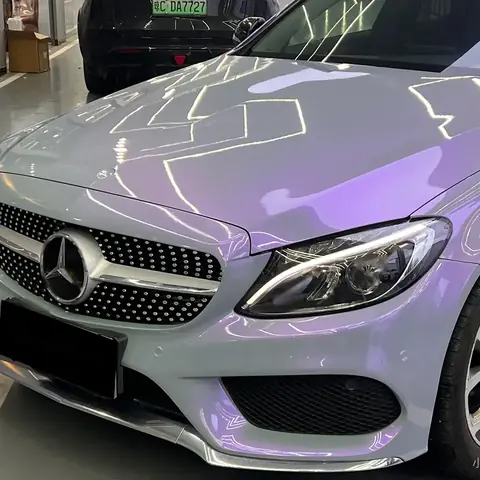
- Colored camo: purple, blue, pink or red and black camo for show cars and social media builds.
- Digital camo: pixel-style patterns that suit angular modern bodywork.
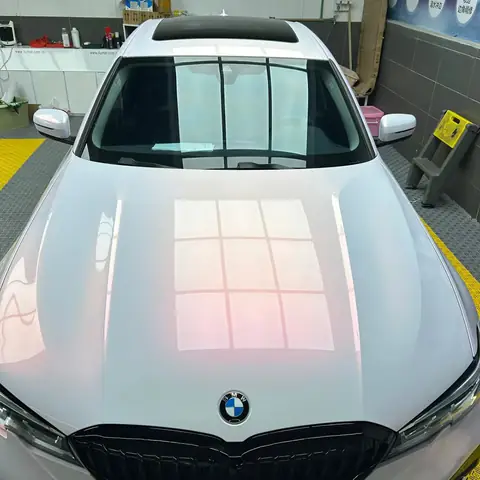
For a camo car where the owner wants a softer, paint-like finish, some shops combine a solid PET liner gloss color on most of the body with camo accents on the roof, hood or mirrors.
Matte, satin or gloss camo?
Finish changes how real a camo pattern looks. Matte camo vinyl is the traditional choice for woodland and hunting styles because it does not reflect light, which matches the look of field gear. Satin is a middle ground that is easier to keep clean. Gloss makes colors pop and suits colored and urban patterns, but it shows wash marks and swirls more readily. If you are unsure, our guide to gloss, satin, matte and chameleon finishes covers maintenance differences in detail.
How much does a camo vehicle wrap cost?
Prices vary by region, vehicle and shop. These typical ranges assume professional installation:
| Job | Typical installed price (USD) |
|---|---|
| Hood, roof or tailgate accent | $250–700 |
| Partial truck skins or lower-half camo | $900–2,000 |
| Full car, stock camo vinyl | $2,000–4,000 |
| Full truck, stock camo vinyl | $2,500–5,000 |
| Full truck, custom printed camo with laminate | $3,500–5,500+ |
Custom print jobs cost more because of design time, ink, laminate and the extra handling. For material planning, the wrap length calculator gives a starting figure for common vehicle sizes; add a margin for pattern matching on camo.
Installing a camo vinyl wrap
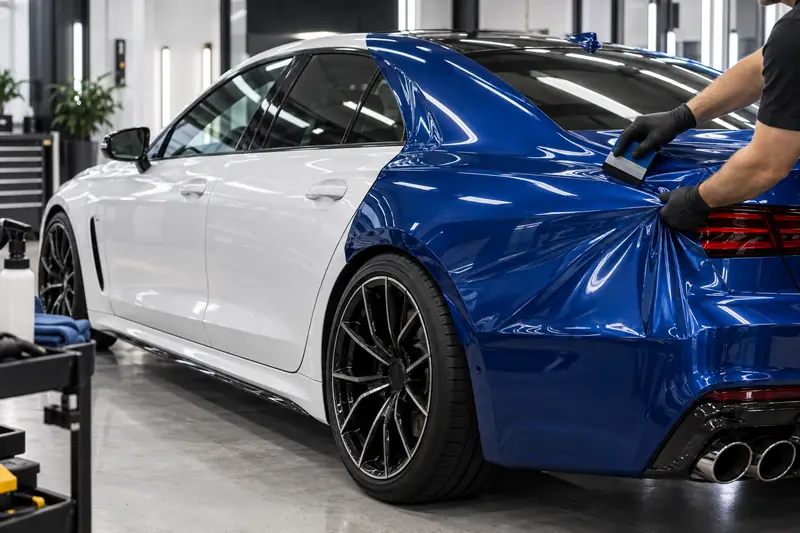
Camo is forgiving because irregular shapes hide small seams and relief cuts. Good practice still matters:
- Clean and decontaminate the paint, then wipe with an isopropyl alcohol solution to remove wax and residue.
- Plan the pattern direction. Run every panel the same way off the roll so the shapes flow from door to door.
- Match large patterns at seams on adjacent panels, especially on trucks with long bed sides.
- Glass out and squeegee with a felt-edged squeegee, using the air-release channels to push out air.
- Post-heat edges and recesses to the temperature on the data sheet so stretched areas do not lift.
- Trim with knifeless tape where cutting near paint is risky.
A note on "camo tape" and "camo form" products: the self-clinging camouflage tapes sold for rifles, bows and hunting gear are a different product from wrap vinyl. They are not designed for automotive paint or for outdoor vehicle durability, so use proper wrap film on a car or truck.
Stocking camo film for your shop
Mars Decorative Film produces stock camo and other effect films on standard 1.52 m rolls, with MOQ of one roll and mixed patterns welcome. Shops and distributors can request free samples to check pattern scale on a real panel, or ask about private label packaging for a camo range under their own brand.
Frequently asked questions
How long does a camo wrap last?
A quality camo vinyl wrap typically lasts several years outdoors, similar to other color-change films of the same grade. Climate, sun exposure, washing habits and whether a printed wrap is laminated all affect lifespan.
Is a camo wrap better than painting camouflage?
For most owners, yes. A wrap costs less than a quality custom paint job, can be removed when the vehicle is sold, and protects the original paint underneath. Paint can be more durable over very long periods but is permanent.
Can you wash a camo vinyl wrap normally?
Hand washing with a pH-neutral car shampoo is best. Avoid harsh solvents, high-pressure washing close to edges and abrasive brushes. Matte camo should not be waxed or polished, because that adds shine.
What is the most popular camouflage truck wrap pattern?
Woodland and other natural hunting-style patterns are the classic choice for trucks. Black, grey and digital camo are popular for street builds, and colored camo is common on show vehicles.
Can I do a camo wrap myself?
A partial camo kit on flat panels, such as a hood or tailgate, is a manageable DIY project. A full camouflage car wrap involves bumpers, mirrors and deep recesses, so most owners get better results from a professional installer.
Is camo vinyl the same as camo tape?
No. Camo tape for hunting gear is a thin, often self-clinging fabric or film that is not built for car paint. Camo vinyl wrap is an automotive film with an adhesive designed to bond to paint and remove cleanly.