Vinyl wraps · 8 min read
What is a car wrap? Materials, types, paint safety and care
What a car wrap is, how vinyl wrap film works, whether it damages paint, DIY vs pro installs, washing tips and where wrap shops buy film rolls.
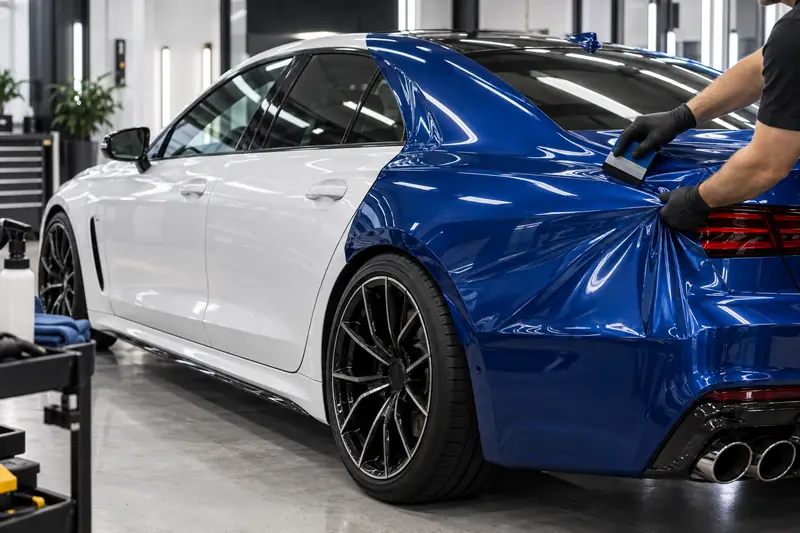
Short answer: A car wrap is a thin adhesive film, usually PVC vinyl, applied over a vehicle's factory paint to change its color, add graphics or protect the surface. It can cover the whole car or just parts, is removable, and on healthy OEM paint typically lasts several years before it is peeled off or replaced.
A car wrap is a layer of adhesive film stretched over a vehicle's body panels to change its color or finish, carry advertising, or shield the paint underneath. This guide explains what automotive vinyl wrap is made of, the main types of vehicle wraps, how a wrap is installed and cared for, and where shops and car owners buy film. It is written for wrap shops, resellers and drivers who want a clear picture before they quote, buy or book a job.
Key takeaways
- A car wrap is a removable film, most often cast or calendered PVC vinyl about 3–6 mil thick, with a pressure-sensitive, air-release adhesive.
- Wraps can be full (every painted panel), partial (roof, hood, mirrors, stripes) or commercial (printed graphics for business vehicles).
- On factory paint in good condition, a quality wrap removed within its service life typically comes off without damaging the paint.
- Standard wrap rolls are 1.52 m (5 ft) wide; most cars need roughly 15–20 m for a full color change, depending on size.
- Hand washing with a pH-neutral soap and avoiding high-pressure water at the edges is the simplest way to make a wrap last.
What is a car wrap made of?
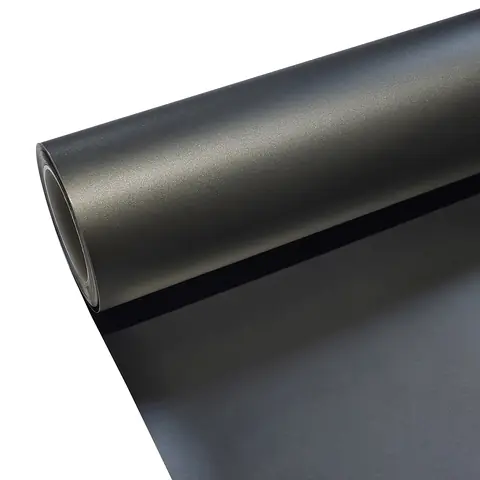
Most automotive wrap film is a colored PVC face film, an adhesive layer, and a release liner that protects the adhesive until installation. The adhesive usually has tiny air-release channels so trapped air can be pushed out with a squeegee instead of leaving bubbles.
The common constructions are:
| Film type | How it is made | Typical use | Notes |
|---|---|---|---|
| Cast PVC vinyl | Liquid PVC cast onto a carrier and cured | Full color-change wraps, deep recesses | Thin, conformable, low shrinkage |
| Calendered PVC vinyl | PVC rolled flat through heated rollers | Flat panels, stripes, budget jobs | Stiffer, more memory, can shrink back |
| PET liner vinyl | PVC face film carried on a rigid polyester liner | Gloss color changes that should look like paint | Very low orange peel |
| Printed and effect vinyl | Pre-printed or embossed face film | Carbon fiber, wood grain, camo, chrome, color shift | Some effects are less stretchy |
| Clear TPU PPF | Thick thermoplastic polyurethane | Invisible paint protection | Installed wet; a different product family |
If you want the details of each material, our comparison of TPU vs PET vs PVC car wrap film covers thickness, protection and cost side by side.
What is a clear car wrap?
A "clear car wrap" almost always means paint protection film (PPF): a transparent TPU film that guards against stone chips and light scratches without changing the color. It is thicker than vinyl and installed with a slip solution. Color PPF combines the two ideas, adding pigment to the protective film.
Wood grain, carbon and other textured wraps
Wood grain vinyl wrap, carbon fiber and brushed metal films are usually used on interior trim, dashboards, mirror caps and roofs rather than whole cars. They are part of the printed and effect family, and many have a textured surface that hides minor imperfections on trim pieces.
Types of vehicle wraps
Full vinyl wrap
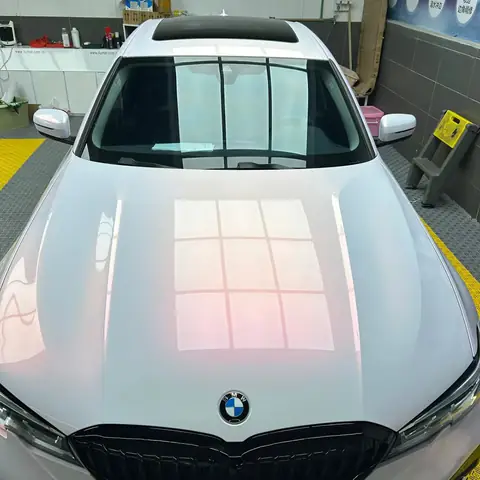
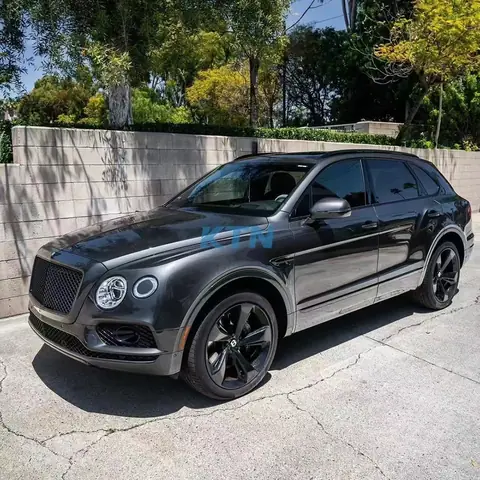
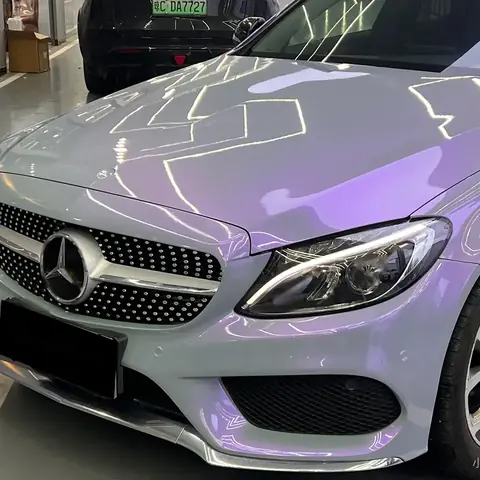
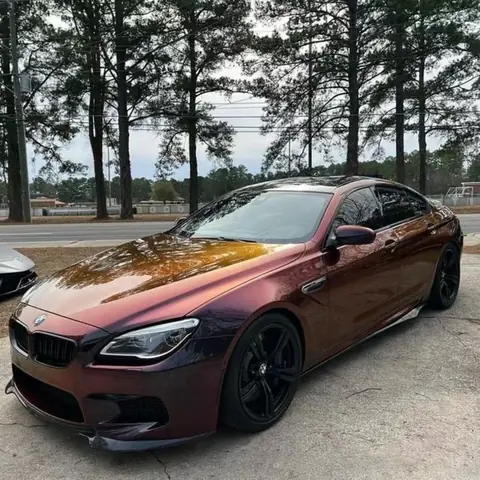
A car full vinyl wrap covers every painted exterior panel, often including door shuts on premium jobs. It is the most common choice for a complete color change, and the original paint is preserved underneath for resale.
Partial wraps and accents
Roofs, hoods, mirrors, spoilers, chrome-delete trim and racing stripes are popular low-cost upgrades. A gloss black roof, for example, needs only a few meters of film and is a common entry job for new customers.
Commercial vehicle wraps
Vans, trucks and fleet cars are wrapped with printed vinyl and a protective laminate to carry logos, phone numbers and full-color designs. The film is often printed in-house by sign shops on printable vinyl. Our guide to fleet wraps and vinyl lettering covers materials and workflow.
Window vinyl, tint and solar film
Side and rear windows are usually treated with window tint (also called solar film or UV film) rather than wrap vinyl, because it is designed to be optically clear and to reduce heat and glare. Perforated window vinyl is used on commercial vehicles so printed graphics can run across rear windows while the driver still sees out. Window tint darkness limits vary by country and state, so check local rules before installing.
Does wrapping a car damage the paint?
On cured factory paint, a quality wrap generally does not damage the paint, and it can protect it from UV fading and light abrasion. Problems usually come from one of these situations:
- Resprayed or poor-quality paint. Aftermarket paint that is poorly bonded can lift when the film is removed.
- Leaving the wrap on too long. Film that has baked in the sun for years past its rated life gets brittle, and the adhesive can become harder to remove cleanly.
- Aggressive removal. Peeling cold film fast, or cutting on the car with too much blade pressure during install, can leave marks.
- Existing damage. Chips, clear-coat failure and rust under the film are not fixed by a wrap and can get worse.
So, do vehicle wraps damage paint? Usually not, if the paint is original, the film is a reputable grade, and the wrap is installed and removed correctly. Installers should inspect paint before taking a job and note any defects.
Is it easy to wrap your own car?
A DIY vehicle wrap is possible, but a full car is a big first project. Flat panels like a roof or hood are manageable for a patient beginner; bumpers, mirrors and deep recesses take practice with heat and stretching. Most people who try a full car alone find that cleaning, trimming and post-heating take far longer than expected.
How to apply a car wrap (overview)
- Wash and decontaminate. Wash, clay if needed, then wipe with an isopropyl alcohol solution to remove wax and oils.
- Remove or mask hardware. Take off badges, handles and lights where practical so film can wrap around edges.
- Measure and cut panels. Leave several centimeters of overhang on every side.
- Position and tack. Peel the liner, lay the film loosely, and anchor it in the center.
- Squeegee from the center out. Use overlapping strokes with a felt-edge squeegee to push air out through the air-release channels.
- Heat and stretch into curves. Warm the film to make it conform; avoid overstretching, which thins the color.
- Trim and tuck edges. Use a sharp blade or knifeless tape so you do not cut into paint.
- Post-heat. Heat stretched areas and edges to the temperature on the film's data sheet (often around 90–100 °C / 195–210 °F for cast film) to stop the film lifting back.
For tool choices, see the guide to choosing a wrap squeegee.
How to wash a wrapped car
Wait roughly a week after installation before the first wash so the adhesive can settle. After that:
- Hand wash with a pH-neutral car shampoo and soft microfiber mitts.
- Keep pressure-washer nozzles well back from the surface and never aim directly at edges or seams.
- Avoid brush-type automatic car washes, which can lift edges and scratch matte films.
- Remove bird droppings, tree sap and fuel spills quickly; they can stain.
- On matte and satin films, skip waxes and polishes that add shine; use products labeled for matte finishes.
Can you wrap rims?
You can wrap rims, but it is fiddly. Wheel wraps are usually limited to the faces of simple spoke designs, and brake heat, tire fitting and curb rash wear the film quickly. Many shops prefer powder coating or wheel paint for a lasting color change, and use vinyl only for small accents such as brake caliper decals or center-cap overlays.
Where to buy vinyl wrap for cars
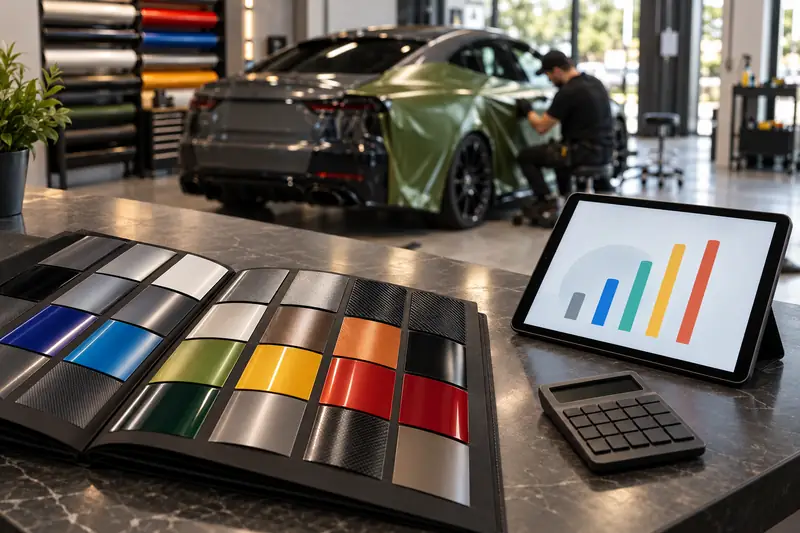
Car owners generally buy through a local wrap shop, which supplies and installs the film and handles the warranty. If you want to buy vehicle wrap film yourself, specialist wrap distributors and online stores sell by the meter or by the roll.
Shops and distributors buy rolls from wholesalers or directly from manufacturers. When comparing suppliers, look at:
- Film type (cast, calendered, PET liner) and adhesive (air-release, repositionable).
- Roll size: 1.52 m wide is the standard; length is commonly 17–18 m for color vinyl.
- Batch consistency, since two rolls of the same color from different batches should match on one car.
- Sample availability, so installers can test conformability before ordering volume.
To estimate quantity for a specific car, use the calculator in how much vinyl you need to wrap a car.
Buying wrap film for your shop
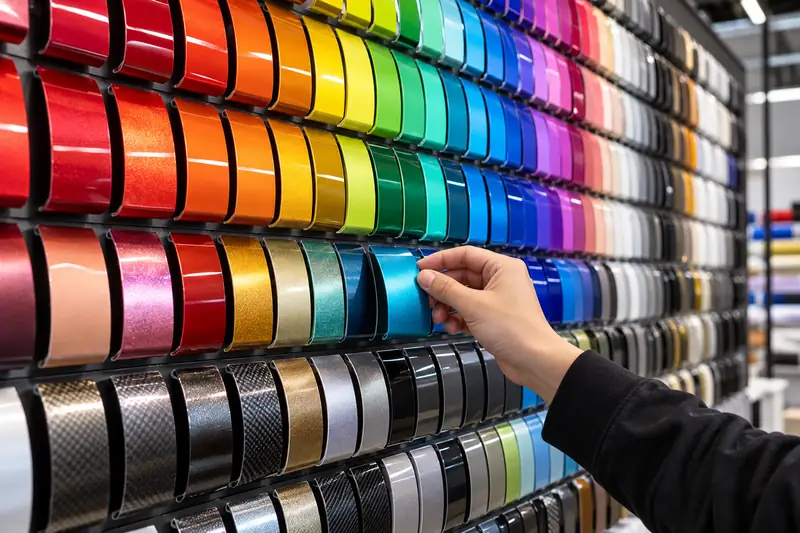
Mars Decorative Film manufactures PVC vinyl wrap in gloss, satin, matte and metallic, plus PET liner and printed effect films, on 1.52 m rolls with an MOQ of one roll and mixed colors welcome. Qualified buyers can request free samples to test on a panel before placing an order.
Frequently asked questions
Does wrapping a car ruin the paint?
Not when the paint is original and in good condition and the film is removed within its service life. Resprayed paint, existing chips or rushed removal are the usual causes of damage. A professional installer will check the paint first and warm the film during removal.
How long does a car wrap last?
It depends on the film grade, climate and care. Quality cast films on vertical panels typically last several years, while horizontal surfaces such as roofs and hoods age faster under direct sun. Check the durability stated on the film's data sheet.
Where can I get my car wrapped?
Look for a dedicated wrap shop that shows finished cars, explains which film grade it uses, and offers a written warranty on installation. Ask to see how they handle edges, door jambs and badges, since those details separate good work from average work.
How do you apply vinyl wrap without bubbles?
Clean the panel thoroughly, use film with air-release adhesive, and squeegee from the center outward in overlapping strokes. Small bubbles in air-release film can usually be pressed out; larger ones may need lifting and relaying the film.
Can you make your own vinyl wrap design?
Yes. Custom designs are printed on printable wrap vinyl with a large-format printer and then protected with a matching laminate. Most people have a sign or wrap shop handle the printing, because color accuracy and laminate choice affect how long the design lasts.
Is a clear car wrap the same as vinyl?
No. A clear car wrap usually means paint protection film made from TPU, which is thicker and designed to absorb stone chips. Color vinyl is mainly cosmetic and offers only light protection.
Can I put a car through a car wash after wrapping?
Touchless washes are generally safer than brush washes, but hand washing is best. Wait about a week after installation, and keep high-pressure water away from film edges.