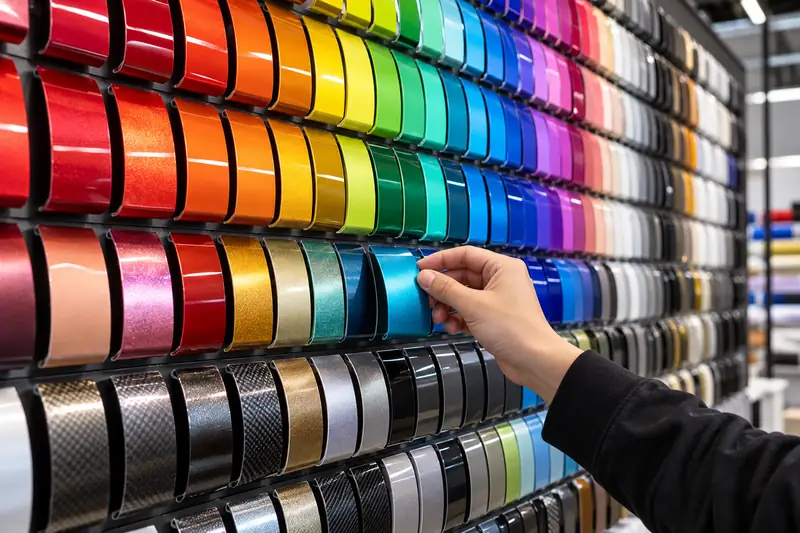
Vinyl wraps · 7 min read
Chameleon wrap guide: color shift, pearlescent and candy finishes
Chameleon wrap explained: how color shift vinyl changes color, pearlescent white and candy red options, two-tone ideas, install tips and typical cost.
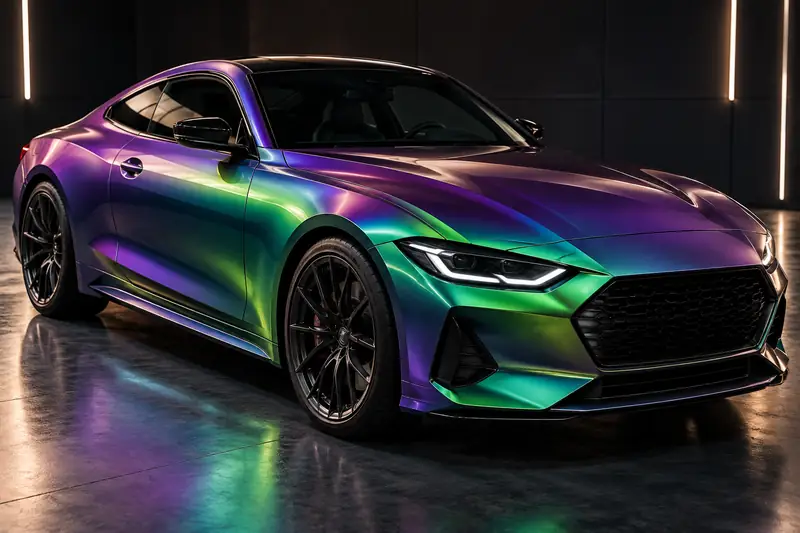
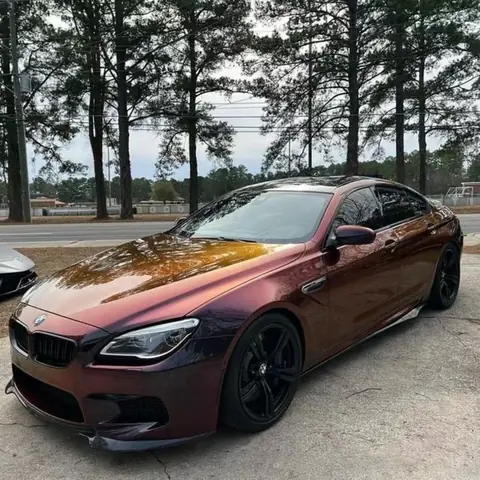
Short answer: A chameleon wrap is a color shift vinyl that shows different colors depending on viewing angle and light, such as purple turning green or blue turning bronze. It uses special interference pigments in the film. Pearlescent wraps give a softer shimmer, while candy wraps give deep, glossy color with a metallic base.
A chameleon wrap turns a car into something that looks different every time you walk around it. Purple on the door, green on the fender, gold where the light hits the hood. For wrap shops, color shift and pearlescent films are high-ticket jobs that bring in customers through social media. For distributors, they are a fast-moving niche that rewards a well-chosen range. This guide covers how color changing car wrap films work, the main styles, how to install them without patchy panels and what to expect on cost.
Key takeaways
- A chameleon car wrap uses interference pigments that reflect different colors at different angles; the effect is strongest on curved panels and in direct sun.
- Pearlescent wraps give a subtle shimmer over a base color, while chameleon films give a dramatic multi-color shift.
- Color shift films are directional. Every panel must be applied in the same orientation, and all film for one car should come from the same batch.
- Candy finishes combine a metallic base with deep transparent-looking color, such as candy red or candy apple red.
- Effect films typically cost more per roll than solid colors and take more planning, so they usually price higher per car.
How does a color shift wrap work?
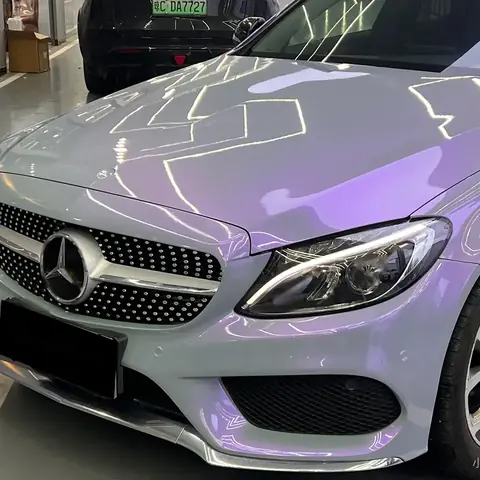
Ordinary vinyl color comes from pigment that absorbs some wavelengths and reflects the rest, so it looks the same from most angles. A color shift vinyl wrap uses flake pigments with thin layered coatings. Light reflecting off the top and bottom of each layer interferes, boosting some colors and cancelling others. Change the angle and the boosted color changes. Soap bubbles and oil on water work the same way.
That is why color changing vinyl looks most dramatic on curves: a fender or bumper presents many angles at once, so you see several colors in one glance. On a flat panel in shade, the effect is quieter.
Chameleon vs pearlescent vs candy
| Finish | What you see | Strength of effect | Typical use |
|---|---|---|---|
| Chameleon (color shift) | Two to four distinct colors as the angle changes | Strong | Show cars, attention-grabbing full wraps |
| Pearlescent | Base color with a soft second tone at angles | Subtle | Premium full wraps, white and pastel colors |
| Candy | Deep, saturated color over a metallic base | Medium, depth rather than shift | Red, blue and green full wraps |
| Satin or matte chameleon | Color shift with low gloss | Softer, more modern | Sports cars, motorcycles |
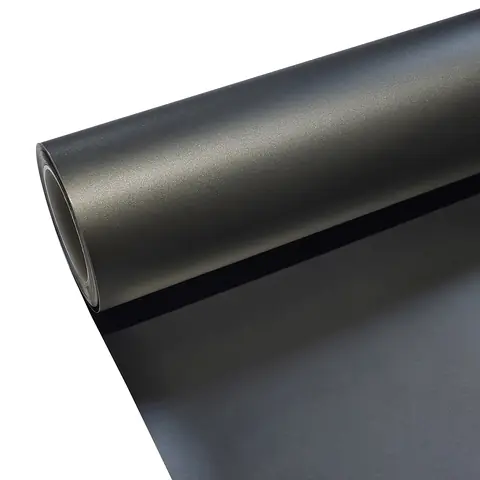
Most color shift films come in gloss, satin and matte versions. Satin chameleon is a common favorite because it shows the shift clearly without strong reflections. For a wider comparison of sheens, see our guide to gloss, satin, matte and chameleon finishes.
Chameleon car wrap colors that sell
Every market has its own favorites, but a few color families come up again and again:
- Purple to green: the classic chameleon look and still a strong seller.
- Blue to purple, and teal to violet: cooler shifts that suit dark cars and EVs.
- Gold to green and bronze to copper: warmer, more understated tones.
- Red to gold: popular on sports cars and motorcycles.
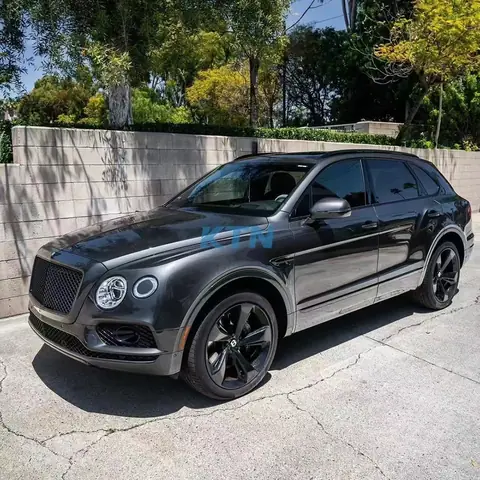
- Silver or grey with a color flip: subtle by day, vivid in sun, often chosen by owners who want a "stealth" color shift.
New effect colors move quickly from social media into customer requests. Mars Decorative Film releases new colors roughly every three months, and many shops refresh their effect swatch book on a similar cycle.
Pearlescent white car wrap
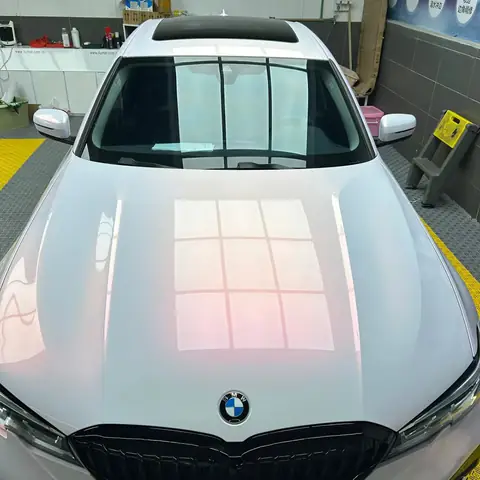
Pearlescent white is one of the most popular premium colors overall. A good pearlescent white vinyl wrap looks plain white straight on and shows a soft blue, pink or gold shimmer at angles. White with blue pearlescent is the most requested version because it reads as clean and modern. Pearlescent car colors in general, such as pearl silver, pearl black and pastel pearls, are a good way to offer something special without the bold look of a full chameleon.
On a pearlescent white car (meaning a car with pearl paint from the factory), owners sometimes ask for a matching film for a damaged panel. Exact paint matches are rarely possible with vinyl, so a full wrap or a deliberate two-tone is the honest recommendation.
Candy red wrap
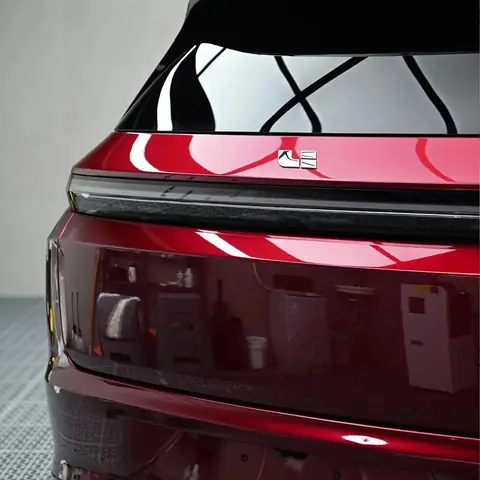
A candy red wrap mimics custom candy paint: a metallic silver or gold base under a deep translucent red. The result has depth that solid gloss red cannot match. Candy apple red vinyl wrap is the brightest version, with a slightly orange-red tone. Candy films are often made on a PET liner for a smoother, more paint-like surface; see our PET liner vinyl wrap range for gloss and candy colors.
Two tone car wrap ideas
A two tone car wrap uses a second color on some panels, usually the roof, pillars, hood or lower body. It works well with effect films because a full chameleon car can be a lot for some owners:
- Chameleon body with gloss black roof and mirrors: the most common combination.
- Pearlescent white body with gloss black or carbon roof: clean and premium.
- Candy red body with satin black hood stripe: a classic performance look.
- Solid matte grey body with color shift accents: mirrors, lip, spoiler and calipers covers only.
Plan the split along natural body lines so the seams look intentional. A 2 tone car wrap also uses less effect film, which brings the price down for customers who love the color but not the cost of a full car.
Installing color shift vinyl wrap: what changes
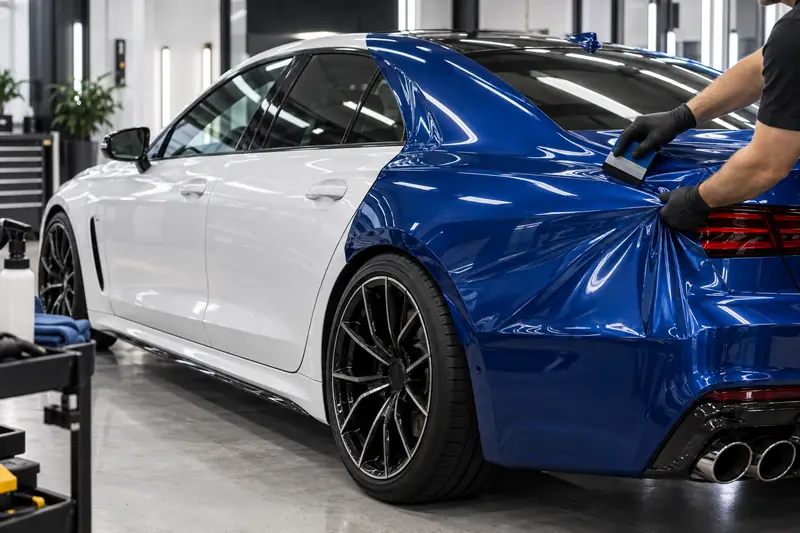
Chameleon vinyl wrap installs much like any other conformable cast or high-grade film, but it is less forgiving in a few ways.
- Order enough film from one batch. Effect pigments can vary slightly between production batches. Order the full amount for the car at once and check batch numbers on every roll. Our guide on how much vinyl to wrap a car helps estimate length.
- Keep the direction consistent. Mark an arrow on the liner of every cut panel so the film runs the same way on all panels. Rotating a piece 90 or 180 degrees can make it look like a different color next to its neighbor.
- Avoid heavy stretch on visible areas. Over-stretching can thin the color layer and change how the shift looks. Use relief cuts, inlays or extra film instead of forcing deep recesses.
- Check panels in sunlight before trimming. Effects that look matched under shop lights can differ outside.
- Post-heat as the data sheet specifies. Effect films still need proper post-heating on edges and stretched areas to prevent lifting.
For a pearlescent motorcycle wrap, the same rules apply on a smaller scale. Tanks and fairings are curved, so the shift looks spectacular, but compound curves need careful heat and minimal stretch. See our motorcycle wraps guide for part-by-part tips.
How much does a chameleon wrap cost?
Color change car wrap pricing depends on the vehicle, film type and region. As a rough guide in many US markets:
| Job | Typical installed price (USD) |
|---|---|
| Full wrap in solid gloss or satin color | Roughly $2,500–$5,000 |
| Full chameleon or pearlescent wrap | Roughly $3,500–$7,000 |
| Two tone car wrap (effect body, black roof) | Similar to a full wrap, sometimes slightly less |
| Accents only (mirrors, roof, spoiler) | Roughly $200–$900 |
| Motorcycle in color shift film | Roughly $400–$1,200 |
These ranges vary widely by region, vehicle size, condition and shop. Effect films cost more per roll, and the extra planning for direction and batch matching adds labor time.
Buying color shift film for your shop
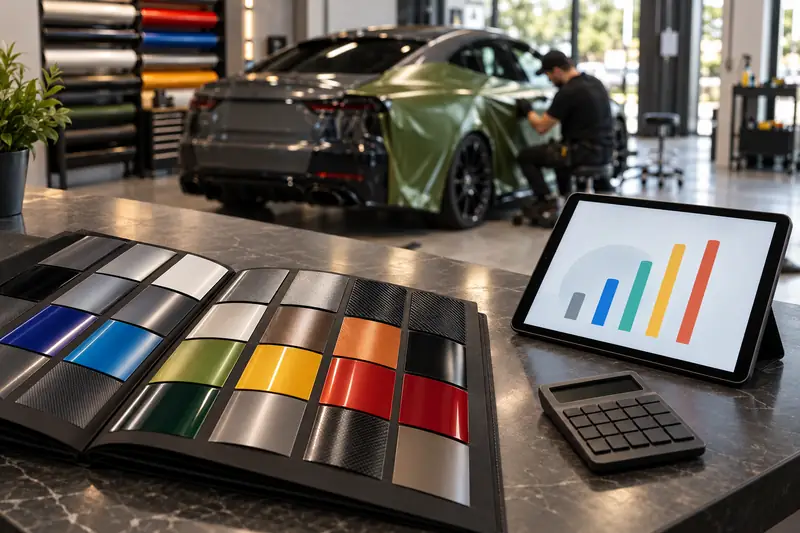
When sampling chameleon films, look at the strength of the shift on a curved sample, the surface texture (orange peel shows more on effect films), the adhesive's repositionability and how the film behaves after heat. A small range of four to six shifts, one or two pearl whites and a candy red covers most customer requests. Qualified buyers can request free samples or browse color shift films in our catalog.
Frequently asked questions
What is a chameleon wrap?
A chameleon wrap is a vinyl film that appears to change color as you move around the car. It uses layered interference pigments that reflect different colors at different angles. The effect is strongest on curved panels and in direct sunlight.
Is a color changing car wrap the same as color change paint?
They look similar, but a wrap is a removable vinyl film applied over the existing paint, while color shift paint is a permanent respray. A wrap is usually cheaper than a quality effect paint job and protects the original paint underneath.
What is the difference between pearlescent and chameleon wrap?
Pearlescent wraps have a single base color with a soft secondary shimmer at angles. Chameleon wraps shift between two or more clearly different colors. Pearl is subtle and classic; chameleon is bold.
Why does my color shift wrap look different on two panels?
The most common causes are panels installed in different orientations, films from different batches, or heavy stretch in one area. Mark the direction on every piece, buy all film for one car from the same batch, and check in sunlight before trimming.
How long does a chameleon vinyl wrap last?
Life depends on film grade, climate and care, and horizontal surfaces such as the roof and hood age fastest. Check the outdoor durability rating on the film's data sheet. Hand washing and parking in shade help the effect stay vivid.
Can you get a candy red wrap in matte?
Most candy finishes are gloss, because the depth of the effect relies on a clear, glossy surface. Some lines offer satin versions with a softer look. Ask for samples to compare before committing to a full car.