Tools & installation · 7 min read
How to remove a car wrap safely (and what makes vinyl removable)
How to remove a car wrap without damaging paint: step-by-step vinyl wrap removal, adhesive remover tips, costs and what makes removable vinyl come off.
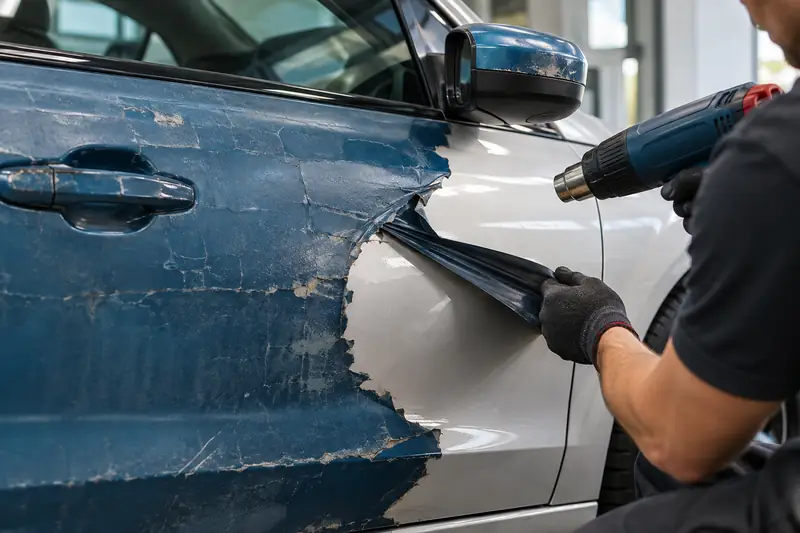
Short answer: To remove a car wrap, warm one panel at a time to soften the adhesive, lift a corner and peel slowly back on itself at a low angle, then clean any residue with a paint-safe adhesive remover. Removable vinyl with good adhesive and a wrap removed within its rated life usually comes off without harming factory paint.
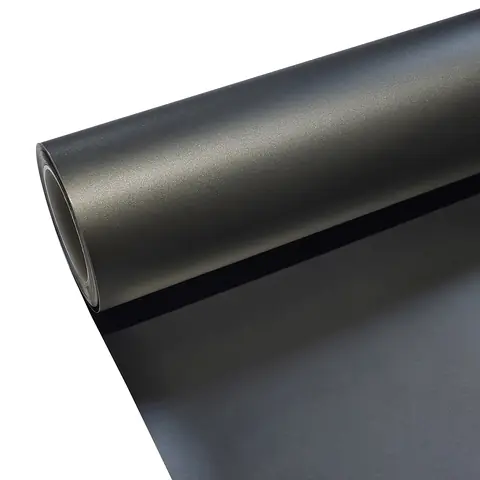
Removable vinyl is one of the main reasons owners choose a wrap over paint: when the lease ends, the business rebrands or the owner wants a new color, the film can come off. That only works well when the film has a removable adhesive, the wrap is taken off within a sensible time, and the job is done with heat, patience and the right tools. This guide covers how to remove a car wrap step by step, which tools and adhesive removers to use, and what affects how cleanly vinyl comes off.
Key takeaways
- Most quality car wrap films use pressure-sensitive adhesives designed to be removed cleanly within the film's rated outdoor life.
- Heat is the main tool: warm the film to soften the adhesive, then peel slowly at a low angle.
- Old, sun-baked or economy films are the hardest to remove; they crack into small pieces and leave more residue.
- Use a paint-safe adhesive remover and plastic tools only; never metal scrapers on paint.
- Professional car wrap removal typically costs a few hundred dollars for a car and more for trucks and heavily weathered wraps.
Can a car wrap be removed?
Yes. Vehicle wraps are designed to be removable, and on healthy factory paint a quality film usually comes off without damage. The phrase "can you remove vinyl wrap from car" really hides three questions:
- Is the adhesive removable? Wrap films use removable or repositionable adhesives, unlike permanent sign vinyl.
- Is the paint sound? Factory paint is well bonded. Respray paint, poor clear coat or touched-up chips can lift with the film.
- Has the film aged past its rated life? UV breaks down the film and hardens the adhesive, which makes removal slower and messier.
Is permanent vinyl removable?
"Permanent" vinyl, often used for signs and decals, has a stronger adhesive meant to stay put. It can be removed with heat and adhesive remover, but it takes longer and leaves more residue, and on a car it is more likely to stress weak paint. It is not a good choice for full vehicle wraps.
What is removable vinyl used for?
Removable adhesive vinyl is used anywhere a graphic needs to come off later without damage:
- Car wraps and color change films
- Removable car decals and stickers for events, promotions or rideshare signage
- Car stripes decals and automotive stripes
- Temporary window graphics and wall decals
- Printable removable vinyl for short-term promotions and point-of-sale graphics
Removable vinyl sheets and rolls come in many grades. For vehicles, choose an automotive wrap or cast film rather than a craft sheet, because it is designed to conform to curves and to be removed in one piece. Our PVC vinyl range uses air-release adhesives built for wrap installs.
Tools for vinyl wrap removal
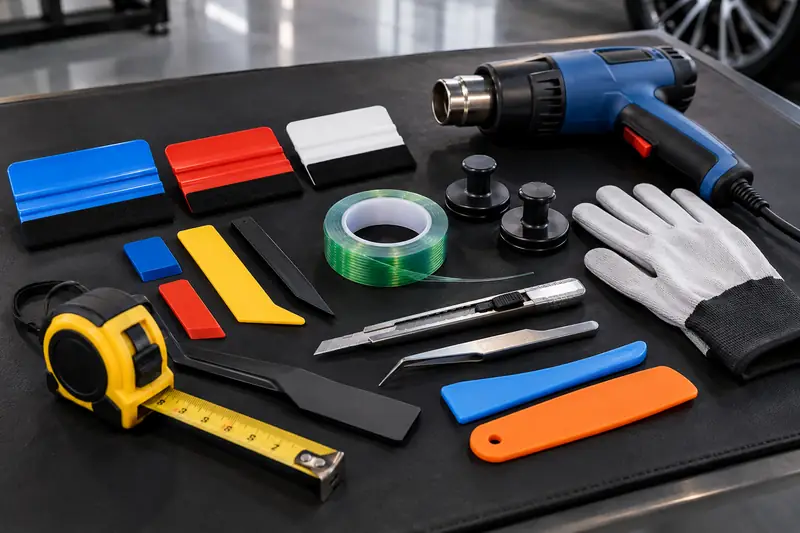
| Tool | Purpose | Tip |
|---|---|---|
| Heat gun | Softens film and adhesive | Keep it moving; avoid overheating plastic trim |
| Steamer (optional) | Gentle, even heat on large panels | Useful for older, brittle film |
| Plastic razor blades | Lift edges and residue | Never use metal blades on paint |
| Vinyl adhesive remover | Dissolves leftover glue | Pick a paint-safe product; test on a hidden area |
| Microfiber towels | Wipe residue and remover | Change towels often |
| Isopropyl alcohol solution | Final clean before polish or re-wrap | Follow product dilution guidance |
| Gloves and eye protection | Safety | Remover and heated film can irritate skin |
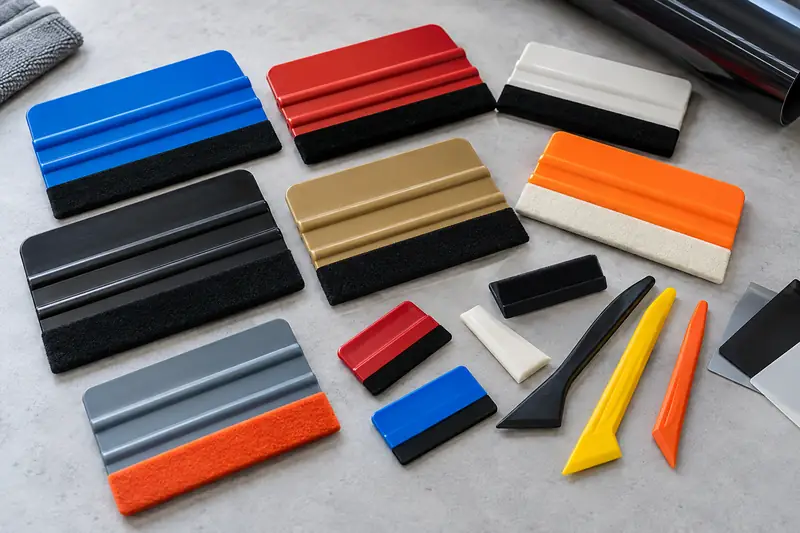
Many of these tools are available in our wrap tools range. Our guide to choosing a heat gun for vinyl wrap covers temperature control in more detail.
How to remove vinyl wrap from a car, step by step
- Wash the car. Dirt on the film can scratch paint as the film comes off. Work indoors or in shade, ideally at a mild temperature.
- Start with one panel. Work panel by panel rather than heating the whole car.
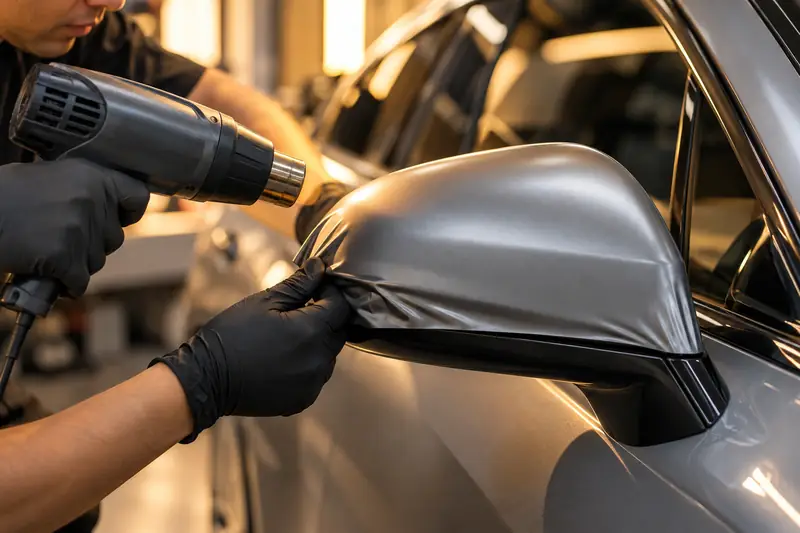
- Warm the film. Heat the panel evenly until the film feels warm and pliable. Aim for warm, not hot; you should be able to touch it briefly.
- Lift a corner. Use a fingernail or plastic blade at an edge or seam.
- Peel low and slow. Pull the film back on itself at a low angle, close to 180 degrees, keeping steady tension. Reheat as it cools.
- Watch the adhesive. If glue stays on the paint, slow down and add a little more heat. If the film tears into small pieces, it has aged; use more heat and shorter pulls.
- Remove residue. Apply vinyl glue remover, let it work per the label, then wipe with microfiber. Use a plastic blade for stubborn spots.
- Clean and inspect. Wipe with an alcohol solution and inspect the paint. Washing, a light polish and wax or sealant restore gloss.
Best way to remove vinyl wrap that is old or cracked
Old wraps often come off in small flakes. A steamer or longer, gentler heating helps, and so does patience. Some shops apply a removal product designed for brittle film, then work in small sections. Expect it to take much longer than a fresh wrap.
Truck wrap removal and commercial vehicles
Truck wrap removal and fleet de-branding follow the same steps, but scale changes the job. Box trucks and vans have large flat panels, rivets and seams, and many have spent years in the sun. Printed vinyl with laminate behaves like a thicker film and usually comes off in larger sheets when warm. Budget more labor for rivet areas and for any panels with failed laminate.
Fleet managers can reduce future removal costs by choosing films rated for the planned service life and scheduling removal before the film ages past it. See our guide to truck and van wraps for planning.
How much does car wrap removal cost?
Auto wrap removal prices vary by region, vehicle and the film's condition. Typical ranges:
| Vehicle | Typical removal cost |
|---|---|
| Small car or coupe | Roughly $300–$600 |
| Mid-size sedan or SUV | Roughly $400–$800 |
| Large SUV, pickup | Roughly $500–$1,000 |
| Box truck or van with old printed wrap | Roughly $800–$2,500+ |
Partial wraps, stripes and decals cost less. Severely sun-damaged film can double the labor.
Removable car decals and stripes
Small graphics such as removable car decals, stripe vinyl car accents and vinyl stickers come off the same way as a full wrap: heat, a slow peel, then adhesive remover. A dedicated vinyl decal remover helps with old decals. On glass, a plastic blade can be used more freely; on paint, keep to plastic and gentle pressure.
Ghosting can appear after removing a decal that has been on the car for years: the paint around it has faded and the covered area has not. Polishing reduces the outline, but it may not disappear completely.
Protecting paint during removal
- Avoid excessive heat on plastic bumpers, trim and lights.
- Keep the peel angle low to reduce stress on the paint.
- Be careful with repainted panels, which may not bond as strongly as factory paint.
- Test the adhesive remover on a hidden area before using it on large panels.
- Plan around the film's rated life so removal stays easy.
Buying film for your shop
Clean removal starts with the film you install. Mars Decorative Film checks incoming adhesive and face materials and inspects every roll before release, so shops get consistent adhesive behavior from batch to batch. Trade buyers can request free samples to test install and removal on their own panels, or browse wrap tools for removal supplies.
Frequently asked questions
Can vehicle wraps be removed?
Yes. Vehicle wraps use removable adhesives and are designed to be taken off. On sound factory paint and within the film's rated life, a wrap usually comes off cleanly with heat and a slow peel.
How to take off car wrap without damaging paint?
Warm each panel, lift an edge with a plastic tool and peel the film back on itself at a low angle. Remove any glue with a paint-safe adhesive remover and avoid metal blades and excessive heat.
How long does it take to remove a car wrap?
A professional can often remove a recent wrap from a car in several hours to a day. Old, sun-damaged film that breaks into small pieces can take two or three times as long.
What is the best vinyl adhesive remover?
Choose a remover labeled safe for automotive paint and test it on a hidden area first. Follow the label's dwell time, wipe with microfiber and finish with an alcohol solution before polishing or re-wrapping.
Will removing a wrap damage my paint?
On healthy factory paint, a quality wrap removed within its rated life rarely causes damage. Risk rises with aftermarket respray, failing clear coat, and old film with hardened adhesive.
Can I remove a vinyl wrap myself?
Yes, if you have time, a heat gun, plastic blades and adhesive remover. Work one panel at a time and keep the heat moderate; for old or cracked wraps, a professional is often faster and safer.
Is permanent vinyl removable from a car?
It can be removed with heat and adhesive remover, but it takes more effort and leaves more residue than removable wrap film. Avoid permanent sign vinyl on paint if you plan to take it off later.