Tools & installation · 7 min read
Car squeegee guide: which squeegee for vinyl wrap, PPF and glass?
Which car squeegee to use for vinyl wrap, decals, PPF, window tint and glass cleaning: types, hardness, felt edges and how to keep film scratch-free.
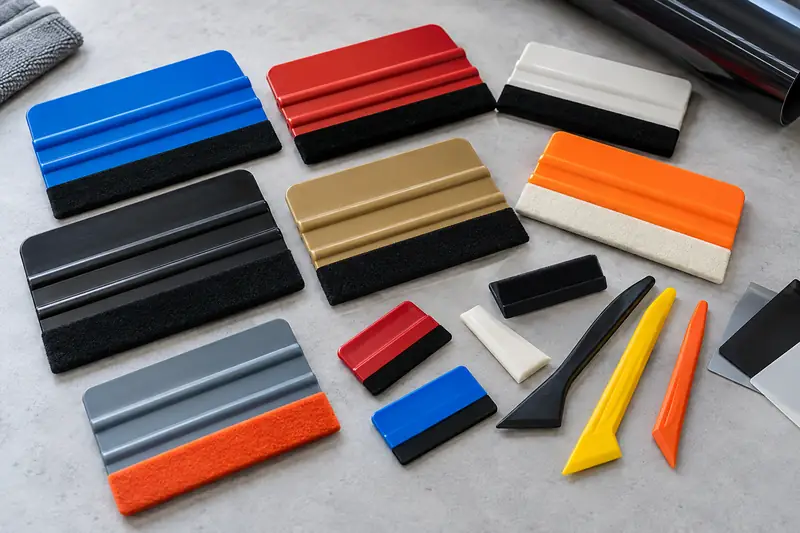
Short answer: The right car squeegee depends on the job. Use a medium-flex squeegee with a felt or microfiber edge for vinyl wrap and decals, a firmer rubber or polymer squeegee for wet PPF and window tint installs, and a soft rubber-blade window squeegee for cleaning and drying car glass.
A car squeegee can mean two very different tools: the flat applicator that installers use to lay vinyl, PPF and tint, and the rubber-blade wiper used to clean and dry windows. This guide covers both, with most of the detail on installation squeegees for wrap shops, tint installers and sign makers who need to stock the right set. Choosing the right hardness and edge saves film, time and redo work.
Key takeaways
- Wrap squeegees are graded by hardness and flexibility; medium-flex is the everyday choice for vinyl wrap.
- A felt or microfiber edge lets you squeegee gloss, satin and matte vinyl without scratching the face film.
- Wet installs such as PPF and window tint need firmer squeegees that push slip solution out from under the film.
- Worn or nicked edges cause scratches and lines, so squeegees and felt buffers are consumables that should be replaced regularly.
- Window cleaning squeegees use soft rubber blades and are not suitable for applying film.
Types of squeegees for car film work
| Squeegee type | Hardness | Best for | Watch out for |
|---|---|---|---|
| Hard plastic squeegee | Stiff | Flat decals, transfer tape, firm pressure on lettering | Scratches vinyl face without a buffer |
| Medium-flex wrap squeegee | Medium | Full vinyl wraps, general panels | Edge wear over time |
| Soft or very flexible squeegee | Soft | Curves, recesses, textured films | Less pressure on large flat areas |
| Felt edge squeegee | Varies, felt-covered edge | Gloss, satin and matte vinyl, chrome, PET liner film | Felt traps grit; keep clean |
| Microfiber or suede buffer | Sleeve over any squeegee | Delicate finishes, final passes | Replace when it wears thin |
| Mini or detail squeegee | Medium to stiff | Edges, tucking around trim and seals | Small contact area |
| PPF squeegee (rubber or polymer blade) | Medium to firm | Wet PPF installs, pushing slip solution | Too stiff can mark soft TPU |
| Tint squeegee and hard card | Firm | Window tint, getting water out of edges | Use with care near defroster lines |
| Large or big squeegee | Wide, stiff | Laminating panels, large flat graphics | Unwieldy on curves |
Choosing a vinyl wrap squeegee
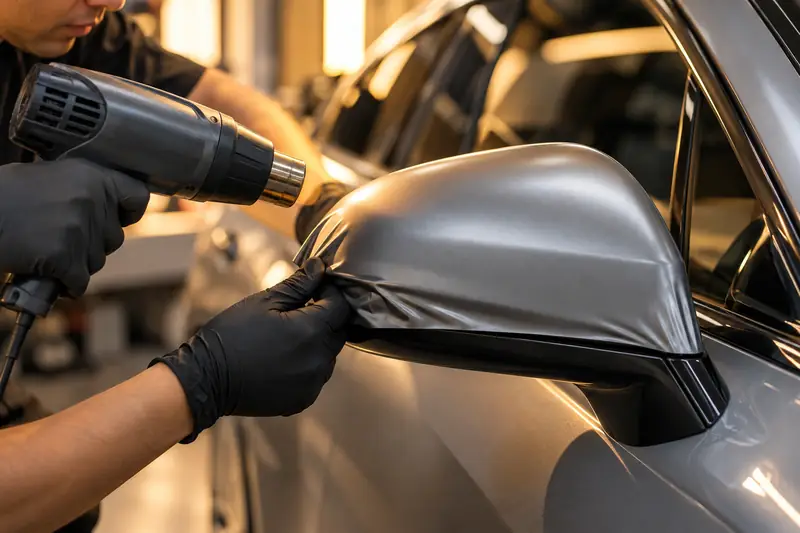
A vinyl wrap squeegee does three jobs: it presses the adhesive into contact with the paint, it pushes air out through the air-release channels, and it helps you guide film into position. The best wrap squeegee for most installers is a medium-flex squeegee with a replaceable felt or microfiber edge.
Felt squeegee for vinyl
Felt edges glide over the film instead of dragging, which reduces scratches on gloss and prevents "burnishing" on satin and matte films. A felt edge squeegee is also the standard tool for chrome and PET liner gloss films, which mark easily. Keep a few spares: once grit embeds in felt, it can scratch the very surface it was meant to protect.
Hard vs flexible
- Harder squeegees give more pressure on flat panels and are useful for decals and lettering where you need firm adhesion through transfer tape.
- Flexible squeegees follow curves, bumpers and mirror shells more easily and are less likely to dig in.
- Dual-edge squeegees combine a stiff side and a soft side, which reduces tool changes.
Squeegee vinyl wrap set: what to include
A practical starter set for each installer:
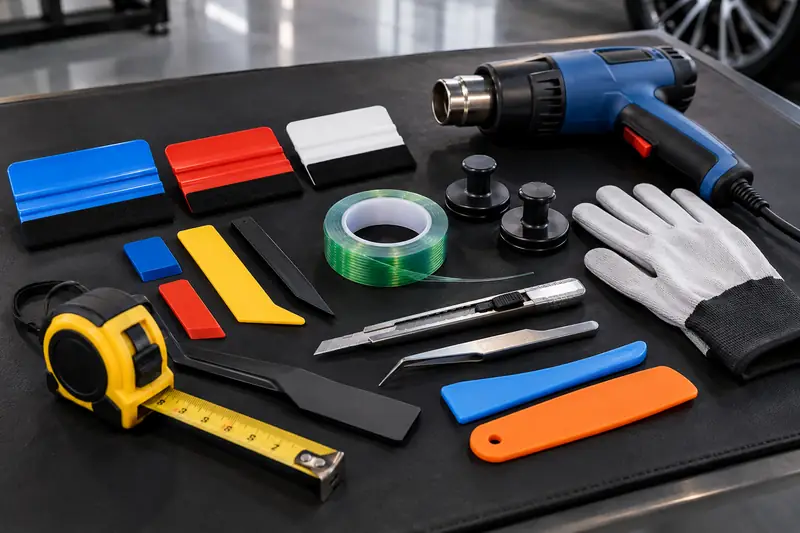
- Two or three medium-flex squeegees with felt edges.
- One soft, highly flexible squeegee for curves.
- One mini squeegee for tucking edges.
- Spare felt strips or microfiber buffer sleeves.
- A magnet holder or belt pouch so tools stay off the floor.
Pair the set with a heat gun, knifeless tape and a sharp blade. Our wrap tools range includes squeegees, knives, tapes and complete kits, and the heat gun guide covers the other essential tool.
Decal squeegees and lettering
A decal squeegee is usually harder and smaller than a wrap squeegee. With cut lettering and decals, the goal is to press the vinyl firmly through the transfer tape so every letter bonds before the tape is removed. Use overlapping strokes from the center outward, then peel the transfer tape back at a sharp angle close to the surface. For vinyl decal squeegee work on painted vehicles, a felt edge is still wise if the squeegee touches exposed vinyl or paint.
For applying laminate by hand, or for laying large flat graphics, a big squeegee laminator tool (a wide, stiff squeegee, sometimes on a handle) lets you cover more surface in each pass. Our transfer tape guide covers tape choices for lettering.
How to use a car wrap squeegee
- Clean the panel and the tool. Grit on the squeegee or film is the most common cause of scratches.
- Hold at roughly 45 degrees. Angle the squeegee in the direction of travel, so it pushes air ahead of it.
- Start in the center. Anchor the film in the middle of the panel and work outward.
- Overlap strokes. Each stroke should overlap the previous one by about half its width to avoid trapped air lines.
- Use moderate, even pressure. Too much pressure on a soft film can stretch or mark it; too little leaves air.
- Keep the film off the surface ahead of you. Hold the film slightly away from the panel so the squeegee sets the contact point, not the film.
- Finish edges with a detail tool. Then post-heat according to the film's data sheet.
Squeegees for PPF and window tint
Wet installs need different squeegees from dry vinyl work. Paint protection film and tint float on slip solution, so the squeegee's job is to push liquid out from under the film and let the adhesive grab.
- PPF squeegees are usually rubber or polymer blades with medium to firm hardness. They should be clean and smooth, since TPU top coats can scuff before they self-heal.
- Tint squeegees are typically firmer, and hard cards help push water out at the edges. Thin, narrow tools reach under gaskets and around dot-matrix borders.
If you install both vinyl and PPF, keep separate, labeled tools for each so felt or abrasive particles from vinyl work do not end up under clear film.
Windshield and car glass squeegees for cleaning
A windshield squeegee or car glass squeegee for cleaning is a different tool: a soft rubber blade on a handle, designed to wipe water off glass. A professional window squeegee for car use is helpful for drying windows after washing and for preparing glass before tint.
What to look for:
- A soft, straight rubber blade that does not chatter on curved glass.
- A short or angled handle for the inside of the windshield, which is the hardest area to reach. The best squeegee for inside a car windshield is usually a compact one with a pivoting head.
- A scrubber side. A window scrubber squeegee with a sponge or microfiber face lets you wash and wipe with one tool.
For car washing, a silicone drying blade can speed things up on glass but should be used carefully on paint and wrapped panels, because trapped grit under the blade can scratch. On matte or satin wraps, use a soft microfiber drying towel instead.
Caring for squeegees
- Wipe edges clean between panels.
- Inspect edges under light for nicks; sand or replace damaged edges.
- Replace felt strips and buffer sleeves as soon as they wear thin or pick up grit.
- Store squeegees flat or hanging so they do not warp.
Buying squeegees and tools for your shop
Mars Decorative Film supplies wrap tools alongside its PVC vinyl wrap films, so shops can order squeegees, knives and tapes in the same shipment as film rolls, with an MOQ of one roll for film. Tool kits can also be packed with private-label branding for distributors.
Frequently asked questions
What is the best squeegee for vinyl wrap?
For most installers, a medium-flex squeegee with a felt or microfiber edge is the best all-round tool. It gives enough pressure to bond the film while protecting the face from scratches. Add a soft flexible squeegee for curves and a mini squeegee for edges.
Do I need a felt squeegee for vinyl?
A felt edge is strongly recommended for gloss, satin, matte, chrome and PET liner films, which scratch or burnish easily. For lettering under transfer tape, a bare hard squeegee is fine because the tape protects the vinyl.
Can I use a vinyl squeegee for PPF?
You can in a pinch, but dedicated PPF squeegees work better because they are designed to push slip solution out from under thick TPU film. Felt edges absorb water and can drag during wet installs.
How often should I replace a wrap squeegee?
Replace felt edges and buffers whenever they wear thin or pick up grit, which may be every few cars for busy installers. Replace the squeegee itself when the edge is nicked, rounded or warped. A damaged edge leaves lines and scratches.
What is the best squeegee for the inside of a car windshield?
A compact squeegee with a short or pivoting handle and a soft rubber blade reaches the lower corners of the windshield best. Pair it with a microfiber towel for the edges, where the dashboard makes blade work difficult.
What is a big squeegee laminator tool used for?
It is a wide, stiff squeegee used to apply laminate or large flat graphics by hand. The extra width lets you cover more area per stroke with even pressure, which helps avoid trapped air and wrinkles on flat panels.