Tools & installation · 8 min read
Heat gun for vinyl wrap: temperature, types and what to buy
How to choose a heat gun for vinyl wrap: the right temperature, corded vs cordless and mini models, what a good one costs and how to post-heat safely.
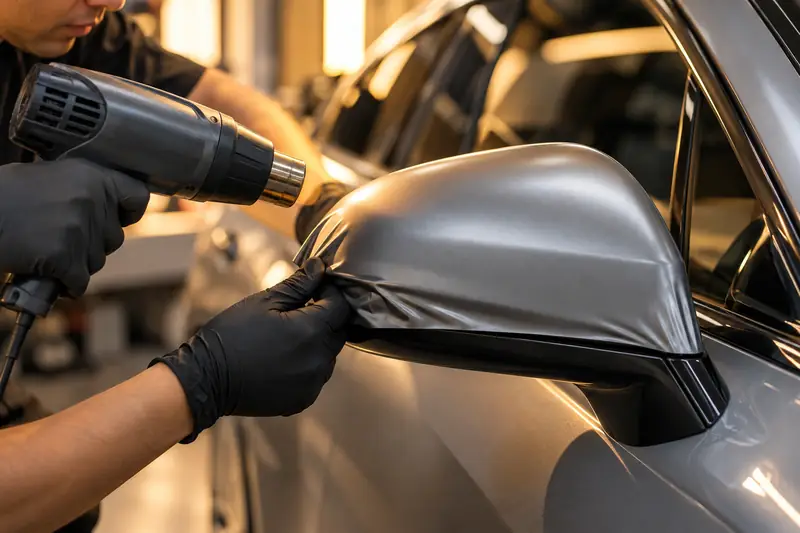
Short answer: A good heat gun for vinyl wrap has variable temperature and airflow, a stable stand and comfortable weight. Use low heat to soften film for stretching and higher heat for post-heating, checking film surface temperature with an infrared thermometer against the film's data sheet. Corded models cost roughly $30–200; cordless ones add battery cost.
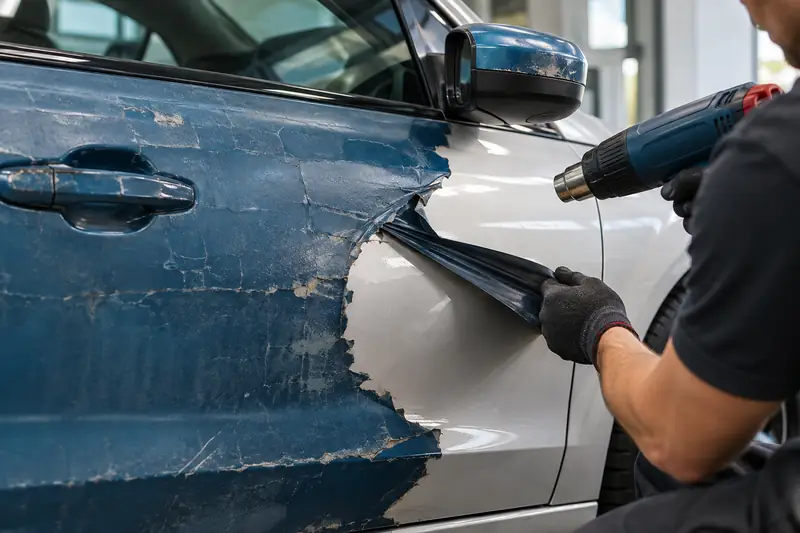
A heat gun is the second most important tool in a wrap kit after the squeegee. It softens vinyl so it stretches into recesses, relaxes wrinkles, and post-heats the film so it stays where you put it. This guide explains what installers need from a heat gun for vinyl wrap, which temperatures matter, how corded and cordless models compare, and what a heat gun costs, for wrap shops equipping new bays and for DIY wrappers buying their first one.
Key takeaways
- Choose a heat gun with variable temperature and fan speed; a single fixed high setting makes it easy to overheat and damage film.
- Film surface temperature is what matters, not the number on the dial. Use an infrared thermometer and follow the film's data sheet.
- Post-heating cast vinyl often targets roughly 90–100 °C (195–210 °F) at the film surface, but the exact figure differs by film.
- Corded heat guns give steady power for full-car wraps; cordless and mini heat guns are useful for edges, small parts and mobile work.
- A solid corded heat gun for wrapping typically costs about $30–200; professional and cordless kits can cost more.
What a heat gun does in vinyl wrapping
Vinyl wrap film is a thermoplastic. Warm it and it becomes soft and stretchy; let it cool and it holds its new shape, at least for a while. A car wrap heat gun is used for three different jobs:
- Softening for forming. Gentle heat makes the film pliable so it can be stretched over bumpers, mirrors and door handles.
- Relaxing and re-positioning. Light heat helps lift and lay film back down and shrink small wrinkles before final squeegeeing.
- Post-heating. After installation, stretched areas and edges are heated to a set temperature. This removes the film's "memory" so it does not pull back out of recesses or lift at edges.
Post-heating is the step that most often separates a wrap that lasts from one that fails in the first few weeks. Cast and calendered films behave differently: calendered PVC has more memory and is less forgiving in deep recesses, while cast film forms more easily. Check the data sheet for each film in a PVC vinyl wrap range before you set your heat routine.
Heat gun temperature for vinyl wrap
Heat gun temperature settings describe the air at the nozzle, which can be several hundred degrees. What actually counts is the temperature of the film surface, which depends on distance, airflow, speed of movement and the panel underneath.
| Task | Typical approach | What to check |
|---|---|---|
| Softening film to stretch | Low setting, keep the gun moving, warm until film is pliable | Film should feel soft, not glossy-wet or shrinking |
| Removing small wrinkles | Low heat, brief passes | Stop as soon as the wrinkle relaxes |
| Post-heating cast vinyl | Raise film surface to the data-sheet value, often around 90–100 °C (195–210 °F) | Confirm with an infrared thermometer |
| Post-heating calendered vinyl | Follow the data sheet; values are often lower than for cast | Watch for gloss change or shrinkage |
| Chrome and specialty films | Lower, more careful heat | These films can haze or discolor if overheated |
| PPF (TPU) | Gentle heat to help forming and edge set | Avoid stretching too far; follow the film's instructions |
A few rules installers follow:
- Keep the gun moving. Holding it still in one place is how film bubbles, burns or loses its finish.
- Hold a steady distance, often several inches from the film, and adjust by feel and thermometer readings.
- Let the panel cool before you check the result. Warm film can look perfect and then pull back as it cools if it was not post-heated properly.
- Never heat film that is already lifting on a dirty surface; cleaning comes first.
Overheating is common with matte, satin and chrome finishes, which can turn glossy or hazy. If you are unsure, test on an offcut stuck to a spare panel.
Corded vs cordless heat gun
Corded electric heat guns
Most shops run corded electric heat guns. They deliver steady, high heat output all day, they are lighter than a cordless tool with a large battery, and they cost less. Wattage on hot air heat guns is commonly in the 1,500–2,000 W range depending on the model and the mains voltage in your market. The downside is the cable, which can drag across a fresh panel, so many installers loop it over a shoulder or use a ceiling hook.
Cordless and battery powered heat guns
A cordless heat gun runs on a power tool battery. It is handy for mobile installs, door jambs, and quick touch-ups where a cable gets in the way. The trade-offs are lower and less consistent heat output, shorter run time and extra weight from the battery. Many installers own one as a second tool, not the main one, and keep spare batteries charged during a full wrap.
Mini and small heat guns
A mini or small heat gun has a narrow nozzle and lower output. It suits emblems, small trim pieces, interior parts, and craft or decal work. It is too slow for post-heating a full hood but useful for edges and tight corners where a full-size nozzle heats too much area.
Best heat gun for vinyl wrap: features that matter
Rather than chasing a particular brand, check these features when you choose the best heat gun for vinyl wrap in your shop:
- Variable temperature control. A dial or digital display with fine steps. Digital readouts make it easier to repeat settings between installers.
- Adjustable airflow. Lower airflow with moderate heat is gentler on film and keeps it from fluttering.
- Weight and balance. Installers hold the gun for hours. A light, well-balanced tool reduces fatigue and shaky passes.
- Stand or flat base. The gun should sit safely upright when you put it down to use both hands.
- Cool-down mode. Some models run the fan without heat to cool the element before storage.
- Nozzle options. A standard round nozzle covers most wrap work; a narrow nozzle helps on small areas. Avoid flat paint-stripping nozzles that concentrate too much heat.
- Cable length and quality. A long, flexible cable is easier to manage around a car.
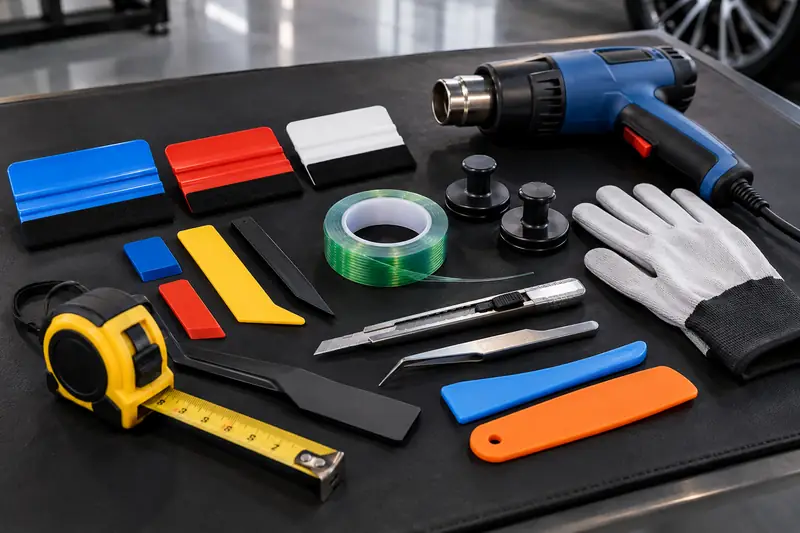
Pair the heat gun with an infrared thermometer. It costs little and turns post-heating from guesswork into a repeatable step. Our vinyl wrap tools guide lists the rest of a complete kit.
Heat guns for paint removal, PVC welding and roofing
The heat gun keyword covers far more than wrapping, and tools sold for other jobs are built differently.
- Paint removal heat guns run very hot to blister old paint. They work for removing old vinyl too, but their high settings are easy to misuse on new film.
- PVC welding, plastic weld and roofing heat guns (including tools for TPO roofing membranes) are industrial hot air tools designed to melt and fuse plastic at high temperatures, often with special nozzles and rollers. They are usually heavier and more expensive than a wrap gun, and they are not needed for vehicle wrapping.
- Industrial and heavy duty heat guns are built for continuous use and can be a good choice for busy shops, as long as they offer fine low-temperature control.
A general-purpose automotive heat gun with good low-end control covers wrapping, PPF edge work, decal removal and light plastic repairs.
How much does a heat gun cost?
How much a heat gun costs depends mostly on control, build quality and whether it is corded. These are typical retail ranges; prices vary by region, store and model.
| Type | Typical price range (USD) | Best for |
|---|---|---|
| Basic corded, two settings | About $20–40 | Occasional DIY use, decal removal |
| Corded with variable temperature | About $40–120 | DIY wraps and most shop work |
| Professional corded with digital control | About $100–250 | Busy wrap and PPF shops |
| Cordless, tool only | About $60–200 | Mobile work and second tool |
| Cordless with battery and charger | Higher than tool-only, depending on battery size | Users without a battery platform |
| Industrial welding or roofing hot air tool | Often several hundred dollars and up | Plastic welding and roofing, not wrapping |
For a first wrap, a variable-temperature corded heat gun plus an infrared thermometer is the usual sensible spend.
Where to buy a heat gun
You can buy a heat gun at hardware and home improvement stores, automotive parts stores, online marketplaces, and wrap supply distributors. Wrap suppliers often bundle heat guns with squeegees, knives and knifeless tape, which can save time when setting up a new bay.
Heat gun safety for wrap shops
Heat guns are simple tools that can still cause burns, fires and damaged cars.
- Put the gun on its stand, nozzle pointing away from film rolls, paper liners and people.
- Never point it at glass edges, rubber seals or plastic trim for long; these can warp or crack.
- Let the tool cool on its stand before storing it.
- Keep the work area clear of solvents, especially when cleaning with alcohol nearby.
- Unplug the gun when you leave the bay.
Buying tools and film for your shop
Mars Decorative Film supplies wrap tools alongside film, so shops can order squeegees, knives and tapes with their vinyl rolls in one shipment. MOQ is one roll and colors can be mixed. If you are testing a new film's heat behavior, ask for free samples and post-heat a few test pieces before the first full car. The guide on how to wrap a car shows where heat fits into each step.
Frequently asked questions
How much is a heat gun?
A basic corded heat gun typically costs about $20–40, and a variable-temperature model suitable for vinyl wrap usually runs about $40–120. Professional digital models and cordless tools with batteries cost more. Prices vary by region and store.
What temperature should a heat gun be for vinyl wrap?
Set the gun low for softening and stretching, then raise it for post-heating. Many cast vinyls are post-heated to roughly 90–100 °C (195–210 °F) at the film surface, but always follow the film's data sheet and measure with an infrared thermometer.
Can I use a hair dryer instead of a heat gun?
A hair dryer can soften film slightly for small decals, but it does not get film hot enough for reliable post-heating. For a car wrap, a proper heat gun is needed.
Is a cordless heat gun good enough for wrapping a car?
A cordless heat gun works for edges, small parts and mobile jobs. For a full car, most installers prefer a corded tool for steady heat and run time, and keep a cordless gun as a backup.
Where can I buy a heat gun?
Heat guns are sold at hardware stores, automotive stores, online marketplaces and wrap supply distributors. Wrap suppliers often bundle them with other installation tools.
Can a heat gun damage car paint?
Yes, if held too close or too long in one spot. Keep the gun moving, use moderate settings and take extra care around resprayed panels, plastic trim and rubber seals.