PPF · 8 min read
Tail lamp tint and headlight film: options, legality and install
Tail lamp tint and headlight protection film explained: smoked vs clear film, legality questions, cost, and how to apply tint to tail lights and headlights.
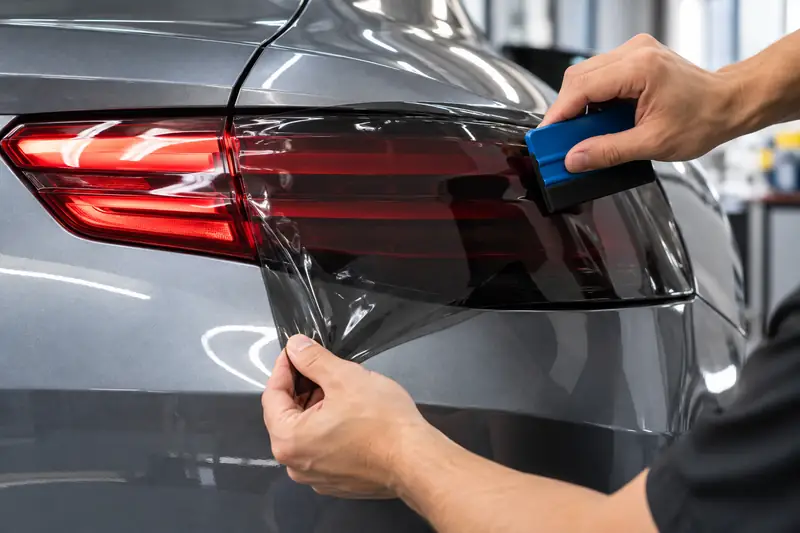
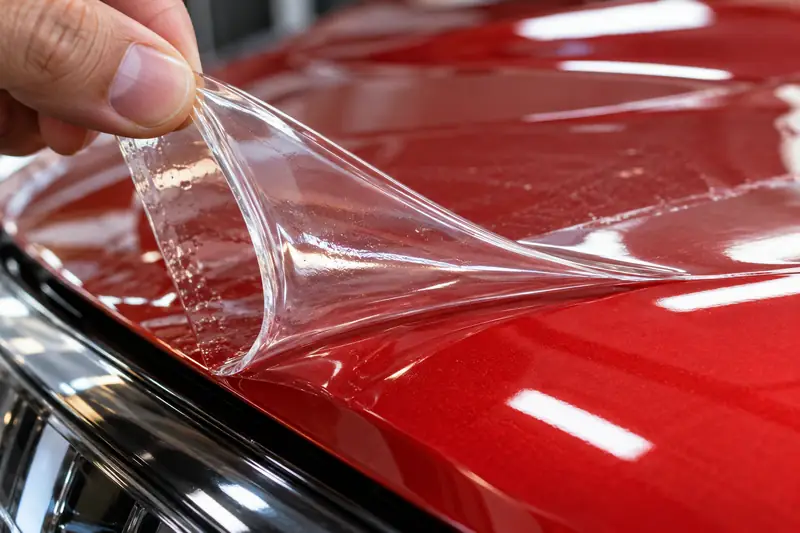
Short answer: Tail lamp tint is a thin smoked film, usually TPU-based like paint protection film, applied over tail lights or headlights to darken them and protect the lens. Clear headlight film prevents chips and yellowing. Whether tinted lights are legal depends on local rules, which generally require lights to stay clearly visible and correctly colored.
Tail lamp tint is one of the cheapest ways to change the look of a car. A light or dark smoked film over the tail lights makes the rear end look cleaner, and clear film on the headlights keeps lenses free of chips and haze. This guide covers which films work on lights, what the legal questions are, what a job costs, and how installers apply tint to curved lenses. It is written for wrap and PPF shops adding light work, and for owners deciding between film, covers and paint.
Key takeaways
- Most tail light tint film and headlight film is TPU, the same family as paint protection film, made in clear and in light, medium and dark smoke.
- Clear headlight protection film guards against stone chips and helps protect polycarbonate lenses from hazing; smoked film mainly changes appearance.
- Lighting rules vary by country and state. In general, lights must stay visible at a required distance and keep their required color. Check local rules before tinting any light.
- Use film made for lights, not window tint. Window film is designed for flat interior glass, not curved exterior lenses that get hot.
- Film is removable and replaceable. Spray-on tail light paint is not easily reversible.
Tail light tint options: film, covers or paint?
There are three common ways to get smoked tail lights.
| Option | Look | Reversible | Protects lens | Typical concerns |
|---|---|---|---|---|
| Tint film (TPU) | Light to dark smoke, gloss finish | Yes, peels off with heat | Yes | Needs careful heat and stretch on deep curves |
| Snap-on tail light cover | Molded smoked shell | Yes | Partly | Fit varies by model; can trap dirt and moisture |
| Tail light paint (tint spray) | Any shade, depends on coats | Difficult; needs sanding or polishing | No | Uneven coats, overspray, hard to undo |
Film is the choice most professional shops prefer. It goes on in a consistent shade from one roll, it peels off when the car is sold or the rules change, and TPU film adds a protective layer to the lens. A rear tail light cover can suit a single popular model, but it is a separate molded part. Tail light paint is the cheapest in materials and the most difficult to undo.
Smoke levels
Light smoked tail lights keep most of the light output and give a subtle tint. They are the most common request and the easiest to keep within visibility rules. Medium smoke is a clearer style change. Dark smoke and "blacked out tail lights" make the lights look nearly black when off. They can reduce brake light and turn signal visibility, which is where legal risk rises.
Film shades are not standardized between suppliers. Always test a sample on the actual light, turned on, in daylight and at night.
Headlight protection film and headlight tint
Headlights take the same stone hits as the bumper. Most modern lenses are polycarbonate with a factory hard coat. Once that coat is chipped or worn, the lens can haze and yellow. Clear PPF for headlights is one of the most common add-ons in a front-end package. It is usually included in a full-front job. Self-healing TPU keeps light scratches from building up.
Tinted headlights are a different matter. A light smoke on the headlight housing changes the look, but any film over the beam reduces output. Yellow headlight tint is popular for a retro or fog-light look. Blue headlight tint changes the beam color, which many places restrict on front lights. Most shops either decline darker or colored headlight tint, or limit it to show cars and off-road use. It is also why many installers keep headlight film clear and focus smoke on tail lights.
For window tint ranges and what VLT means, see our window tint film VLT guide.
Are tinted tail lights and headlights legal?
There is no single answer, because vehicle lighting rules vary by country, state and province. Most rules, though, follow a few shared principles:
- Visibility. Brake lights, tail lights and turn signals must be visible from a specified distance, day and night.
- Color. Rear lights must usually show red (with amber or red turn signals in many places), and headlights must show white or a permitted yellow. Film that changes the emitted color can fail this.
- Covers over lights. Some places restrict any cover or film over a light, regardless of shade.
- Inspection. Areas with periodic vehicle inspections may fail a car with dark tint on its lights even when it is driven without issue elsewhere.
So, are smoked tail lights legal? Light smoke may pass where dark tint does not, but "are blacked out tail lights illegal" and "is it illegal to tint your headlights" depend entirely on local wording and enforcement. Shops should check the rules in their market, explain them to customers, and keep records of what was installed. Owners should check their local traffic code or ask the inspection authority before tinting.
How much does tail light tint cost?
Prices vary by region, vehicle and shop. As a rough guide in most US markets:
| Job | Typical range (USD) | Notes |
|---|---|---|
| DIY tail light tint kit | About $20–80 | Pre-cut for popular models, or a small sheet |
| Professional tail light tint | About $100–300 | More for complex or wraparound lights |
| Clear headlight protection film | About $100–250 | Often bundled in a front-end PPF package |
| Tint plus clear PPF, all lights | About $250–500 | Depends on size and number of light units |
Cars with large wraparound lights, full-width light bars or many separate light units take longer. A Dodge Charger's full-width tail light, for example, is more work than two small corner lamps.
How to tint car tail lights
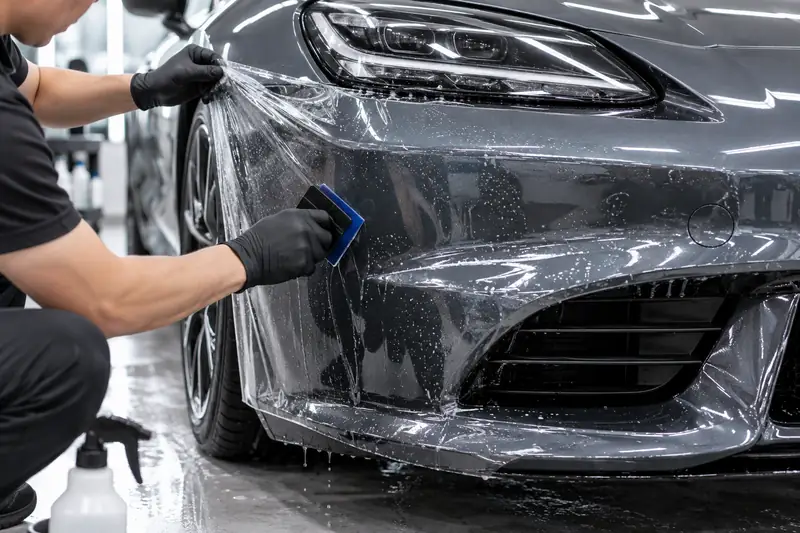
Tail light tint film is installed much like paint protection film: wet, with slip solution, then heated and stretched around the curves. The same steps work for headlights.
- Clean the lens thoroughly with soap, water and then isopropyl alcohol. Clay the surface if it is rough. Any dust shows under smoked film.
- Cut a piece with a margin of a few centimeters on all sides, or use a pre-cut pattern from a plotter.
- Spray slip solution on the lens and on the adhesive side of the film as you peel the liner.
- Float the film into position, centered, with an even margin.
- Anchor the center with a firm squeegee stroke, using a tack solution or a light pass to set it.
- Work outward, pushing solution out from the center. On deep curves, warm the film with a heat gun on low and stretch it gently into place. Keep stretch even to avoid distortion in the smoke.
- Trim the edges carefully along the lens edge or seam. Avoid cutting into paint or trim; knifeless tape or a pre-cut pattern helps here.
- Post-heat the edges lightly so the film settles, then squeegee them down again.
- Let it cure. Avoid washing for a day or two while remaining moisture evaporates.
Can you use window tint for tail lights?
It is not recommended. Window tint is a thin polyester film designed for the inside of flat or gently curved glass. It does not stretch, and it is not meant to withstand weather, washing and heat on an exterior lens. It tends to wrinkle, peel and fade. Use a TPU-based light tint film that is designed to stretch, self-heal and be removed cleanly.
Choosing light film for your shop
Look for films that are clear and consistent, with:
- TPU base for stretch over curved lenses and self-healing of light swirls.
- Even pigment with no streaks or hazy patches, checked with the light on.
- Several smoke levels so customers can choose a lighter, more compliant option.
- Clean-release adhesive so the film can be removed later.
Many shops simply use their clear TPU PPF for headlight protection, and stock a few smoked or tinted shades for tail lights alongside their color PPF range. Mars Decorative Film also makes dedicated light tint film in our tint film line; request samples to test on real lenses before committing to stock.
For removing old film, see what paint protection film is and how to remove it.
Frequently asked questions
Can you tint tail lights?
Yes. Tail lights are usually tinted with a smoked TPU film applied wet, heated and stretched around the lens. Light smoke changes the look with less loss of visibility. Check your local lighting rules before going darker.
Are tinted tail lights illegal?
It depends on where you live. Rules vary by country and state, but they generally require brake lights and turn signals to stay visible at a set distance and keep their required color. Very dark tint is the most likely to fail inspection or attract a citation.
Are tinted headlights legal?
In many places any film that reduces headlight output or changes the beam color is restricted, and colored films such as blue are commonly not allowed on front lights. Clear protection film is generally a different matter. Check your local vehicle code before installing tint on headlights.
How do you apply headlight tint?
Clean the lens, then spray slip solution on it and on the film adhesive. Position the film, squeegee from the center out, and use gentle heat to stretch it around curves. Trim the edges, post-heat lightly, and let it cure for a day or two.
Can you use window tint to tint tail lights?
It is not a good idea. Window tint is a non-stretch polyester film made for the inside of glass. On an exterior curved lens it wrinkles, lifts and fades. Light tint film made from TPU is designed for this job.
How much does tail light tint cost?
In most US markets a professional tail light tint typically costs roughly $100–300. DIY kits cost less, roughly $20–80. Prices vary with the vehicle, the size of the lights and the region.
Does headlight protection film reduce brightness?
Quality clear PPF is very transparent and has little visible effect on light output. Smoked or colored films reduce output more as the shade gets darker.