Tools & installation · 7 min read
Knifeless tape: how vinyl wrap cutting tape works and how to use it
Knifeless tape explained: how vinyl wrap cutting tape works, finish line vs design line types, step-by-step use for seams and stripes, and mistakes to avoid.
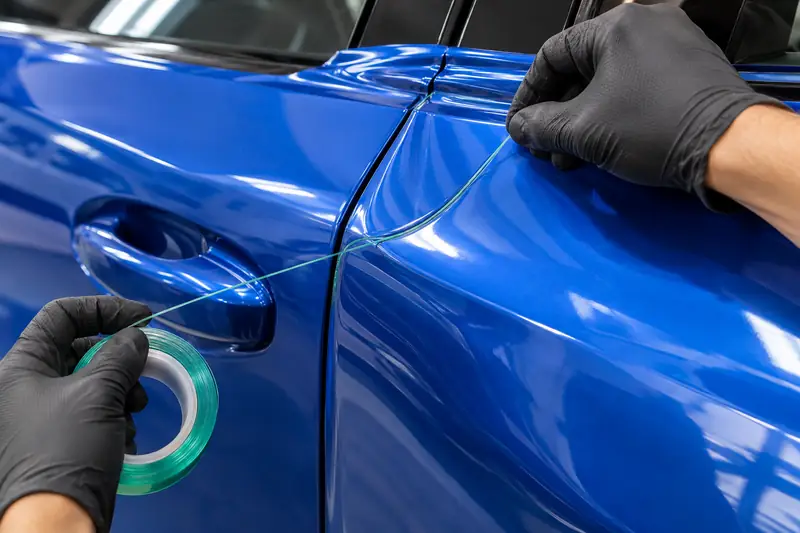
Short answer: Knifeless tape is a thin adhesive tape with a strong filament inside. You lay it on the car, apply vinyl over it, then pull the filament up through the film to cut a clean line without a blade touching the paint. Finish line types suit straight seams and edges; design line types follow tighter curves.
Knifeless tape is one of the simplest tools in a wrap kit and one of the most useful. It lets installers cut vinyl on the car without a blade ever touching the paint, which protects the clear coat, glass and trim, and it makes clean seams, stripes and two-tone designs much easier. This guide explains how vinyl wrap cutting tape works, the main types, how to use it step by step, and the mistakes that cause ragged cuts, for wrap shops training new installers and DIY wrappers alike.
Key takeaways
- Knifeless tape has a high-strength filament embedded in a thin adhesive carrier; pulling the filament cuts through the vinyl above it.
- It removes the risk of blade cuts in paint, which is the main reason many shops use it on every job.
- Finish line tape is for straight lines, seams and edges; design line tape is narrower or more flexible for curves and shapes.
- Lay the tape flat, without stretching, on a clean surface, and leave a tail at each end to pull.
- Pull the filament back over itself at a low, steady angle, keeping slight tension on the vinyl.
How knifeless tape works
A roll of knifeless tape looks like a narrow masking tape with a fine thread running through it. The thread is a strong filament, and the carrier is a low-profile adhesive tape that holds the filament exactly where you place it.
The process has three stages:
- Lay the tape on the vehicle along the line you want to cut.
- Apply the vinyl over the tape as normal, squeegeeing it down.
- Pull the filament up through the vinyl. It cuts the film cleanly along the tape line, and the waste is peeled away. The carrier tape stays under the film edge or is removed with the waste, depending on the tape design and the job.
Because the cut is made from beneath, nothing sharp touches the car. That matters most on expensive paint, on fresh resprays and on glass, where a knife slip leaves permanent marks.
Types of knifeless tape
Product names vary between suppliers, but most knifeless film for cutting falls into a few groups:
| Type | Typical use | Notes |
|---|---|---|
| Finish line tape | Straight cuts, panel seams, edges, overlaps | Wider carrier for stability on long runs |
| Design line tape | Curves, logos, stripes, freehand shapes | Narrower or more flexible carrier that bends without wrinkling |
| Bridging or perforated types | Spanning gaps, panel joints and inlay work | Used where the cut must cross a gap or create an inlay |
| PPF-specific cutting tape | Paint protection film installs | Made to cope with wet application; check the product's instructions |
For most color-change wraps, a roll of finish line tape and a roll of design line tape cover nearly every job. Standard vinyl wrap knifeless tape is designed for dry vinyl install. Wet-applied PPF needs a tape made for that purpose, since slip solution can stop a standard carrier from holding.
Where to use knifeless tape on a wrap
- Seams and overlaps. Joining two pieces of film on a large panel, such as a van side or a roof, along a planned seam line.
- Edges near glass and trim. Finishing film at window rubbers, lights and badges where a blade could cut seals or glass.
- Stripes and two-tone designs. Racing stripes, roof and pillar contrasts, and partial wraps where the line falls on open paint.
- Inlays. Cutting a window in one film to set another film in, such as a carbon fiber section in a gloss panel.
- Graphics and lettering on paint. Freehand shapes and logos laid out with design line tape.
Where a cut falls on a panel gap or an edge you can wrap around, a knife may still be faster. Many installers use both and pick the tool for each cut.
How to use knifeless tape step by step
- Clean the surface. Wipe the area with isopropyl alcohol solution and let it dry. Wax, dust or oil stop the tape from sticking and let it shift during the pull.
- Plan the line. Mark the path with low tack masking tape or a grease pencil on the masking tape if needed. For stripes, measure from fixed body lines so both sides match.
- Lay the tape without stretching. Unroll a short length at a time and press it down flat. Stretched tape tends to pull back and lift, especially on curves.
- Leave tails. Leave a few centimeters (about an inch or two) of tape beyond the end of the cut line at each end so you can grab the filament later. Fold the end back on itself to make a tab.
- Avoid crossing tapes directly. Where two cut lines meet, lay the second tape so its filament crosses over the first, and plan the pulling order so the first cut does not trap the second filament.
- Apply the vinyl. Lay the film over the tape and squeegee it down firmly along the tape line, so the film sits flat over the filament.
- Pull the filament. Lift the tail, then pull the filament back over itself at a low angle with steady speed. Hold light tension on the vinyl with your other hand so the cut stays clean.
- Remove the waste. Peel away the excess film. If the design calls for it, remove the exposed carrier tape too.
- Squeegee and post-heat the edge. Press the new edge down firmly and post-heat it to the film's data-sheet temperature so it does not lift.
For the full sequence of a wrap, see the how to wrap a car guide.
Common knifeless tape mistakes
- Pulling too fast or at a high angle. This can tear the film instead of cutting it, leaving a jagged edge.
- Stretching the tape around curves. The tape lifts as the film is applied, and the cut line drifts.
- Too little film overlap past the tape. If the vinyl barely covers the tape, the filament can pull out from under the edge.
- Filament breaks on thick film. Thicker or specialty films, such as some chrome, textured or heavy cast films, need more care. Test on an offcut first.
- Old or heat-damaged tape. Store rolls in a cool, dry place; old adhesive may not hold on long runs.
- Forgetting the tail. Without a tail you will have to dig the filament out, which risks damaging the film.
Knifeless tape vs a vinyl knife
| Knifeless tape | Snap-off knife | |
|---|---|---|
| Paint safety | No blade on the car | Risk of cuts if the blade slips |
| Speed | Slower on short trims, fast on long seams | Fast for edges and panel gaps |
| Line control | Line set before film goes on | Follows panel edges and gaps |
| Cost per job | Consumable tape | Blades are inexpensive |
| Best for | Seams, stripes, designs, edges near glass | Trimming at gaps, edges, wrap-arounds |
Most shops keep both on the tool belt. Knifeless tape is the safer choice wherever the cut sits on open paint. The vinyl wrap tools guide covers the rest of a full kit.
Choosing the right film for knifeless cuts
Cutting quality also depends on the film. Conformable cast and air-release films usually cut cleanly with knifeless tape. Very thick, metallized or textured films can resist the filament or leave a rougher edge, so test first. Our PVC vinyl wrap range includes gloss, satin, matte and metallic films for color changes and stripes.
Buying knifeless tape for your shop
Knifeless tape is a consumable, so shops go through it quickly. Mars Decorative Film supplies cutting tapes alongside squeegees, knives and other wrap tools, and they can be added to a mixed film order from a single roll MOQ. Ask for free film samples to test how each film cuts before you stock it.
Frequently asked questions
What is knifeless tape used for?
Knifeless tape is used to cut vinyl wrap on the vehicle without a blade. It is common for seams, stripes, two-tone designs, inlays and edges near glass or trim where a knife could cause damage.
Can you use knifeless tape with PPF?
Use a cutting tape made for PPF. Standard vinyl wrap knifeless tape is designed for dry vinyl install, and slip solution used for PPF can stop it from holding in place.
Does knifeless tape stay under the vinyl?
Often part of it does. After the cut, the carrier tape may sit under the film edge or be removed with the waste, depending on the tape type and design. Check the product instructions.
Can knifeless tape damage paint?
Knifeless tape is designed to cut without touching paint, and the adhesive is made to remove cleanly. As with any tape, fresh or poorly bonded paint may lift, so take care on resprays.
What is the difference between finish line and design line tape?
Finish line tape is for straight seams and edges and has a more stable carrier for long runs. Design line tape is narrower or more flexible so it can follow curves and shapes.
How do you make knifeless tape cut cleanly?
Lay it flat without stretching, squeegee the vinyl down well over it, and pull the filament back over itself at a low, steady angle while holding light tension on the film.