Vinyl wraps · 7 min read
How long does a car wrap last, and how do you make it last longer?
How long does a car wrap last? Typical lifespans by film type and climate, a care routine that extends wrap life, safe cleaners and paint protection facts.
Short answer: A professionally installed car wrap made from quality cast vinyl typically lasts about 5 to 7 years, while calendered or economy films often last 2 to 4 years. Hot sun, horizontal panels, harsh washing and poor installation shorten wrap life; regular hand washing, shade and timely removal extend it.
How long does a car wrap last? For most quality wraps the answer is several years, but the real number depends on the film, the climate, the installer and how the car is cared for. This guide is for car owners planning a wrap and for wrap shops that want to set honest expectations with customers. It covers typical lifespans, the factors that shorten them, a practical care routine, and whether a wrap really protects the paint underneath.
Key takeaways
- Quality cast vinyl wraps typically last about 5–7 years; calendered or economy films often last 2–4 years.
- Horizontal panels (hood, roof, trunk) age faster than vertical sides because they take direct sun.
- Specialty films like chrome and some color-shift films usually have shorter outdoor lives than standard colors.
- Hand washing, parking in shade and avoiding harsh solvents are the biggest controllable factors.
- A vinyl wrap protects paint from UV, light scratches and swirl marks, but not from stone chips the way PPF does.
- Removing a wrap within its rated life makes removal easier and safer for the paint.
How long do car wraps last?
Most customers asking "how long do vinyl wraps last" want a single number. Here are realistic ranges for professionally installed films:
| Film type | Typical outdoor life (vertical panels) | Notes |
|---|---|---|
| Premium cast PVC vinyl (gloss, satin, matte) | About 5–7 years | Standard for full color changes |
| PET liner vinyl | About 4–7 years, depending on grade | Paint-like gloss; similar face film to cast PVC |
| Polymeric calendered vinyl | About 3–5 years | Fine for flat panels and fleets |
| Economy calendered vinyl | About 1–3 years | May shrink and crack sooner |
| Chrome and mirror films | About 1–3 years | Delicate surface, more sensitive to UV |
| Printed and laminated wrap | About 3–7 years | Depends on ink, media and laminate |
| Color PPF (TPU) | Often longer than vinyl | Thicker, self-healing top coat |
These are typical ranges, not guarantees. Always check each film's data sheet and the installer's warranty. In very hot, sunny climates, expect the lower end; in mild climates with garage parking, the upper end is realistic.
How long does vinyl wrap last on a car's horizontal panels?
Hoods, roofs and trunk lids get direct overhead sun and collect heat, bird droppings and tree sap. They often fade or lose gloss a year or more before the sides. Many shops rewrap only the horizontal panels to extend the life of an otherwise healthy wrap.
What shortens wrap life
Sun and heat
UV is the main enemy. It fades pigments, dries out the film and eventually makes it brittle. Darker colors absorb more heat. Matte and satin films can also show wear faster on high-heat areas.
Film quality
Cast films are made without built-in stress, so they stay dimensionally stable for years. Calendered films are rolled and stretched during production and tend to shrink over time, which can pull edges back and expose paint. Our TPU vs PET vs PVC comparison explains the material differences.
Installation
Poor installation is a common reason wraps fail early. Overstretched film, missed post-heating and edges wrapped too tightly can lead to lifting, especially in recesses. Post-heating to the temperature on the film's data sheet — often around 90–100 °C (195–210 °F) for cast film — locks the film into its new shape.
Washing and chemicals
Automatic brush washes, high-pressure jets aimed at edges, and strong solvents can scratch, lift or stain the film. Fuel spills left to sit can also damage some films.
Vinyl wrap maintenance: a practical care routine
Good car wrap maintenance is simple and mostly about avoiding damage.
- Wait before the first wash. Let the adhesive settle — many installers suggest about a week, but follow your installer's advice.
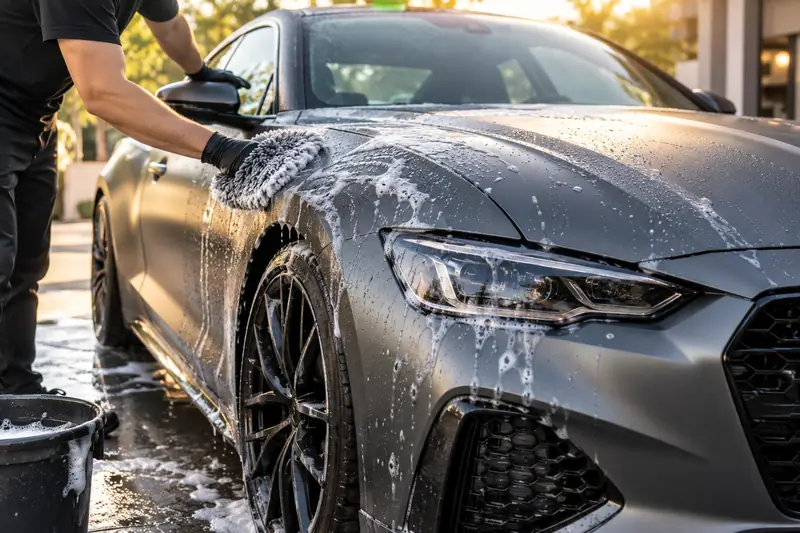
- Hand wash every 1–2 weeks. Use a pH-neutral car shampoo, two buckets and a soft microfiber mitt.
- Rinse gently. If you use a pressure washer, keep the nozzle at a safe distance and never aim directly at edges or seams.
- Dry with a soft microfiber towel or a blower to avoid water spots.
- Remove contaminants quickly. Bird droppings, bug splatter, tree sap and fuel should be cleaned off as soon as possible.
- Park in shade or a garage whenever you can, and use a breathable car cover for long parking periods.
- Inspect edges every few months and have lifting fixed early before dirt gets under the film.
Vinyl wrap cleaner and car wrap cleaner products
Dedicated vinyl wrap cleaner or vehicle wrap cleaner products are formulated to be safe on film. General rules:
- Choose pH-neutral products without strong solvents or abrasives.
- For matte and satin wraps, avoid waxes and polishes that add gloss or leave patchy shine. Use matte-specific cleaners.
- Isopropyl alcohol diluted with water is commonly used for spot cleaning, but test on a hidden area first.
Vinyl wrap protectant and coatings
A vinyl wrap protectant spray or a ceramic coating made for wraps can add UV resistance and make washing easier. Make sure the product is compatible with your finish — especially matte films. Coatings do not make a wrap last forever, but they can slow fading and staining.
Does vinyl wrap protect paint?
Partly. A vinyl wrap acts as a barrier against UV, light scratches, swirl marks from washing, and minor environmental damage. Many owners wrap a new car partly to keep the factory paint in good condition for resale.
What a standard vinyl wrap does not do well is stop stone chips or deep scratches. Typical color-change vinyl is thin — often around 3–4 mil — so a sharp impact goes through to the paint.
Clear wrap car protection
If paint protection is the main goal, clear paint protection film is the better choice. It is a thicker TPU film with a self-healing top coat that resists stone chips and heals light scratches with heat. Color PPF combines color change and protection in one layer. See our clear TPU PPF range and the color PPF buyer's guide for details.
| Goal | Best film choice |
|---|---|
| New color, light protection | Cast PVC or PET liner vinyl |
| Maximum paint protection, original color | Clear TPU PPF |
| New color plus stone-chip protection | Color PPF |
| Short-term promo graphics | Printed calendered or cast vinyl |
When should a car wrap be removed?
Plan to remove a wrap before it reaches the end of its rated life. Signs it is time:
- Fading, chalky surface or loss of gloss.
- Cracking, especially on the hood and roof.
- Edges lifting or shrinking back from panel edges.
- Adhesive starting to bond harder to the paint.
A wrap removed on time usually peels off in large pieces with gentle heat. A wrap left too long can crack into small pieces and leave adhesive behind, which takes much longer and costs more. Read our car wrap removal guide for the process.
Can you vinyl wrap plastic?
Yes. Plastic trims, mirror caps, bumpers and interior panels can be wrapped. Clean them thoroughly, use a primer or adhesion promoter on low-energy or textured plastics if needed, and expect slightly shorter life on heavily textured surfaces.
Choosing film that lasts
Film quality sets the ceiling on how long a wrap can last. Mars Decorative Film checks incoming raw materials, inspects film in-line and releases rolls one by one with batch numbers, so shops can trace any issue back to its production run. Browse the PVC vinyl wrap range or request free samples through the contact page to test films in your own climate.
Frequently asked questions
How long does a car wrap last?
A quality cast vinyl wrap installed by a professional typically lasts about 5–7 years. Economy calendered films and chrome films usually last less, often 1–4 years. Climate, parking and care make a big difference.
How long does a vehicle wrap last on a commercial van?
Printed and laminated van wraps typically last about 3–7 years, depending on the media, ink, laminate and how much sun the vehicle gets. Fleets parked outdoors in hot climates should expect the lower end.
Do car wraps last longer in a garage?
Yes. Parking in a garage or shade reduces UV exposure and heat, which are the main causes of fading and cracking. Garage-kept wraps often reach the upper end of their rated life.
Does car wrap protect paint?
A vinyl wrap protects paint from UV, light scratches and wash swirls. It offers limited protection against stone chips; clear or color PPF is the better choice when impact protection matters.
What is the best cleaner for a vinyl wrap?
Use a pH-neutral car shampoo or a dedicated vinyl wrap cleaner without strong solvents or abrasives. For matte and satin wraps, choose matte-safe products that do not add gloss.
Can I take a wrapped car through a car wash?
Hand washing is safest. Touchless washes are usually acceptable, but brush washes can scratch the film and lift edges. Check your installer's warranty terms before using any automatic wash.
How long can a car wrap last if well maintained?
With premium cast film, good installation, garage parking and regular hand washing, wraps can reach or sometimes exceed the upper end of their rated life. Horizontal panels may still need replacing earlier.