Vinyl wraps · 8 min read
Metallic car wrap: metallic colors, satin metallic and glitter vinyl explained
Metallic colors for car wraps explained: gloss and satin metallic vinyl, glitter and brushed films, how they compare to metallic car paint, and install tips.
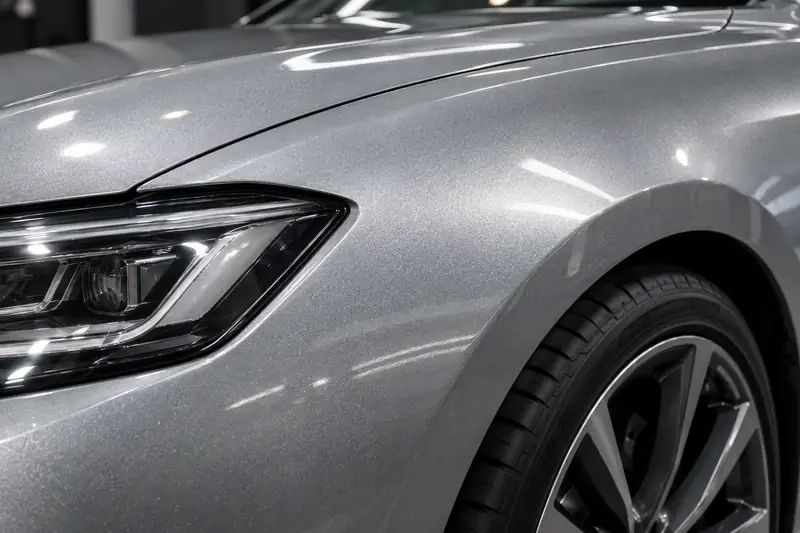
Short answer: Metallic colors in car wraps come from fine reflective flakes in the vinyl, giving a sparkle that shifts as light moves across the panel, much like metallic car paint. Metallic vinyl wrap is sold in gloss metallic, satin metallic, brushed metal and glitter or metal flake styles. Install every panel in the same roll direction so the flake reads evenly.
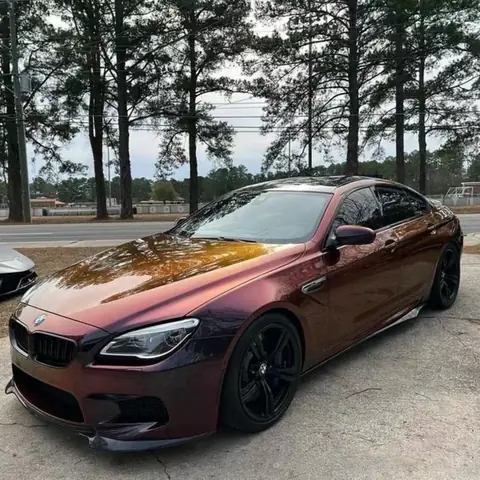
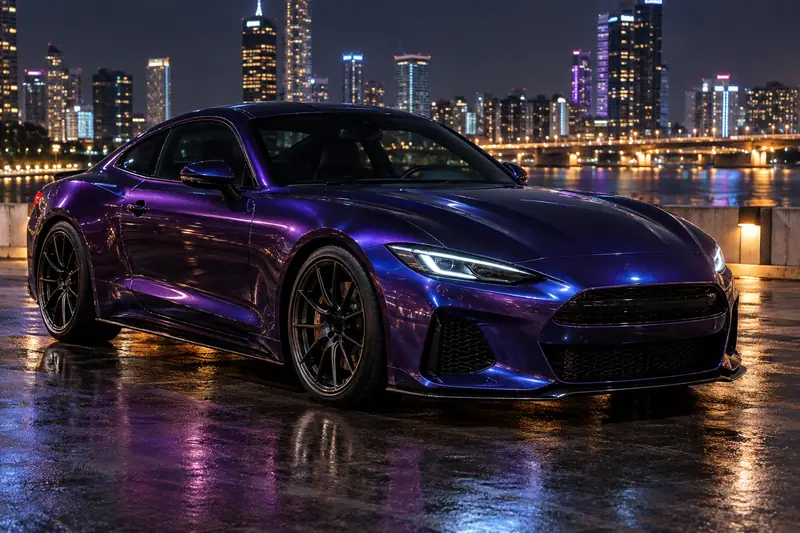
Metallic colors are paint or film colors that contain tiny reflective flakes, so the surface sparkles and changes brightness as light and viewing angle move. On cars, metallic car paint has been the most common factory finish for decades, and metallic car wrap films reproduce that look in vinyl. This guide is for wrap shops building a color range and for owners choosing a wrap. It explains how metallic vinyl works, the main styles from gloss metallic to glitter, popular metallic car wrap colors, how wraps compare with metallic automotive paint, and how to install metallic films so every panel matches.
Key takeaways
- Metallic vinyl contains fine aluminum-type flakes or effect pigments that reflect light, creating sparkle and depth.
- The main styles are gloss metallic, satin metallic, brushed metal and glitter or metal flake; chrome is a separate mirror finish.
- Metallic films are directional: panels installed in different roll directions can look slightly different in shade.
- Metallic black, silver and grey are the most common metallic car wrap colors; blues, greens and reds are popular show colors.
- Glitter car wraps use larger flakes, are usually thicker and stiffer, and need more heat and care on deep curves.
- A metallic wrap typically costs about the same as a standard gloss color, while glitter and chrome cost more.
What makes a color metallic?
A metallic color has reflective particles mixed into it. In metallic car paint, small aluminum flakes sit in the base coat under a clear coat. In metallic vinyl, similar flakes or effect pigments are embedded in the colored layer of the film, often under a clear protective top layer.
The flakes act like tiny mirrors. Where they face the light, the panel looks bright; where they angle away, it looks darker. This brightness change across a curve is called flop or travel, and it is what makes metallic paint colors show body lines so well. Solid (non-metallic) colors look the same from every angle by comparison.
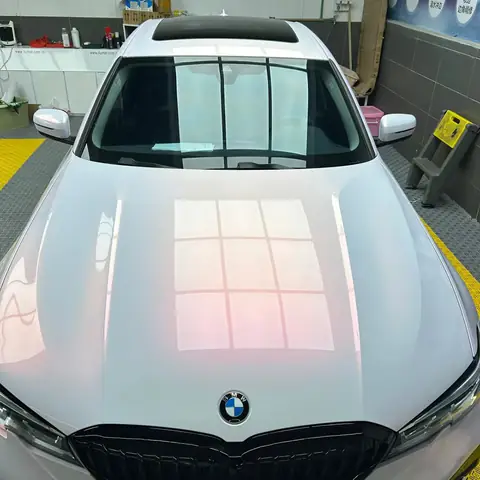
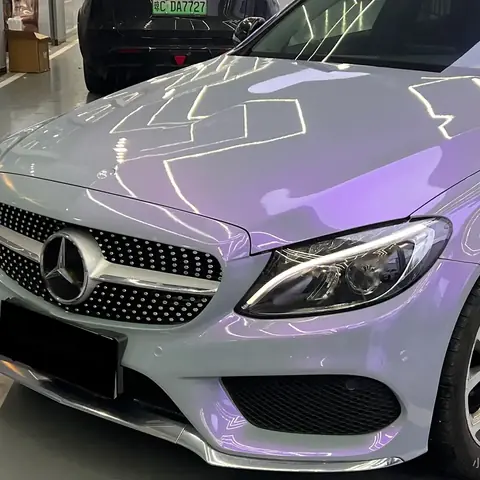
Pearl or pearlescent colors are related but use mica-type pigments that refract light and add a soft color glow rather than a hard sparkle. Many films combine both.
Types of metallic vinyl wrap
Metallic vinyl wrap comes in several styles that look very different on a car. The table compares the main ones.
| Style | Look | Flake size | Install difficulty | Best for |
|---|---|---|---|---|
| Gloss metallic | Paint-like shine with fine sparkle | Fine | Standard | Factory-paint look, daily drivers |
| Satin metallic | Soft sheen with a glowing metallic depth | Fine | Standard | Modern, understated builds |
| Matte metallic | Flat surface with subtle shimmer | Fine | Standard; matte care needed | Stealth looks |
| Brushed metal | Fine directional lines like brushed aluminum or steel | Linear texture | Moderate; grain direction matters | Roofs, mirrors, interior trim, accents |
| Glitter or metal flake | Large, visible sparkle | Coarse | Harder; thicker film | Show cars, motorcycles, accents |
| Chrome | Mirror reflection | N/A (metallized layer) | Hardest | Show cars, accents |
For a broader comparison of finishes, see gloss, satin, matte and chameleon finishes. Chrome works differently from metallic film and is covered in our chrome wrap guide.
Popular metallic car wrap colors
Metallic car wrap colors follow the same trends as metallic car paint colors: neutral shades lead, with a strong niche for saturated blues, greens and reds. A rough metallic color chart for wraps looks like this:
| Color group | Example shades | Typical finish |
|---|---|---|
| Black | Metallic black, black sparkle, black satin metallic | Gloss or satin |
| Silver | Bright silver, liquid metal silver, brushed steel | Gloss, satin, brushed |
| Grey | Gunmetal, titanium grey, Grigio Telesto-style grey | Gloss or satin |
| Blue | Storm blue, midnight blue, electric blue | Satin or gloss metallic |
| Green | Emerald, British racing green, olive | Gloss metallic |
| Red | Candy red, metallic red, wine | Gloss metallic |
| Warm | Gold, bronze, copper | Gloss, satin, chrome |
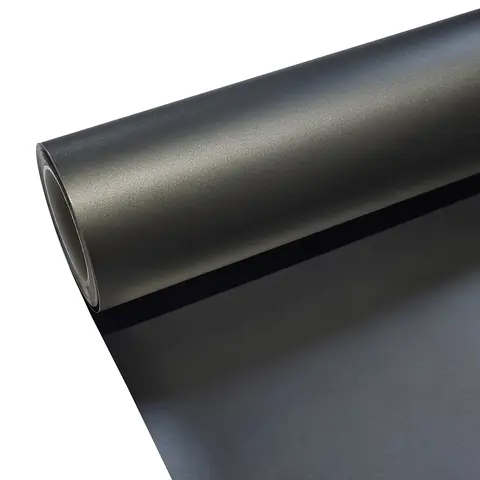
Some real Mars Decorative Film examples show the spread: Liquid Metal Silver, Storm Blue satin metallic, Emerald Green super gloss metallic, a Gloss Metallic Red on a PET liner, plus brushed films such as Titanium Grey satin brushed metal, Light Gray satin brushed steel and Black satin metallic brushed.
Metallic black car wrap
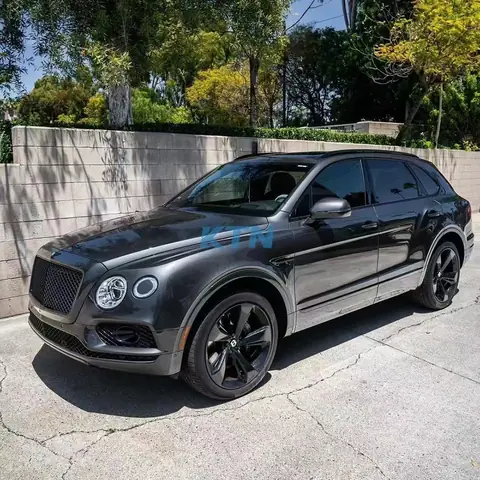
A metallic black car wrap looks deep black in shade and shows fine sparkle in sunlight, so it hides light dust better than solid gloss black and looks less flat than matte. Metallic black vinyl wrap is one of the safest choices for a first wrap. For solid blacks, compare our satin, matte and gloss black wrap guide.
Metallic silver vinyl wrap
Metallic silver vinyl wrap ranges from bright, almost chrome-like silver to soft satin silver. Silver shows body shape strongly and hides dirt well. Brushed silver and brushed steel films work especially well on roofs and mirrors as contrast.
Grey metallic wraps
Grey metallic wraps are popular because they look modern and are easy to live with. Many owners search for factory supercar greys such as Grigio Telesto; a metallic grey wrap gives a similar effect, although no film is an exact match for a specific paint code. See the grey car wrap guide for more grey shades.
Glitter car wrap and sparkle vinyl
A glitter car wrap uses much larger flakes than standard metallic vinyl, so each speck is visible and the car sparkles like a bass boat or a stage costume. Black glitter vinyl wrap and black diamond glitter car wraps are the most requested, because the dark base makes the sparkle stand out.
Glitter vinyl wrap behaves differently from fine metallic film:
- Thicker and stiffer. Large flakes add bulk, so the film is harder to stretch into deep recesses and may need relief cuts or inlays.
- Rougher surface. Some glitter films have a slightly textured top, which holds dirt more than smooth gloss. Use soft wash mitts and a foam pre-wash.
- Visible seams. Seams and overlaps show more on glitter, so plan seam lines carefully.
For a sparkle car wrap that is easier to install, a gloss metallic with larger-than-average flake is a good middle ground.
Metallic car paint vs metallic vinyl wrap
Metallic automotive paint and metallic vinyl look similar from a few steps away, but they differ in cost, permanence and repair.
| Metallic vinyl wrap | Metallic car paint | |
|---|---|---|
| Typical cost, full car | Roughly USD 2,500–6,000 | Often USD 4,000–10,000+ for quality work |
| Reversible | Yes | No |
| Damage repair | Replace the affected panel's film | Spot repair and blending, which is hard with metallics |
| Color range | Large stock ranges, including brushed and glitter | Almost unlimited, including custom mixes |
| Typical life | Several years, depending on film and climate | Many years |
Repairs are a real advantage for wraps. Metallic auto paint is notoriously hard to blend because flake orientation changes with spray technique, so a repaired panel can look different. With a wrap, the installer replaces the film on one panel from the same batch. Prices vary by market, vehicle and shop; see vinyl wrap vs paint for more detail.
How to install metallic vinyl so panels match
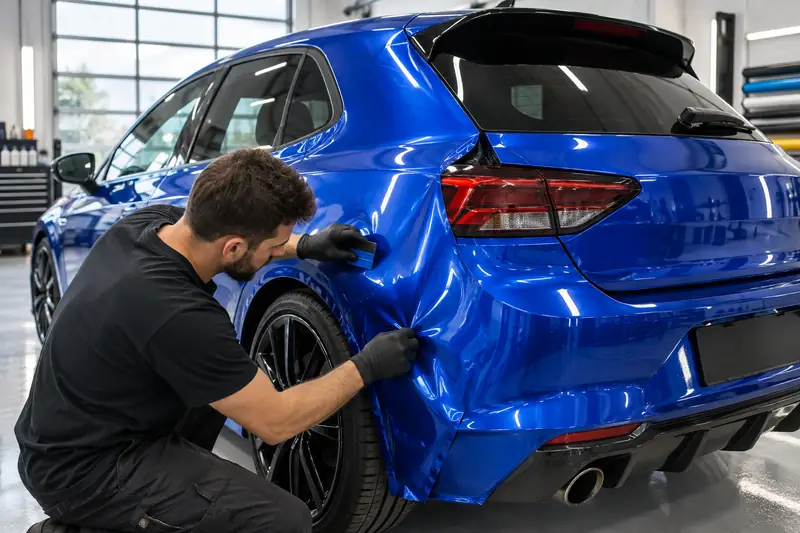
Metallic films are directional. The flakes lie with a slight orientation set during production, so a piece turned sideways can look lighter or darker than its neighbor. A clean metallic wrap follows these steps:
- Order from one batch. Use rolls with the same batch number for the whole car to avoid small shade differences between production runs.
- Mark roll direction. Draw an arrow on the liner of every cut piece showing which way it came off the roll.
- Install all panels in the same direction. Usually that means the roll runs front to back along the car. Never rotate a piece 90 degrees to save film without checking it in daylight.
- Plan film use with direction in mind. Directional install can use more film. Allow for it when you calculate how much vinyl you need.
- Avoid overstretching. Heavy stretching thins the color layer and can spread flakes apart, making stretched areas look lighter.
- Check under daylight before post-heating. Look at adjoining panels from several angles to catch mismatches while you can still re-lay the film.
- Post-heat edges and recesses to the temperature in the film's data sheet.
Brushed films add another layer: the grain lines must run the same way on every piece, usually horizontal along the car.
Choosing metallic films for your shop
Metallic and satin metallic colors are steady sellers because they look premium without the install risk of chrome. A practical range covers metallic black, two silvers or greys, a satin metallic blue, a metallic red and one glitter black for show work.
Mars Decorative Film makes metallic colors across its PVC vinyl wrap line, paint-like gloss metallics on PET liner vinyl, and brushed and other effect films in the printed and effect range. Rolls are 1.52 m wide with an MOQ of one roll, mixed colors are fine, and every roll carries a batch number for matching. Ask for free A4 samples or a swatch book to judge flake size in daylight before stocking.
Frequently asked questions
What are metallic colors?
Metallic colors contain tiny reflective flakes, usually aluminum-based, that make a surface sparkle and change brightness with viewing angle. They are used in car paint and in metallic vinyl wrap films to show body lines and add depth.
Is a metallic car wrap more expensive than a gloss wrap?
Usually not by much. Standard gloss metallic and satin metallic films are typically priced close to solid gloss colors, so the labor cost is similar. Glitter and chrome films cost more and take longer to install.
Why do metallic wrap panels sometimes look different shades?
Metallic flakes are slightly directional, so pieces installed in different roll directions or from different production batches can look lighter or darker. Installing every piece in the same direction from one batch avoids it.
How do you clean a glitter car wrap?
Use a foam pre-wash, a pH-neutral shampoo and a soft wash mitt, then dry with a clean microfiber towel. Glitter films can have a slightly textured surface that holds dirt, so avoid stiff brushes and automatic car washes with brushes.
Does metallic vinyl look like metallic car paint?
Quality gloss metallic vinyl looks very close to metallic car paint from a normal viewing distance. Up close, paint can have more depth from its clear coat, while vinyl offers easier repair and full reversibility.
What is the most popular metallic car wrap color?
Neutral metallic colors such as metallic black, silver and grey are the most common choices because they look premium and are easy to live with. Satin metallic blues and greens are popular for owners who want more color.