Vinyl wraps · 7 min read
White car wrap and pearl white vinyl: how a wrap compares to pearl paint
Pearl paint and pearl white wrap explained: gloss, satin, matte and pearlescent white vinyl, blue pearl shades, wrap vs paint, care, cost and sample tips.
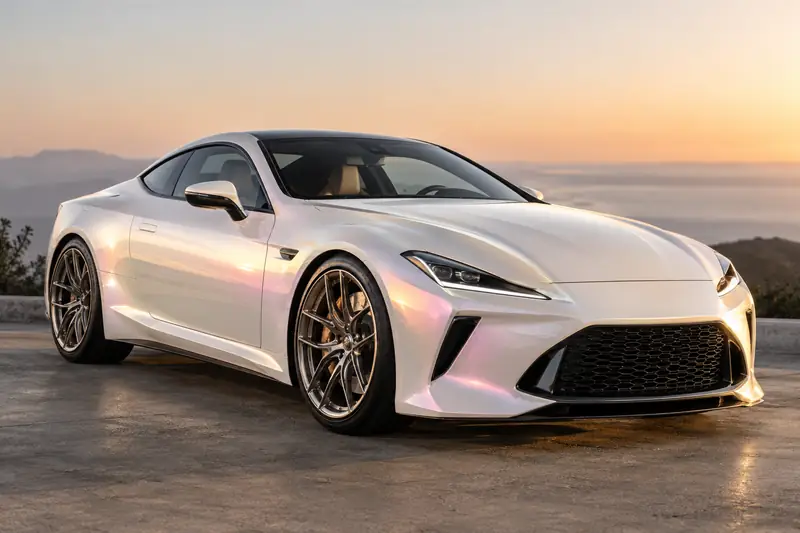
Short answer: Pearl paint uses pearlescent (mica-type) pigment that adds a soft, shifting glow, often gold, blue or pink, on top of the base color. A pearl white wrap recreates that tri-coat look in vinyl or color PPF without a respray. White wraps also come in gloss, satin and matte, and pearl or satin whites hide minor marks better than flat gloss white.
Pearl paint is automotive paint that contains pearlescent pigment, tiny coated flakes that reflect and refract light so the color glows and shifts slightly as you move around the car. Pearl white is the best-known example, and it is also one of the most requested wrap colors. This guide is for owners deciding between a white car wrap and pearl paint, and for wrap shops choosing which whites to stock. It covers the white and pearl shade family, how gloss, satin, matte, metallic and pearlescent finishes compare, wrap vs paint, film types, care, cost and how to choose from samples.
Key takeaways
- Pearl paint uses pearlescent pigment that gives a soft glow with a gold, blue or pink tint, unlike the sparkle of metallic flake.
- A pearl white wrap gives the tri-coat pearl look over the original paint and can be removed later.
- Gloss white shows stretch marks, edges and dirt most; pearl and satin whites are more forgiving.
- Matte white car wraps look striking but stain easily, so they need careful, frequent washing.
- Blue pearl and other pearl colors use the same effect on darker bases, from light blue pearl to midnight blue pearl.
- Order samples: whites vary from cool blue-white to warm cream, and the difference is obvious on a full car.
What is pearl paint?
Pearl paint is a paint system with pearlescent pigment, usually mica or synthetic flakes coated with metal oxides. Instead of reflecting light like a tiny mirror, as metallic flake does, pearl pigment reflects some light and lets some pass through, which creates a soft glow and a color tint that changes with angle.
Pearl white car paint is often a "tri-coat": a white base, a translucent pearl mid-coat and a clear top coat. That is why it looks deep and why it is expensive to repair and blend. Searches for "pearlescent paint car", "pearl automotive paint" and "pearl paint colors" usually come from owners comparing that look with a wrap.
White metallic paint vs pearl
White metallic paint uses fine aluminum flake that sparkles, especially in sun. Pearl gives a smoother, silkier glow without obvious sparkle. Some films combine both.
White and pearl shades for wraps
| Shade | How it looks | Typical finishes |
|---|---|---|
| Pure gloss white | Bright, clean, slightly cool | Gloss, satin, matte |
| Pearl white | White with a soft glow, gold or blue tint | Gloss pearl, satin pearl |
| Gold white pearl | Warm white with gold shimmer in sun | Gloss pearl |
| Crystal or diamond white | White with fine sparkle | Gloss metallic |
| Cream and off-white | Warm, vintage feel | Gloss, satin |
| White carbon fiber | Woven texture in white | Textured film |
| Blue pearl and midnight blue pearl | Blue base with pearl glow | Gloss pearl |
Mars examples include Gold White Pearl and Diamond Crystal White. Pearl effects also appear in other colors, such as Flower Pearl Pink; see the pink car wrap guide and the blue car wrap guide for blue pearl and midnight blue pearl shades.
How each finish changes a white car wrap
White shows the surface more than any other color, so the finish has a big effect.
- Gloss white. Clean and bright, close to factory solid white. A gloss white vinyl wrap is the least forgiving: stretch marks, texture and edges stand out.
- Satin white. A satin white wrap has a soft sheen that looks like porcelain and hides minor marks better than gloss.
- Matte white. Flat and dramatic. A matte white car wrap or matte white vinyl wrap shows dirt and stains quickly and must be washed often with matte-safe products.
- Pearl and pearlescent. A pearlescent car wrap adds a glow with color tint; satin pearl white wrap is a popular, softer version.
- Metallic white. Adds sparkle; looks lively in sun.
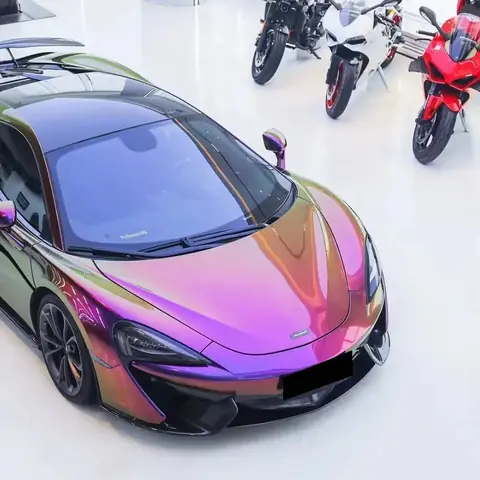
- Color-shift white. Pearlescent whites that shift toward blue, pink or gold at angles, a subtle form of color-shift.
Our guide to gloss, satin, matte and chameleon finishes covers each surface in more depth.
Which cars suit a white vinyl wrap?
White suits almost every vehicle, which is why it is a top choice for covering faded or unpopular factory colors.
- Luxury sedans and SUVs. Pearl white looks premium and close to high-end factory paint.
- Sports cars. Satin or matte white with black accents gives a strong contrast look.
- Fleets and vans. Vehicle wrap white is a common base for printed graphics and logos; see fleet wraps and vehicle graphics.
- Older cars. A white car wrap can refresh tired paint without a respray.
Accents: white carbon fiber wrap on mirrors, spoilers or roofs adds texture; see the carbon fiber vinyl wrap guide. White reflective vinyl is a separate safety product for markings, covered in our reflective vinyl wrap guide.
Pearl white wrap vs pearl paint
A pearl white wrap gives the look of pearl car paint while keeping the original paint underneath. Paint offers the deepest pearl effect but is permanent, costly and hard to repair.
| Pearl white vinyl wrap | Pearl paint (tri-coat respray) | |
|---|---|---|
| Look | Close to pearl paint, best on gloss PET liner | Deepest, layered pearl glow |
| Reversible | Yes | No |
| Typical cost, full car | Roughly USD 2,500–6,000 | Roughly USD 6,000–15,000+ for quality tri-coat work |
| Repair | Replace one panel of film | Blending tri-coat is difficult |
| Time | Usually 2–5 days | Often 1–3 weeks |
Read our full wrap vs paint comparison for the long-term trade-offs.
Film types: PET-liner gloss, PVC or color PPF
- PET-liner vinyl. PVC film on a smooth PET liner, giving a flat, glass-like gloss. It matters for white because orange peel and texture are easy to see. See PET liner vinyl wrap.
- PVC vinyl. The standard color-change film for satin, matte and many pearl and metallic whites. See PVC vinyl wrap.
- Color PPF. White or pearl white thermoplastic polyurethane (TPU) film with self-healing top coat and stone-chip protection. White color PPF is popular because it changes the color and protects the paint at once. See color PPF.
White wrap care and cost
White wraps need the most regular cleaning of any color. Road film, tar and bug spots show quickly, and some stains can set into the surface if left.
- Wash every week or two by hand with a pH-neutral shampoo.
- Remove tar, bugs and tree sap promptly with a wrap-safe cleaner.
- On matte white, never polish or wax; use matte-specific products.
- Pay attention to edges, where dirt collects and darkens a white film.
- Check the film's rated outdoor life; quality whites resist yellowing, but hoods and roofs age fastest.
A professional white or pearl white wrap typically costs roughly USD 2,500–6,000 on a standard car; full body white color PPF usually costs roughly USD 5,500–10,000 or more. Prices vary by market, vehicle and shop. See car wrap care for washing detail.
How to pick a white from samples
Whites range from blue-white to warm cream, and pearl tints vary a lot. Two "pearl whites" can look like different colors in sun.
- Decide finish and effect. Gloss, satin, matte, pearl or metallic.
- Order several white samples. Include at least one pure white and one pearl white for reference.
- View them in direct sun and in shade. Pearl tint shows in sun; the base white shows in shade.
- Hold them against trim and glass. Black trim makes white look brighter; chrome can make warm whites look yellow.
- Order from one batch. White shows batch differences quickly; see how much vinyl to wrap a car.
For the full palette, see our car wrap colors guide.
Stocking white and pearl white wrap for your shop
Most shops carry a gloss white, a satin white and at least one pearl white. Mars Decorative Film makes whites and pearl whites in PET-liner, PVC and color PPF, on 1.52 m wide rolls with an MOQ of one roll and mixed colors allowed. Every roll is batch-numbered, which matters for white, where batch differences are easy to see. Trade buyers can request free A4 samples or swatch books.
Frequently asked questions
What is pearl paint on a car?
Pearl paint contains pearlescent pigment that reflects and refracts light, giving a soft glow with a slight color tint that changes with viewing angle. Pearl white is often a tri-coat system with a base, a pearl mid-coat and a clear coat.
Is a pearl white wrap cheaper than pearl paint?
Usually yes. A professional pearl white wrap typically costs roughly USD 2,500–6,000 on a standard car, while a quality tri-coat pearl respray often costs much more and is harder to repair. Prices vary by market, vehicle and shop.
Is a matte white car wrap hard to maintain?
Yes, it is one of the most demanding finishes. Matte white shows dirt and stains quickly and cannot be polished, so it needs frequent hand washing with matte-safe products and prompt removal of tar and bugs.
What is the difference between white metallic paint and pearl?
White metallic paint uses fine aluminum flake that sparkles in light. Pearl uses pearlescent pigment that creates a smoother glow with a gold, blue or pink tint rather than sparkle. Some wraps and paints combine both effects.
What is blue pearl paint?
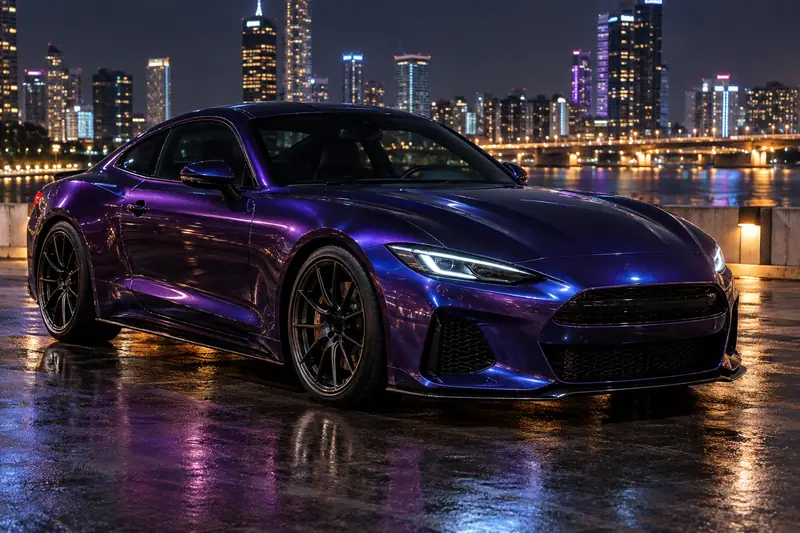
Blue pearl paint is a blue base with pearlescent pigment, which gives a glow that shifts between lighter and darker blue or toward purple. Wraps offer similar looks, from light blue pearl to midnight blue pearl, in gloss pearl films.
Does white vinyl wrap turn yellow?
Quality white films are made to resist yellowing, but all films age with sun exposure, heat and pollution, especially on hoods and roofs. Regular washing, shade parking and choosing a film with a suitable rated outdoor life help a white wrap stay white.