PPF · 6 min read
PPF vs vinyl wrap: protection, looks, cost and which to choose
PPF vs vinyl wrap compared for shops and owners: thickness, chip protection, self-healing, finishes, satin vs matte black, lifespan and typical cost.
Short answer: PPF is a thick, self-healing TPU film made to protect paint from stone chips and scratches, available clear or in colors. Vinyl wrap is a thinner PVC film made mainly to change color, with a wider range of finishes and a lower price. Choose PPF for protection, vinyl for color variety and budget, or color PPF for both.
PPF vs vinyl wrap used to be a simple choice: clear film for protection, colored vinyl for a new look. Color PPF changed that, because it now offers color change and real protection in one layer. This guide compares paint protection film vs vinyl wrap on material, protection, finishes, installation, lifespan and cost, so wrap shops can explain the difference clearly and car owners can choose with confidence.
Key takeaways
- PPF is made from thermoplastic polyurethane (TPU), typically around 6.5–10 mil thick; vinyl wrap is usually PVC, typically around 3–6 mil.
- Only PPF gives meaningful protection against stone chips, and most quality PPF self-heals light scratches with heat.
- Vinyl wrap offers the widest range of colors and effects, including chrome, carbon and color shift, at a lower price.
- Color PPF combines a color change with PPF-level protection, but costs more than vinyl and has a smaller color range.
- Installed prices vary by region and vehicle, but full PPF typically costs well above a full vinyl wrap.
PPF vs vinyl: the material difference
Both films are installed over the factory paint and can be removed later, but they are built from different plastics for different jobs.
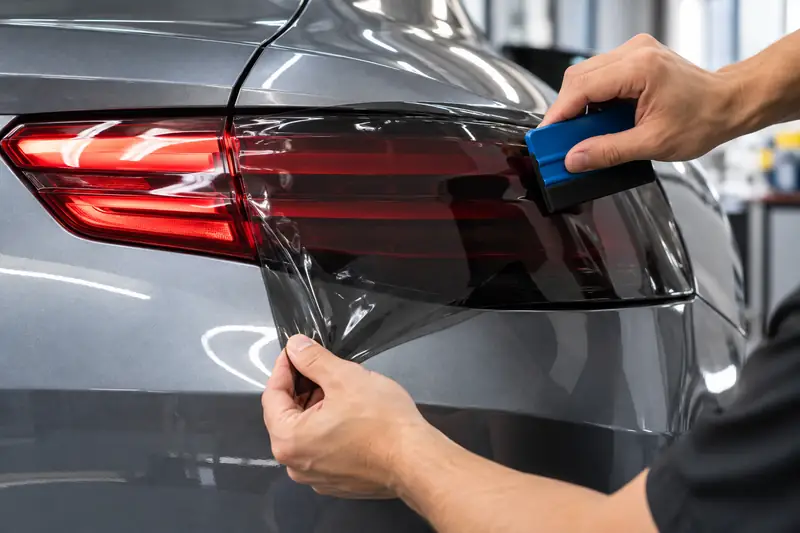
Vinyl wrap is a PVC film with a pressure-sensitive, usually air-release adhesive. It is thin and conformable, especially in cast grades, so it stretches into recesses and around bumpers with heat. It is designed first for color change and appearance, with light scuff resistance as a bonus.
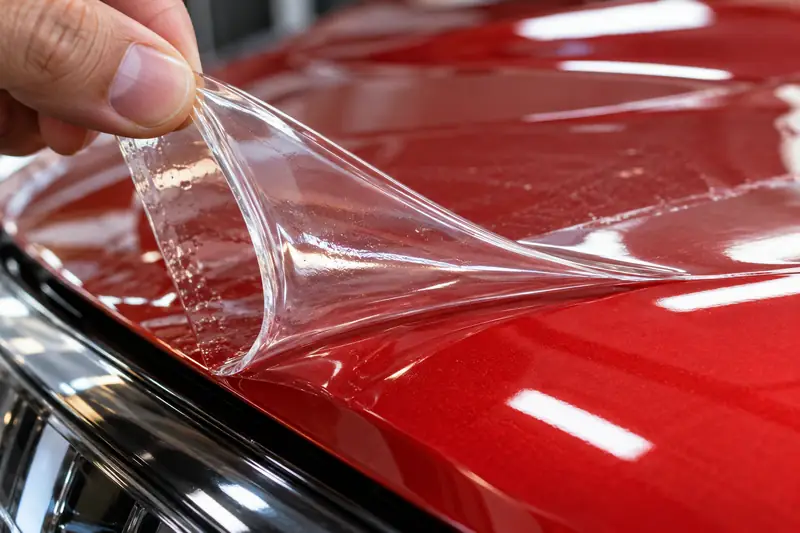
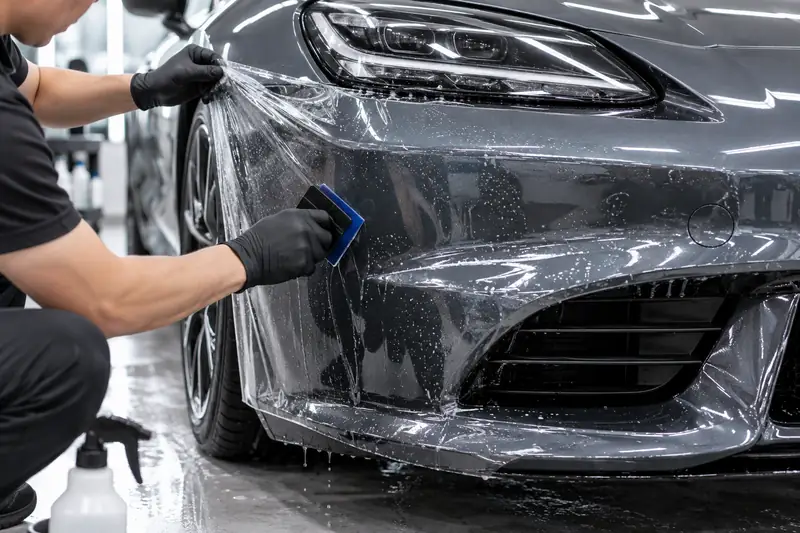
Paint protection film is a TPU film with a clear top coat. It is thick, elastic and tough, which lets it absorb the energy of small stones. Most quality films have a self-healing top coat that closes light swirls and fine scratches when warmed. Clear PPF protects the existing color; color PPF adds pigment or a colored layer so it changes the color too. For a deeper material comparison, read TPU vs PET vs PVC car wrap film.
Paint protection film vs vinyl wrap compared
| Vinyl wrap (PVC) | Clear PPF (TPU) | Color PPF (TPU) | |
|---|---|---|---|
| Main job | Color change | Invisible protection | Color change plus protection |
| Typical thickness | About 3–6 mil | About 6.5–10 mil | About 6.5–10 mil |
| Stone-chip protection | Low | High | High |
| Self-healing | No | Yes, on most grades | Yes, on most grades |
| Color and effect range | Widest | Clear gloss or matte only | Growing, but smaller than vinyl |
| Installation | Dry, with heat | Wet, with slip and tack solution | Wet, with slip and tack solution |
| Install time | Shorter | Longer | Longer |
| Typical roll | 1.52 × 17–18 m | 1.52 × 15 m | 1.52 × 15 m |
| Relative cost | Lowest | High | Highest |
Which protects paint better: car wrap vs PPF?
PPF, clearly. A vinyl wrap does shield the paint from UV, light scuffs and minor contamination, and many owners report the paint underneath looks fresh when the wrap comes off. But a vinyl wrap is too thin to absorb a stone hit at highway speed; a chip often goes through the vinyl and into the paint.
PPF's thickness and elasticity are what make the difference. On the front bumper, hood leading edge, mirrors and rocker panels, where most chips happen, PPF is the only film that reliably prevents damage. If a film panel is damaged, it can be replaced without repainting.
Looks and finishes: where vinyl wins
Vinyl remains the choice when the customer wants something unusual:
- Effects: chrome, brushed metal, carbon fiber, camo and color shift are mostly vinyl products.
- Range: hundreds of solid colors in gloss, satin, matte and metallic.
- Paint-like gloss: PET liner vinyl gives a very smooth, low-orange-peel gloss at vinyl prices. PET liner films are a popular step up from standard PVC.
Color PPF has closed much of the gap on popular colors: gloss and satin black, greys, whites, blues and greens. For mainstream colors, it often looks as good as or better than vinyl, with a deeper gloss. For the full breakdown, read our color PPF buyer's guide.
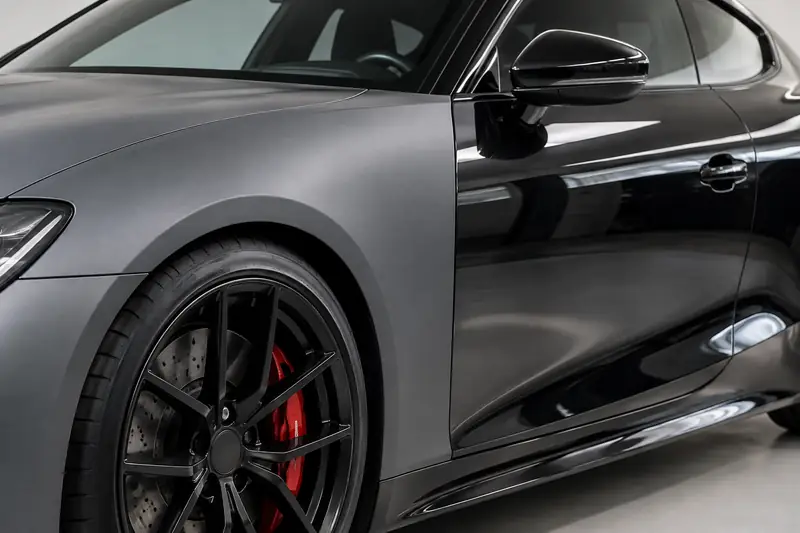
Satin black wrap vs matte black
Black is the most requested color change, and the satin vs matte question comes up in both vinyl and PPF.
| Satin black | Matte black | |
|---|---|---|
| Look | Soft, low sheen; highlights body lines | Flat, no reflection; aggressive look |
| Hides imperfections | Fairly well | Very well, but shows oils and fingerprints |
| Cleaning | Easier | Harder; needs matte-safe products |
| Scratches and scuffs | Shows less than gloss | Can polish shiny if rubbed hard |
| Available in PPF | Yes, in satin or matte PPF and color PPF | Yes, in matte PPF |
Satin black is the safer choice for daily drivers because it is easier to keep clean. Matte black gives the most dramatic look. Matte and satin PPF have one extra benefit: the self-healing top coat makes them more forgiving of light marks than matte vinyl. More detail is in our guide to matte, satin and gloss black wraps.
PPF vs vinyl wrap cost
Pricing depends on region, vehicle size, panel complexity and shop. As a rough guide in many US markets:
| Job | Typical installed price (USD) |
|---|---|
| Full vinyl wrap, solid color | Roughly $2,500–$5,000 |
| Full vinyl wrap, chrome or specialty film | Often $5,000 and up |
| Front-end clear PPF (bumper, hood, fenders, mirrors) | Roughly $1,500–$3,000 |
| Full-body clear PPF | Roughly $4,000–$8,000 or more |
| Full-body color PPF | Often similar to or above full clear PPF |
PPF costs more for two reasons: TPU film costs more per meter than PVC, and wet installation takes longer. Over a car's life, though, PPF may avoid paint repair costs. A popular middle ground is a vinyl color change with clear PPF only on the front end.
Lifespan and removal
Lifespan depends on film grade, climate, care and how much sun the car sees. In general, quality PPF and premium cast vinyl are rated for longer outdoor life than economy calendered vinyl. Horizontal surfaces such as roofs and hoods age fastest in both films. Check each product's data sheet for its rated durability rather than relying on generic numbers. See how long PPF lasts for the factors that matter.
Both films can be removed with gentle heat. Removal is cleanest when it happens within the film's rated life and when the paint underneath is healthy factory paint.
How to choose: PPF vs wrap for your car
- The customer wants protection first: clear PPF, full front or full body.
- The customer wants a new color for a few years at the lowest cost: vinyl wrap.
- The customer wants an unusual effect: vinyl, perhaps with clear PPF on the front.
- The customer wants a mainstream new color and protection: color PPF.
- The car is leased: vinyl or color PPF, both removable at lease end.
Stocking PPF and vinyl for your shop
Most shops end up selling both. A sensible mix is a deep vinyl color range for volume, clear gloss and matte PPF for protection jobs, and a handful of the best-selling color PPF shades. Mars Decorative Film makes color PPF and clear PPF on its own coating lines in Shanghai, with MOQ from one roll and mixed colors welcome. Qualified buyers can request free samples to compare feel and finish side by side.
Frequently asked questions
Is PPF better than vinyl wrap?
PPF is better for protection because it is thicker and self-heals light scratches. Vinyl wrap is better for color range, special effects and price. The better choice depends on whether the customer values protection or variety more.
Can you put PPF over a vinyl wrap?
It is possible, but it is rarely worth it: you pay for two films and two installs, and removal becomes harder. Color PPF gives color and protection in one layer, so it is usually the cleaner solution.
Is color PPF the same as a vinyl wrap?
No. Color PPF is TPU film with color, offering PPF-level chip protection and self-healing. Vinyl wrap is PVC film designed mainly to change color. They can look similar on a finished car but perform very differently against stones.
Why does PPF cost more than vinyl wrap?
TPU film costs more to produce than PVC, and PPF is installed wet, which takes longer and requires more experience. The higher price buys real impact protection and usually a longer service life.
Which lasts longer, PPF or vinyl wrap?
Quality PPF and premium cast vinyl are generally rated for longer outdoor life than economy vinyl, but the exact rating varies by product. Climate, sun exposure and care make a big difference to both.
Is satin black or matte black easier to maintain?
Satin black is easier to keep clean and shows less fingerprinting than matte. Matte black needs matte-safe cleaners and should never be polished or waxed with gloss products.