Vinyl wraps · 9 min read
Reflective vinyl wrap: safety film, fleet markings and brake caliper wraps
Reflective vinyl explained: how retroreflective film works, reflective car and fleet wraps, brake caliper wraps vs caliper paint, and legal limits to check.
Short answer: Reflective vinyl is adhesive film with glass beads or micro-prisms that bounce light straight back toward its source, so it glows under headlights while looking normal by day. It is used for fleet safety markings, signs, decals and full reflective car wraps. Colors and placement are regulated in many places, so check local vehicle rules before installing.
Reflective vinyl is a self-adhesive film that returns light toward the direction it came from, which makes it shine brightly when headlights hit it at night. That property makes it the standard material for road signs, emergency vehicle markings and fleet safety graphics, and it has also become a style choice for reflective car wraps and accents. This guide is for wrap and sign shops, fleet managers and owners. It covers how retroreflective film works, its main types, safety and fleet uses, full reflective vehicle wraps, brake caliper wraps, and the legal caveats that apply to reflective and mirror-like films on vehicles.
Key takeaways
- Retroreflective vinyl sends light back toward its source, so a driver behind headlights sees it glow; ordinary gloss or chrome film reflects light away at an angle instead.
- The two main constructions are glass bead films and microprismatic films; prismatic films are typically brighter and used for high-visibility markings.
- Reflective vinyl is used for fleet conspicuity markings, emergency and service vehicles, signs, decals and full reflective wraps.
- Some reflective colors, patterns and placements are regulated, and rules vary by country and state, so check with your local transport authority.
- Brake caliper wraps are risky because calipers get far hotter than most vinyl can tolerate; high-temperature caliper paint is the more durable option.
- Mirror-finish chrome wraps are not retroreflective but are restricted in some places because of glare.
What is reflective vinyl and how does it work?
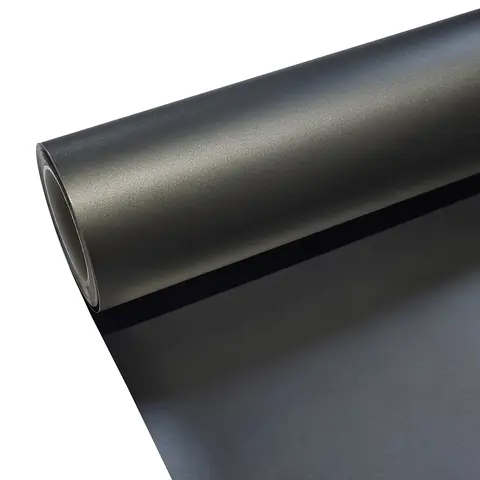
Retroreflective vinyl (also written retro reflective vinyl) is film built with tiny optical elements under a clear top layer. When light hits the film, those elements bend and bounce it back toward the source, rather than scattering it or mirroring it away.
That is why a reflective sign looks dull from the side but bright from behind the headlights that light it. Ordinary reflective-looking finishes such as gloss, metallic or chrome vinyl do the opposite: they reflect light at an equal and opposite angle, like a mirror, so they only flash brightly from one angle.
There are two main constructions:
- Glass bead films. Microscopic glass beads sit in or under a clear layer. They are flexible, relatively affordable and common for decals, lettering and vehicle graphics.
- Microprismatic films. Tiny cube-corner prisms return light more efficiently, so they are brighter at a distance. They are widely used for highway signs and conspicuity markings, and they are usually stiffer and harder to apply over curves.
Types of reflective adhesive vinyl
Reflective adhesive vinyl is sold for several different jobs, and the right one depends on the surface and how long it must last.
| Type | What it is | Typical use |
|---|---|---|
| Glass bead reflective vinyl | Flexible film with bead optics | Lettering, logos, decals, partial vehicle graphics |
| Microprismatic film | Prism optics, high brightness | Signs, safety and conspicuity markings |
| Silver reflective vinyl | Silver-white film that glows white at night | Most common color for signs and safety stripes |
| Colored reflective vinyl | Red, yellow, blue, green and more | Signs, fleet graphics, accents |
| Printable reflective vinyl | White reflective film that accepts print | Full-color graphics that reflect at night |
| Clear reflective vinyl | Transparent film with reflective effect | Overlays on existing colors or prints |
| Reflective conformable wrap film | Thinner, stretchable reflective film | Full or partial reflective car wraps |
| Reflective heat transfer vinyl | Heat-applied film for fabric | Clothing and bags, not vehicles |
"Reflective permanent vinyl" in craft terms usually means reflective film with a permanent outdoor adhesive, as opposed to a removable one. For vehicles, use film rated for vehicle outdoor use rather than craft sheets. Reflective vinyl sheets suit small decals; reflective vinyl rolls suit lettering, stripes and wraps. For adhesive choices, see permanent vs removable adhesive vinyl.
Reflective vinyl for fleet safety and conspicuity
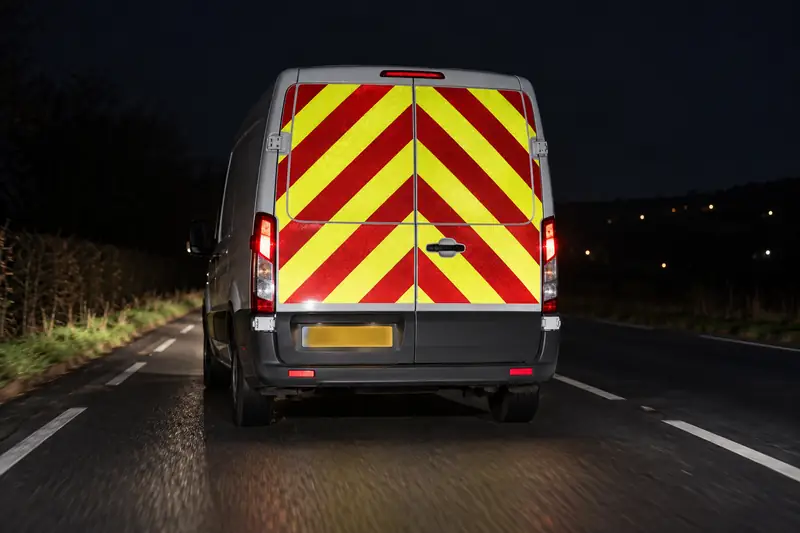
The most important use of reflective vinyl for cars and trucks is safety. Conspicuity markings are reflective strips and patterns that make large or slow vehicles easier to see at night and in bad weather.
Common fleet uses include:
- Contour or outline markings on trucks and trailers, which show the vehicle's size and shape in headlights.
- Rear chevrons on vans, utility vehicles and service trucks that stop at the roadside.
- Reflective lettering and logos, so company graphics stay visible at night.
- Emergency and service vehicle patterns in specified colors and layouts.
Many markets have rules on which vehicles need conspicuity markings, which film grades are accepted, and which colors and placements are allowed. Some colors and patterns, such as certain red and blue combinations or emergency-style chevrons, may be restricted to specific vehicle types. Rules vary by country and state and change over time, so fleet managers should check current requirements with their local transport authority or DMV and buy film certified for regulated markings. Our fleet wraps and vehicle graphics guide covers planning graphics across a fleet.
Reflective car wrap and reflective vehicle wrap
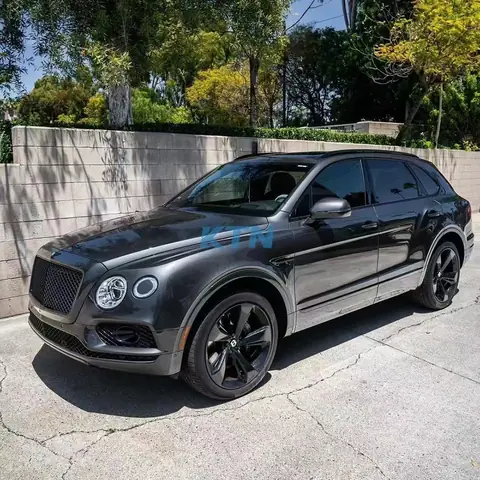
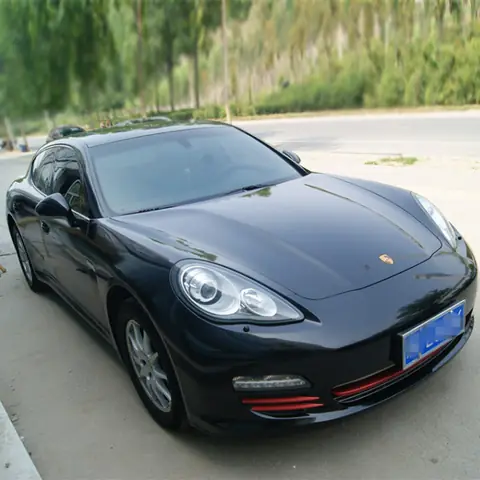
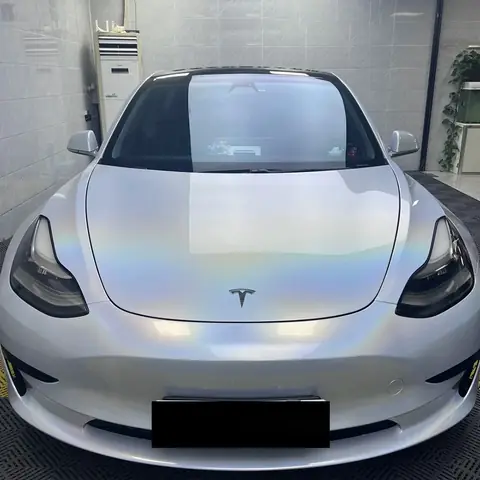
A reflective car wrap covers some or all of a vehicle in reflective film. By day it looks like a normal satin or gloss color, often a silver-grey or dark tint; at night, under headlights or a camera flash, it lights up. Reflective vehicle wraps are mostly used for show cars, photo shoots and attention-grabbing promotional vehicles.
A full reflective wrap is more demanding than a standard color change:
- Stiffer film. Reflective constructions usually stretch less than color-change vinyl, so deep recesses may need inlays or seams.
- Overstretching kills the effect. Stretching can distort the optical layer and reduce brightness in curves.
- Higher cost. Reflective vinyl car wrap film typically costs noticeably more than standard colors, and installation takes longer.
- Legal attention. A fully reflective car can dazzle other drivers or draw attention from police. Some places restrict reflective areas, colors and placement.
Many owners choose reflective accents instead: stripes, wheel lip stripes, logos or a reflective roof. These give the night effect with less cost and fewer legal questions. For layout ideas, see custom vinyl car wraps and partial wraps.
Legal caveats for reflective and chrome films
Reflective and mirror-like films both raise legal questions on road vehicles, for different reasons. Retroreflective film can resemble emergency or official markings, especially in red, blue or chevron patterns. Full chrome and mirror films can cause glare for other drivers in sunlight. Some jurisdictions limit reflective areas on private cars, prohibit certain colors on the front or rear, or restrict reflective films on windows and lights. Rules vary by country and state and change over time; treat this as general guidance and check with your local DMV or transport authority. The chrome wrap guide discusses chrome films in more detail.
Brake caliper wrap: reflective vinyl vs caliper paint
A brake caliper wrap is vinyl applied to the outside of a brake caliper, often in a bright or reflective color. Searches for a reflective brake caliper wrap have grown as owners look for an easy alternative to painting.
The problem is heat. Brake calipers on a street car can get very hot under hard or repeated braking, and on spirited driving or track use they can exceed temperatures that most vinyl films and adhesives are designed for. Typical wrap films are rated for service temperatures far below what hard-worked calipers can reach. The result can be shrinking, bubbling, discoloring or film peeling off. Brake dust, wheel cleaners and pressure washers add more wear.
| Caliper vinyl wrap | Caliper paint (high-temperature) | |
|---|---|---|
| Heat tolerance | Limited; risky under hard braking | Designed for high temperatures |
| Durability | Often short on daily or performance cars | Typically long with good prep |
| Reversible | Yes | No |
| Install | Removal of wheels; tight curves; careful edges | Masking or caliper removal; multiple coats |
| Reflective options | Reflective film available | Reflective caliper paint and additives exist |
If you still want a caliper vinyl wrap, keep these rules:
- Use it only on lightly driven or show cars, not on track or tow vehicles.
- Never apply film to rotors, pads, pistons, bleed screws or anything inside the caliper. Only the outside face.
- Clean and degrease thoroughly to remove brake dust and oils.
- Keep the film clear of moving parts and check clearance with the wheel.
- Inspect after the first drives and remove the film if it bubbles or lifts.
For most daily drivers, reflective brake caliper paint or a high-temperature caliper paint is the more durable choice. Brake systems are safety-critical; if in doubt, have a qualified mechanic check the work.
How to apply reflective vinyl lettering and stripes
Reflective lettering and stripes are the most common reflective jobs for wrap and sign shops. A clean install follows the same basics as other cut vinyl, with extra care because reflective film is stiffer:
- Clean and degrease the surface, then wipe with an isopropyl alcohol solution.
- Plot and weed the graphic, then apply transfer tape suited to the film's thickness.
- Position with a hinge of masking tape and check level and spacing.
- Apply with firm pressure using a felt-edged squeegee; reflective film needs good pressure to bond fully.
- Avoid heavy stretching over curves to protect the optical layer.
- Seal or heat edges if the film data sheet recommends it, especially on stripes that run over panel edges.
Sourcing reflective and graphics film for your shop
Reflective film is a specialist product, and for regulated conspicuity markings you need film certified to the relevant standard. When sourcing, ask for the product's certification documents, outdoor durability and the recommended installation temperature range.
Mars Decorative Film's range centers on color-change, effect, printable and cutting vinyl and PVC vinyl wrap, along with squeegees, knives and tapes in its wrap tools line. If you need reflective film, contact the team to ask what is currently available and what documentation comes with it, rather than assuming a product meets a regulation.
Frequently asked questions
What is the difference between reflective and retroreflective vinyl?
In vehicle and sign terms, "reflective vinyl" usually means retroreflective film, which sends light back toward its source. Gloss, metallic and chrome films are reflective in the everyday sense but bounce light away at an angle, so they do not glow under headlights the same way.
Is a reflective car wrap legal?
It depends on where you drive. Some places restrict reflective areas, colors such as red and blue, or patterns that resemble emergency vehicles. Rules vary by country and state and change, so check with your local DMV or transport authority before installing a full reflective wrap.
Can you wrap brake calipers with vinyl?
You can, but it is risky. Calipers can get much hotter than most vinyl and adhesives tolerate, especially under hard braking, so wraps may bubble or peel. High-temperature caliper paint is usually the more durable choice for daily and performance cars.
What is silver reflective vinyl used for?
Silver reflective vinyl looks light grey by day and glows bright white under headlights. It is the most common color for road signs, safety stripes, fleet lettering and conspicuity markings.
Can you print on reflective vinyl?
Yes, printable reflective vinyl is a white reflective film that accepts print, so full-color graphics also reflect at night. Check the film's compatibility with your printer's ink and use a compatible laminate for outdoor durability.
How long does reflective vinyl last outside?
Quality outdoor reflective film is typically designed to last several years outdoors, and certified sign and conspicuity grades are often rated for longer. Real life depends on climate, sun exposure, cleaning and the specific product's rating.