Vinyl wraps · 7 min read
Car wrap care: how to wash, wax and clean off adhesive from a vinyl wrap
Car wrap care explained: how to wash a vinyl wrap, safe pressure washer distance, waxing and ceramic coatings, matte wrap care, and how to clean off adhesive.
Short answer: To clean off adhesive, sap or tar from a vinyl wrap, soften it with a wrap-safe cleaner or diluted isopropyl alcohol, wait a minute, and wipe gently with a microfiber towel. For routine car wrap care, hand wash with pH-neutral shampoo, keep a pressure washer at least 30 cm away, and use synthetic sealants, never carnauba paste, on matte film.
Car wrap care is the routine of washing, protecting and spot-cleaning a vinyl-wrapped vehicle so the film keeps its color, finish and adhesion for as long as possible. A wrap is not paint: it is a thin plastic film that scratches, stains and lifts in different ways. This guide covers how to wash a wrap by hand or touchless, safe pressure washer distance, whether you can wax a wrapped car, ceramic coatings for wraps, matte and satin care, and how to clean off adhesive, sap and tar without harming the film. It is for owners and for wrap shops writing aftercare instructions.
Key takeaways
- Wait about a week after installation before the first wash so the adhesive can settle and edges can bond.
- Hand washing with a pH-neutral shampoo and a soft mitt is the safest method; touchless washes are a reasonable second choice.
- Keep a pressure washer nozzle at least 30 cm (12 in) from the film, use a wide fan tip, and never aim directly at edges or seams.
- You can wax a gloss vinyl wrap with synthetic, wrap-safe products, but avoid carnauba and petroleum-based paste wax, especially on matte and satin film.
- Remove bird droppings, fuel, sap and bug splatter quickly; left in the sun, they can stain or etch vinyl.
- Ceramic coatings made for wraps add easier cleaning and some stain resistance, but do not stop stone chips.
How to wash a vinyl wrap
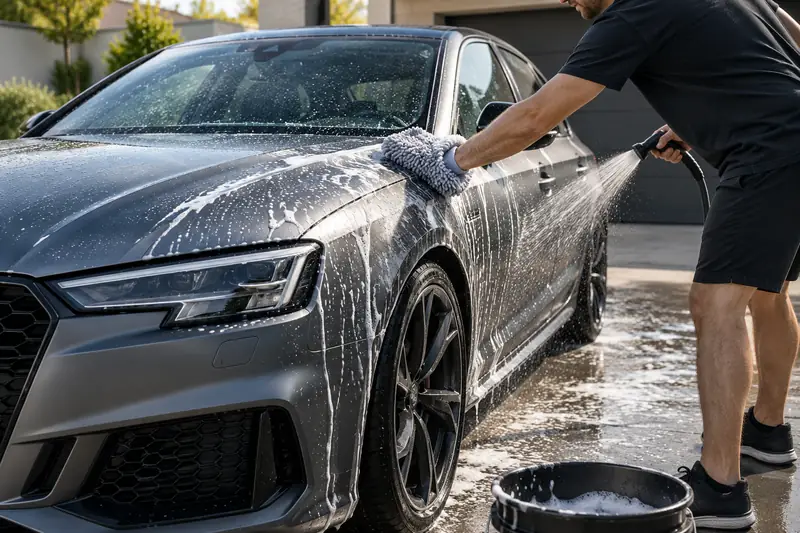
Washing a wrap well is mostly about avoiding friction and harsh chemicals. A careful hand wash every one to two weeks keeps dirt from bonding to the film.
- Rinse first. Remove loose grit with a gentle hose or a pressure washer at a safe distance.
- Pre-soak. A foam pre-wash or snow foam loosens dirt so less rubbing is needed.
- Use two buckets. One with pH-neutral car shampoo, one with clean rinse water and a grit guard.
- Wash top down with a soft mitt. Use straight-line passes rather than circles, and rinse the mitt often.
- Rinse thoroughly. Shampoo left in seams can dry into streaks.
- Dry gently. Use a clean microfiber drying towel or filtered air blower, blotting rather than dragging, especially on matte film.
- Check edges. Look for lifting at corners, seams and recesses and have a shop re-post-heat them early.
Wash in the shade on a cool panel. Hot film and fast-drying shampoo leave water spots that can be hard to remove from matte and satin finishes.
Hand wash vs touchless vs brush car wash
Not all car washes treat a wrap equally.
| Wash method | Safe for wraps? | Notes |
|---|---|---|
| Two-bucket hand wash | Best | Lowest friction, full control over chemicals |
| Touchless automatic | Usually OK | Strong detergents and high-pressure jets can stress edges; use occasionally |
| Brush or soft-cloth tunnel | Avoid | Brushes can scratch gloss film, catch edges and lift seams |
| Waterless wash spray | OK for light dust | Use plenty of product and many towel faces; not for gritty cars |
| Rinseless wash | OK | Good for apartments; low friction if done carefully |
If a touchless wash is the only option, choose one without harsh wheel-acid sprays reaching the body film, and dry by hand afterward.
Pressure washer distance for a wrapped car
A pressure washer is safe on a wrap if you respect the film's edges. Most wrap aftercare guidelines suggest:
- Distance: at least 30 cm (12 in), and more on edges and seams.
- Pressure: a moderate setting, commonly under about 2,000 psi (around 140 bar).
- Nozzle: a 25° or 40° fan tip, never a zero-degree or rotary turbo nozzle.
- Angle: spray across the surface, not straight into seams, edges or panel gaps.
- Water temperature: cool to warm, not hot.
Edges are the weak point. A jet aimed into a lifted corner can peel back film in seconds.
Can you wax a wrapped car?
Yes, you can wax a gloss vinyl wrap, but choose the product carefully. Synthetic spray waxes, polymer sealants and products labeled wrap-safe add gloss and make the film easier to clean.
Avoid:
- Carnauba paste wax, which can leave white residue on edges, build up unevenly and, on matte or satin film, create glossy patches.
- Petroleum-based or solvent-heavy waxes that can soften or stain vinyl.
- Cutting compounds and polishes. They abrade the surface, and on printed or effect films they can remove the color layer.
Best wax for wrapped cars
The best wax for wrapped cars is usually a synthetic spray sealant applied thinly with a microfiber towel every few weeks. For matte and satin wraps, use a matte-specific detailer or sealant that adds no shine.
Ceramic coatings for vinyl wraps
Ceramic coatings are liquid coatings, often silica (SiO2) based, that cure into a thin, hard, water-repellent layer. Many detailers apply wrap-specific ceramic coatings after installation.
Benefits include easier washing, stronger water beading, and some resistance to bird droppings, bug stains and UV fading. Matte-specific coatings protect without adding gloss.
Limits: a coating does not stop rock chips or deep scratches, and it can make future wrap removal or edge repair slightly more involved. Apply only after the wrap has settled for the period the film and coating makers recommend. For impact protection, owners use paint protection film instead; our PPF vs ceramic coating comparison explains the difference.
Matte and satin wrap care
Matte and satin films have a micro-textured surface that scatters light. Anything that fills or polishes that texture creates shiny spots that cannot be reversed.
- Use matte-specific shampoo and detailer with no gloss enhancers.
- Never polish, compound, clay aggressively or use carnauba wax.
- Blot water dry instead of dragging a towel.
- Clean fingerprints and oily marks quickly with a matte detailer or diluted isopropyl alcohol.
For help choosing between finishes before a wrap, see our guide to gloss, satin and matte finishes.
How to clean off adhesive, sap and tar from a wrap
Sticky contaminants such as tree sap, road tar, bug residue and leftover sticker glue need softening, not scrubbing. Here is how to clean off adhesive and similar residues safely:
- Wash the area so grit is not dragged across the film.
- Apply a wrap-safe cleaner or isopropyl alcohol diluted to roughly 50–70% on a microfiber towel.
- Let it dwell for 30–60 seconds to soften the residue.
- Wipe gently in one direction, turning the towel often.
- For tar, use a tar remover that the label says is safe on vinyl, after testing on a hidden area.
- Rinse and dry, then re-apply a wrap-safe sealant.
Do not use acetone, lacquer thinner, strong degreasers or razor blades on a wrap. For residue on paint or glass rather than film, see how to remove sticker residue and our comparison of adhesive remover for cars.
Long-term vinyl wrap maintenance
Good car wrap maintenance extends film life. Park in a garage or shade where possible, because sunlight and heat are the main causes of fading, cracking and shrinkage on horizontal panels like the hood and roof. Avoid fuel spills near the filler cap, and rinse off road salt in winter.
Life expectancy varies with film type and climate; our guide on how long a car wrap lasts gives typical ranges. When the time comes, have the film taken off before it becomes brittle; see how to remove a car wrap safely.
Clear protective wrap for cars
A clear protective wrap usually means paint protection film (PPF), a thicker clear polyurethane film that resists stone chips. Some owners put PPF over high-impact areas of a vinyl wrap, or choose color PPF instead of vinyl. Care for PPF is similar: gentle washing, no abrasive polish on matte versions, and quick removal of contaminants.
Aftercare advice for wrap shops
Shops that hand customers a printed aftercare sheet tend to see fewer edge-lift comebacks. Include the first-wash waiting period, the pressure washer rules above, banned products and a reminder to book edge checks.
Film choice matters too. Mars Decorative Film makes PVC vinyl wrap in gloss, satin, matte and metallic, PET liner vinyl for paint-like gloss, and self-healing color PPF. It does not make cleaners, waxes or ceramic coatings. Shops can request free A4 samples to test how each finish responds to their preferred aftercare products.
Frequently asked questions
Can you wax a vinyl wrap?
Yes, gloss vinyl wraps can be waxed with synthetic spray waxes or sealants labeled safe for wraps. Avoid carnauba paste wax, petroleum-based waxes and any polish or compound. Matte and satin wraps should only get matte-specific sealants that add no shine.
Can you wax a wrapped car with carnauba wax?
It is best not to. Carnauba paste can leave white residue along edges, build up unevenly and create glossy patches on matte or satin film. A thin synthetic sealant gives similar protection with fewer risks.
How do you clean off adhesive from a car wrap?
Soften the adhesive with a wrap-safe cleaner or isopropyl alcohol diluted to about 50–70%, let it sit for 30–60 seconds, and wipe gently with a microfiber towel. Avoid acetone, strong solvents and blades, then rinse and re-apply sealant.
Can I take a wrapped car through a car wash?
A touchless car wash is usually acceptable occasionally, but brush and soft-cloth washes can scratch the film and catch edges. Hand washing with pH-neutral shampoo remains the safest option for a wrap.
How close can I pressure wash a vinyl wrap?
Keep the nozzle at least 30 cm (12 in) from the film, use a 25° or 40° fan tip at moderate pressure, and avoid spraying directly into edges, seams and panel gaps. A jet aimed at a lifted corner can peel the film back.
Can you ceramic coat a vinyl wrap?
Yes. Wrap-specific ceramic coatings make washing easier and add stain and UV resistance, and matte-specific versions keep a flat finish. Wait until the wrap has settled before coating, and remember a coating does not stop stone chips.