Vinyl wraps · 7 min read
Wood vinyl wrap: wood grain film for car interiors, exteriors and furniture
Wood vinyl wrap guide: wood grain film types, walnut and oak patterns, car interior and exterior uses, wrapping furniture and doors, and install tips.
Short answer: A wood vinyl wrap is self-adhesive film printed or embossed with a wood grain pattern, such as walnut, oak or ash, used to give car trim, exterior panels, furniture or doors a wood look. Textured films feel like real grain; smooth printed films look realistic from a distance. Laminated, UV-stable film lasts best on exteriors.
A wood vinyl wrap is an adhesive film that reproduces the look, and sometimes the texture, of real wood, so you can add a walnut, oak or ash finish to car trim, exterior panels, cabinets or doors without real veneer. Wood grain vinyl wrap is cheaper, lighter and more flexible than wood, and it can be removed later. This guide is for wrap shops adding wood finishes and for owners and DIYers planning a project. It covers the types of wood grain film, popular patterns, interior and exterior car uses, wrapping furniture and doors, and how to install it.
Key takeaways
- Wood grain vinyl comes as smooth printed film or embossed textured film that you can feel; textured films look more convincing up close.
- Walnut, dark walnut, oak, ash, teak and burl are the most common wood vinyl wrap patterns.
- Car interiors are the main automotive use, with dash strips, consoles and door inserts the most common parts.
- Wood grain vinyl wrap for car exteriors works, but it needs UV-stable film and a protective laminate, and printed patterns may fade sooner than solid colors.
- Wood grain direction matters: run the grain the same way on every piece, usually along the length of the part.
- Vinyl covering for wood furniture and doors uses similar films, but surfaces need sanding and sealing first.
What is wood grain vinyl wrap?
Wood grain vinyl wrap is a self-adhesive film with a wood pattern printed into or onto it. Better films have a clear protective layer over the print, and many add an embossed surface texture that copies the pores and grain lines of real wood.
There are three main types:
| Type | How it is made | Look and feel | Best for |
|---|---|---|---|
| Smooth printed wood vinyl | Wood image printed and laminated | Realistic from a distance; smooth to the touch | Vehicle graphics, large panels, budget jobs |
| Textured wood vinyl wrap | Printed film with embossed grain texture | Feels like real wood; most convincing up close | Interior trim, consoles, furniture |
| Gloss or satin "lacquered" wood film | Wood print under a high-gloss or satin clear layer | Looks like varnished luxury trim | Dash strips, door inserts, yachts and classic cars |
Shops can also print custom wood patterns on printable vinyl and laminate them, which allows exact grain choices or matching to existing trim.
Popular wood vinyl wrap patterns
Most wood vinyl wraps copy a handful of well-known species and finishes. The choice depends on the rest of the interior or vehicle color.
| Pattern | Color and grain | Pairs well with |
|---|---|---|
| Walnut | Medium brown, flowing grain | Tan, beige and black interiors |
| Dark walnut | Deep chocolate brown | Black and dark grey; classic luxury look |
| Oak and royal oak | Lighter honey to mid brown, open grain | Modern and rustic styles; trucks |
| Ash | Pale with strong grain lines | Scandinavian-style, white or grey interiors |
| Teak | Golden brown, straight grain | Boats, classic and marine-inspired builds |
| Burl | Swirled, knotty pattern | Classic luxury dashboards |
| Grey or black wood | Stained or open-pore dark wood | Contemporary interiors |
A walnut vinyl wrap is by far the most requested for cars, followed by dark walnut wood vinyl wrap for black interiors. Our guide to car wrap colors helps match accents to the main color.
Wood grain for car interiors
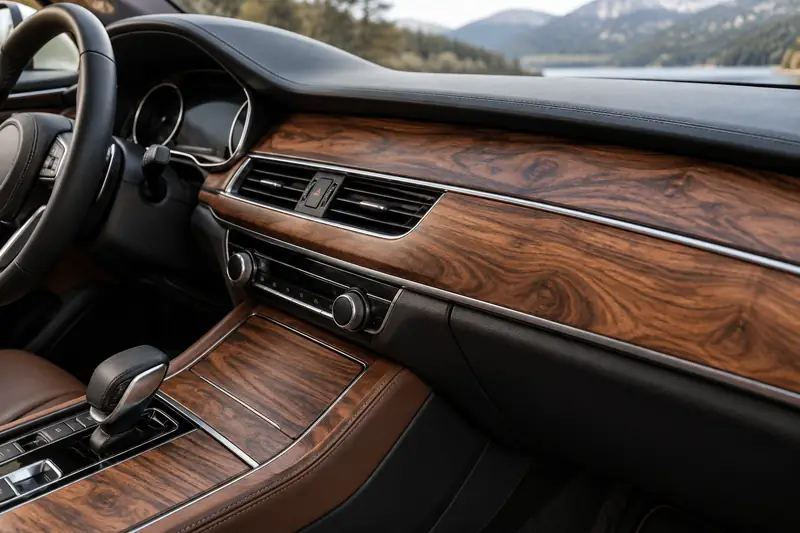
Car interiors are the natural home for a wood grain car wrap. Many cars have plain silver or gloss black trim, and a wood vinyl wrap car interior upgrade gives a luxury or classic feel for a small cost.
Common interior parts include:
- Dashboard trim strips and inserts.
- Center console panels and shifter surrounds.
- Door panel inserts and window switch surrounds.
- Steering wheel trim pieces away from the airbag.
Interior trim faces heat from sun through the glass, and many plastics are hard for adhesives to grip. Remove parts, degrease them, wrap the film around the back edges and post-heat carefully. Never cover airbag doors or seams. The interior vinyl wrap guide covers heat, adhesion and airbag safety in detail.
Wood grain vinyl wrap for car exteriors
A wood grain vehicle wrap on the outside of a car is less common but very distinctive. It is most often used for retro "woodie" side panels on wagons and vans, accents on trucks and campers, and promotional vehicles for businesses with a natural or rustic brand.
Exterior wood grain needs more care than interior work:
- UV and weather. Printed patterns, especially lighter woods, can fade or shift tone sooner than solid-color films in strong sun. Choose film designed for outdoor vehicle use, with a UV-protective laminate.
- Conformability. Textured films can be stiffer. They suit flat or gently curved panels better than deep bumpers.
- Texture flattening. Heavy heat and stretching can flatten embossed grain, so stretched areas look shinier than the rest.
- Pattern scale. Grain that looks right on a dash strip may look small on a whole door. Check a full-size sample on the panel before committing.
For a full car wrap wood look, many shops use printed graphics: a high-resolution wood image printed on cast wrap film and laminated. This allows seamless large panels and exact patterns. See custom vinyl car wraps and printing for how printed wraps are produced.
Vinyl wrap for wood furniture, cabinets and doors
People also use vinyl to cover wood or to make plain surfaces look like wood. Vinyl wrap for wood furniture, kitchen cabinets and interior doors uses similar adhesive films, often called architectural or decorative films.
| Project | What works | Watch out for |
|---|---|---|
| Cabinets and drawer fronts | Smooth or textured wood grain adhesive vinyl | Edges and handles; remove hardware first |
| Interior doors | Wood grain vinyl wrap for doors in large sheets | Panel grooves need careful heat and trimming |
| Tables and desks | Textured film with a durable top layer | Heat from hot dishes; abrasion |
| Laptop, speakers, small items | Offcuts of wood vinyl | Clean, smooth surfaces only |
Surfaces need to be smooth, clean and sealed. Raw or oiled wood can absorb adhesive or release oils, so sand, seal or prime first. Exterior house doors face sun and temperature swings and need products rated for outdoor architectural use.
Hardwood vinyl and sheet vinyl flooring
Searches for hardwood vinyl and sheet vinyl that looks like wood usually refer to floor coverings: vinyl plank and sheet flooring. These are thick, rigid or semi-rigid flooring products, not adhesive wrap film. Wrap film is far too thin for floors and will wear through quickly.
How to install wood grain vinyl
Wood grain film installs much like other decorative wrap films, with extra attention to grain direction. A typical process:
- Plan grain direction. Decide which way the grain should run, usually along the length of each part, and mark an arrow on the liner of every piece.
- Clean and prepare. Degrease, then wipe with an isopropyl alcohol solution. On furniture, sand and seal raw wood first.
- Cut oversize. Cut each piece with enough extra to wrap around the edges and back of the part.
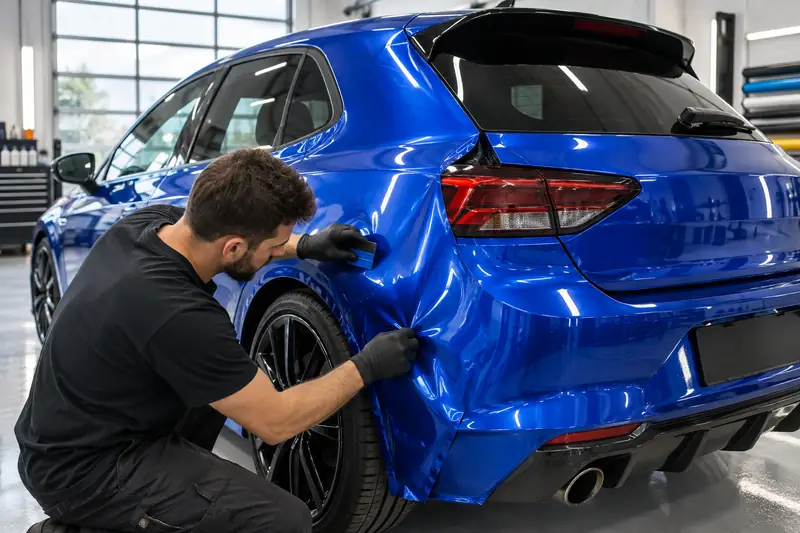
- Apply from the center. Lay the film, squeegee from the center outward with a felt-edged squeegee, and let air-release channels do their job.
- Heat lightly on curves. Use gentle heat to conform; avoid overheating textured films, which can flatten the grain. A heat gun with temperature control helps.
- Trim and wrap edges. Wrap around edges wherever possible rather than cutting flush on the visible face.
- Post-heat. Post-heat stretched areas and edges to the data-sheet temperature so the film does not lift.
On multi-piece interiors, check that the grain lines up visually across adjacent parts before final trimming.
Sourcing wood grain film for your shop
Wood grain is a niche but loyal market: classic car owners, luxury interior work, campers and furniture DIY. A small range of walnut, dark walnut, a light oak and a grey wood covers most requests.
Mars Decorative Film produces effect films, including textured patterns, in its printed and effect vinyl range, solid colors in PVC vinyl wrap, and printable vinyl for shops that print their own patterns. Ask which wood grain patterns are currently available, request free A4 samples to check grain scale and texture, and consider private label packaging if you sell film under your own brand.
Frequently asked questions
What is wood grain vinyl wrap used for?
Wood grain vinyl wrap is used to give car interior trim, exterior panels, furniture, cabinets and doors the look of real wood. It is cheaper and lighter than real veneer and can be removed later without damaging the original surface when applied correctly.
Can you put wood grain vinyl on the outside of a car?
Yes, but choose film rated for outdoor vehicle use with a UV-protective laminate. Printed wood patterns can fade sooner than solid colors in strong sun, and textured films suit flat or gently curved panels better than deep recesses.
Is textured wood vinyl better than smooth?
Textured wood vinyl looks and feels more like real wood up close, so it suits interior trim and furniture. Smooth printed film is easier to stretch and is fine for exterior graphics viewed from a distance.
What is the most popular wood vinyl wrap color?
Walnut is the most popular wood grain for cars, followed by dark walnut for black interiors. Oak and ash suit lighter, modern interiors, and burl suits classic luxury looks.
Can you wrap wood furniture with vinyl?
Yes. Clean, smooth and sealed wood furniture, cabinets and doors can be wrapped with decorative adhesive vinyl. Sand rough surfaces, seal raw or oiled wood, and remove handles and hinges before wrapping.
How long does wood grain vinyl last?
Indoors, quality wood grain vinyl can last many years because it is protected from weather. On vehicle exteriors, life depends on film quality, laminate, climate and sun exposure, and it is often shorter than for solid-color films.