Vinyl wraps · 8 min read
Interior vinyl wrap: dashboard, trim and console film for car interiors
Interior vinyl wrap explained: which films suit dashboards, trim and consoles, heat and adhesion tips, airbag safety, clear protective film and typical cost.
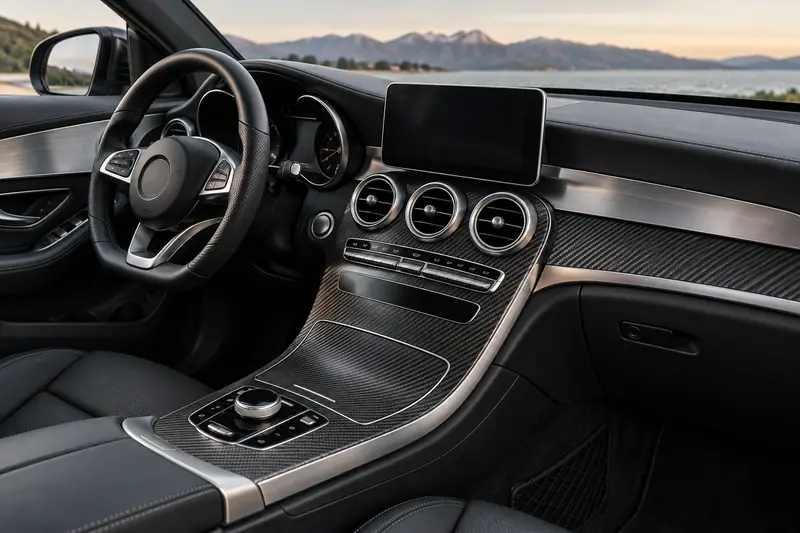
Short answer: Interior vinyl wrap is thin adhesive film applied to a car's dashboard trim, center console, door panels and window trim to change their color or texture. Brushed metal, carbon fiber, wood grain and gloss or satin colors are common. Clean and prime low-energy plastics, choose film that tolerates cabin heat, and never cover airbag deployment seams or doors.
Interior vinyl wrap is self-adhesive film applied to the hard surfaces inside a car, such as dashboard trim, the center console, door panel inserts, vent surrounds and window trim, to change their color or texture without replacing parts. It is a popular add-on for wrap shops and a common first project for owners. This guide covers which films work inside a car, which parts are safe to wrap, how cabin heat and plastic type affect adhesion, why airbag seams must stay clear, clear protective film for glossy trim, and typical costs.
Key takeaways
- Car interior vinyl wrap covers hard trim pieces; soft, stitched or heavily textured surfaces are usually poor candidates.
- Brushed metal, carbon fiber, wood grain and satin or gloss colors are the most common interior wrap finishes.
- Cabin surfaces under the windshield can get very hot in sun, so films need an adhesive and face film that tolerate heat.
- Many interior plastics are low-energy surfaces that need thorough cleaning and often adhesion promoter on edges.
- Never cover airbag deployment doors, seams or covers on the dashboard, steering wheel, seats or pillars.
- Clear TPU protective film is the best way to protect piano-black trim and screens from scratches.
What is interior vinyl wrap?
Interior vinyl wrap is the same family of adhesive films used on car exteriors, applied to interior trim. Most jobs use thin cast or PVC films in decorative finishes. Automotive interior vinyl wrap is usually applied to parts removed from the car, which gives clean wrapped edges, though some flat pieces can be wrapped in place.
Interior wraps are popular because they are cheap compared with replacement trim, reversible, and available in finishes that factory options rarely offer. An auto interior wrap can turn faded silver plastic into brushed aluminum, swap scratched gloss black for satin carbon, or add wood grain to a plain console.
Which parts of a car interior can you wrap?
Hard, smooth plastic trim pieces with simple curves are the best candidates. Use the table as a starting guide.
| Interior part | Suitability | Notes |
|---|---|---|
| Dashboard trim strips and inserts | Good | Usually clip out; wrap off the car |
| Center console and shifter surround | Good | High-wear area; consider clear PPF on top |
| Door panel inserts and handle surrounds | Good | Remove panels carefully; clips break easily |
| Window switch panels | Good | Mask or remove switches |
| Vent surrounds | Moderate | Many small curves; heat carefully |
| Steering wheel trim (non-airbag) | Moderate | Only bezels and spokes away from the airbag cover |
| Full dashboard top | Poor to moderate | Large, textured, very hot; often includes airbag doors |
| Airbag covers and seams | Never | Film can interfere with deployment |
| Soft-touch, leather or stitched surfaces | Poor | Film will not bond or look right |
Airbag safety: what you must not wrap
Never apply film over any airbag cover, deployment door or tear seam. Airbags are designed to break through specific weakened lines in the trim. Film over those lines can change how the cover opens, delay deployment or create fragments.
Areas to keep clear:
- The steering wheel center pad.
- The passenger-side dashboard area above the glove box, where the passenger airbag door sits. On many cars the seam is invisible from the outside.
- Knee airbag panels below the steering column and glove box.
- Seat side bolsters with side airbags, usually marked with a label.
- A-pillar and roof-lining trim along curtain airbag paths.
If you are not sure where the airbag doors are, check the vehicle's owner's manual or service information, and leave that area unwrapped. Shops should make airbag clearance a standard part of their interior wrap checklist.
Vinyl wrap dashboard: heat and adhesive considerations
A vinyl wrap dashboard job faces the harshest conditions in the cabin. A dashboard in direct sun behind glass can typically reach 70–90 °C (roughly 160–195 °F) or more on hot days. Heat softens adhesive, lets stretched film shrink back, and brings out any trapped contamination.
To make a dash wrap vinyl job last:
- Choose a quality vehicle film. Cast or premium PVC films have better heat tolerance and less shrinkage than cheap craft vinyl, which often lifts on a sunny dash.
- Avoid overstretching. Stretched film tries to return to its original shape when heated. Use relief cuts or wrap smaller pieces where curves are deep.
- Post-heat thoroughly. Bring stretched areas and edges to the film's data-sheet post-heat temperature so the film forgets its original shape.
- Wrap edges around the back. Edges that wrap behind a part hold much better than edges cut flush on the visible face.
- Watch for outgassing. Some plastics and fresh coatings release gas that can create small bubbles. Air-release adhesive helps.
Many dashboard tops are also textured. Smooth film over a grained surface shows the texture through and can lift at the high points, which is why full dashboard wraps are less common than trim inserts.
Preparing interior plastics for vinyl
Most interior plastics are low-energy surfaces, which means adhesive has a harder time wetting and bonding to them. Factory protectants and silicone dressings make this worse. A careful prep sequence looks like this:
- Remove the part. Use plastic trim tools to release clips. Take photos so you can reinstall in the right order.
- Degrease. Clean with a mild degreaser to remove dressings, skin oils and dust, then wipe with an isopropyl alcohol solution.
- Test-fit and plan. Cut a piece of film larger than the part with enough excess to wrap around the back edges.
- Prime edges. Apply a thin line of adhesion promoter on edges and recesses that will stay under tension. See adhesion promoter for vinyl wrap for how to use it.
- Apply and squeegee. Lay the film from the center outward with a felt-edged squeegee. Use light heat to conform around curves.
- Trim and wrap edges. Trim excess with a sharp blade, leaving enough to fold behind the part.
- Post-heat and rest. Post-heat edges and stretched areas, and let the adhesive build bond before reinstalling, ideally several hours.
A sharp snap-off knife or a small vinyl trimmer is enough for most interior work. The vinyl wrap tools guide lists the rest of the kit.
Popular interior wrap finishes
Interior car wraps are mostly about texture. Effect films that look like real materials are far more common inside than solid colors.
| Finish | Look | Good for |
|---|---|---|
| Brushed metal | Fine directional lines like brushed aluminum or steel | Dash strips, console, door inserts |
| Carbon fiber | Woven carbon texture, gloss or matte | Console, steering wheel trim, door inserts |
| Wood grain | Walnut, oak, ash and other grains | Dash strips and console for a classic look |
| Gloss or satin color | Solid color, often matching the exterior | Accents, contrast trim |
| Piano black | Deep gloss black | Replacing faded silver trim |
| Leather-texture film | Grained surface like leather | Hard panels that sit next to leather |
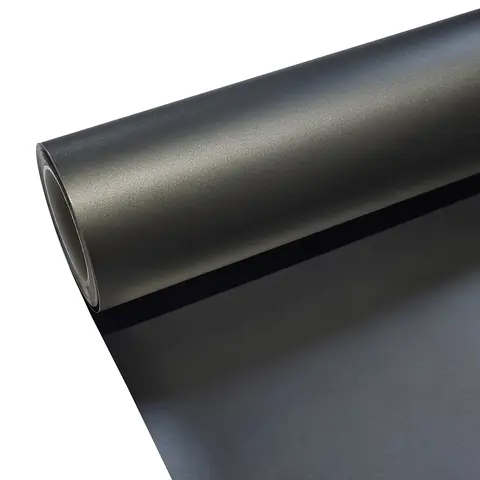
Examples of brushed interior films include Titanium Grey satin brushed metal, Light Gray satin brushed steel and Black satin metallic brushed. For grain-effect options, see our wood grain vinyl wrap guide and the carbon fiber wrap guide.
Leather wrapping car interior parts
Leather wrapping a car interior, such as re-covering a dashboard top or steering wheel in real leather or synthetic leather with stitching, is an upholstery trade, not a film job. Leather-texture vinyl film can make hard trim match nearby leather, but it does not replace stitched upholstery.
Vinyl wrap window trim and interior chrome
Vinyl wrap window trim covers two jobs. Inside, it means covering chrome or silver door and window surrounds. Outside, it usually means a chrome delete on the window beltline. Both use thin, conformable film because the profiles are narrow with tight edges. For exterior trim, see the chrome delete guide.
Clear protective film for car interior trim
Automotive interior protective film is clear film that protects glossy surfaces rather than changing their color. Piano-black consoles, glossy door trim and infotainment screens scratch easily, and a clear protective film for car interior use is one of the most practical interior upgrades.
Clear TPU PPF works well here because it is thick enough to absorb light scratches and its self-healing top coat lets fine swirls disappear with warmth. It is usually applied wet, cut to shape, and wrapped around edges where possible. Use a matte or anti-glare film on screens if reflections are a concern, and check that the film does not interfere with touch response. For background, see what paint protection film is.
How much does an interior vinyl wrap cost?
Costs vary with how many parts are wrapped and how hard they are to remove. Rough professional ranges in many markets:
- Trim strips or console only: roughly USD 150–400.
- Full interior trim package (dash strips, console, door inserts): roughly USD 400–1,200.
- Clear PPF on piano-black console and screens: roughly USD 100–400.
- DIY film for a trim package: roughly USD 30–100 in material.
Prices vary by market, vehicle and shop. Luxury interiors with many clipped pieces cost more.
Stocking interior wrap films for your shop
Interior work is a good way to use offcuts and sell add-ons with exterior wraps. Shops typically stock a few brushed metals, two or three carbon fiber styles, piano black and a wood grain, plus clear TPU for protection.
Mars Decorative Film makes brushed, carbon and other effect films in its printed and effect vinyl range, solid colors in PVC vinyl wrap, and clear TPU PPF for protective jobs. MOQ is one roll and mixed colors are fine in one order. Request free A4 samples to test texture and adhesion on your most common trim plastics.
Frequently asked questions
Can you vinyl wrap a car interior?
Yes. Most hard, smooth trim pieces such as dash strips, console panels, door inserts and switch surrounds can be wrapped with vinyl. Soft-touch, stitched and leather surfaces are poor candidates, and airbag covers must never be wrapped.
Is it safe to wrap a dashboard?
Trim inserts on a dashboard are usually safe to wrap, but the dashboard top often contains the passenger airbag door and its hidden seams. Film over airbag areas can interfere with deployment, so leave those zones unwrapped and check the vehicle manual if unsure.
Will vinyl wrap peel off a hot dashboard?
It can if the film is low quality, overstretched or poorly post-heated. Dashboards can reach very high temperatures in direct sun, so use quality vehicle film, avoid heavy stretching, wrap edges around the back of parts and post-heat to the data-sheet temperature.
How long does an interior car wrap last?
Interior vinyl wraps are protected from rain and road grit, so they often last as long as or longer than exterior wraps when installed well. High-touch areas such as the console and door handles wear fastest.
What is the best clear protective film for a car interior?
Clear TPU paint protection film is a strong choice for piano-black trim and screens because it absorbs light scratches and has a self-healing top coat. Choose a matte version for screens if you want less glare.
Do you need to remove trim to wrap it?
Removing trim is strongly recommended. It lets you wrap film around the back edges, which holds much better than edges cut flush on the visible surface, and it avoids cutting near other parts.