Tools & installation · 8 min read
How to remove sticker residue from a car: paint, glass and plastic
How to remove sticker residue from car paint, glass and plastic using rubbing alcohol, gentle heat and a plastic razor, plus what never to use on paint.
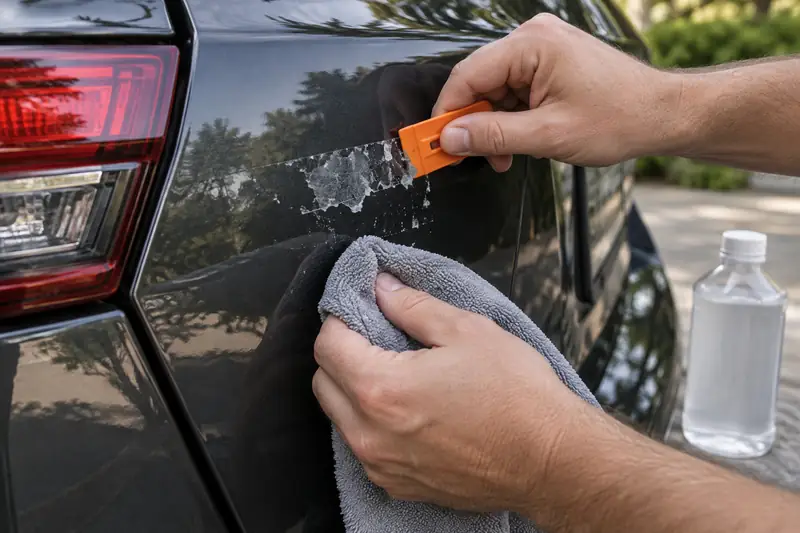
Short answer: Rubbing alcohol for sticker residue works well on most car surfaces. Warm the area gently, scrape off the bulk with a plastic razor, then wipe with 70–90% isopropyl alcohol on a microfiber cloth until the glue rolls off. For stubborn glue, use a citrus or automotive adhesive remover, test it first, then wash and dry the surface.
Sticker residue is the layer of pressure-sensitive adhesive that stays behind when a sticker, decal, dealer badge, parking permit or piece of tape is peeled off. On a car it collects dust, turns gray and looks worse than the sticker did. This guide explains how to remove sticker residue from car paint, glass and plastic trim, why rubbing alcohol for sticker residue is usually the first thing to try, when to step up to a dedicated remover, and which tools and chemicals to keep away from paint. It is written for detailers, wrap shops and car owners.
Key takeaways
- Rubbing alcohol (isopropyl alcohol, IPA) at 70–90% dissolves most fresh sticker and tape adhesive and is safe on cured automotive paint when used briefly.
- Gentle heat softens old adhesive so most of it lifts off before you need any chemical.
- Use a plastic razor blade on paint and plastic; a metal blade is acceptable only on bare exterior glass, held at a low angle.
- Citrus-based and solvent-based adhesive removers handle thick, aged glue, but always test on a hidden spot first.
- Never use acetone, lacquer thinner, steel wool or abrasive pads on car paint or plastic trim.
- Wash and dry the area afterward, and re-apply wax or sealant on paint, because solvents strip protection.
Why sticker residue is hard to remove
Most stickers use an acrylic or rubber-based pressure-sensitive adhesive. When the sticker is fresh, the adhesive is still soft and comes away with the face film. After months of sun and heat, the face film turns brittle and the adhesive partly cures, so the label tears and the glue stays on the surface.
Three things help you get rid of sticker residue:
- Heat softens the adhesive and lowers its grip.
- Solvent dissolves or swells the adhesive so it lets go.
- Gentle mechanical action (a plastic blade, a microfiber towel, a rubber eraser wheel) lifts it without scratching.
The best way to remove sticker residue combines all three, using the mildest option that works on the surface in front of you.
What you need
| Item | Use | Safe on |
|---|---|---|
| Hair dryer or heat gun on low | Softens sticker and glue | Paint, glass, plastic (keep it moving) |
| Plastic razor blade | Lifts sticker and bulk glue | Paint, glass, plastic |
| Metal razor scraper | Lifts glue on flat glass | Exterior glass only, not tinted or defroster sides |
| Isopropyl alcohol 70–90% | Dissolves fresh residue | Paint, glass, most plastics |
| Citrus or automotive adhesive remover | Thick or old glue | Paint and glass; test on plastic |
| Microfiber towels | Wiping and buffing | All surfaces |
| Car shampoo, quick detailer, wax | Clean up and re-protect | Paint |
A full comparison of remover types is in our guide to adhesive remover for cars.
How to remove sticker residue from car paint
Paint is the surface where mistakes cost the most, so work slowly and use the gentlest method first. Cured factory paint tolerates isopropyl alcohol and most automotive adhesive removers; fresh resprays do not, so wait until a repaint has fully cured before using any solvent.
- Wash and dry the area. Grit trapped under a towel will scratch the clear coat.
- Warm the sticker. Hold a hair dryer or a heat gun on its lowest setting 10–15 cm (4–6 in) from the surface and keep it moving. Aim for a surface that feels warm to the touch, roughly 40–60 °C (104–140 °F), not hot.
- Peel slowly at a low angle. Lift a corner with a fingernail or plastic razor and pull back over itself. Re-warm if the label starts to tear.
- Scrape the bulk glue. Push a plastic razor across the residue at a shallow angle. Keep the surface wet with alcohol or remover to reduce friction.
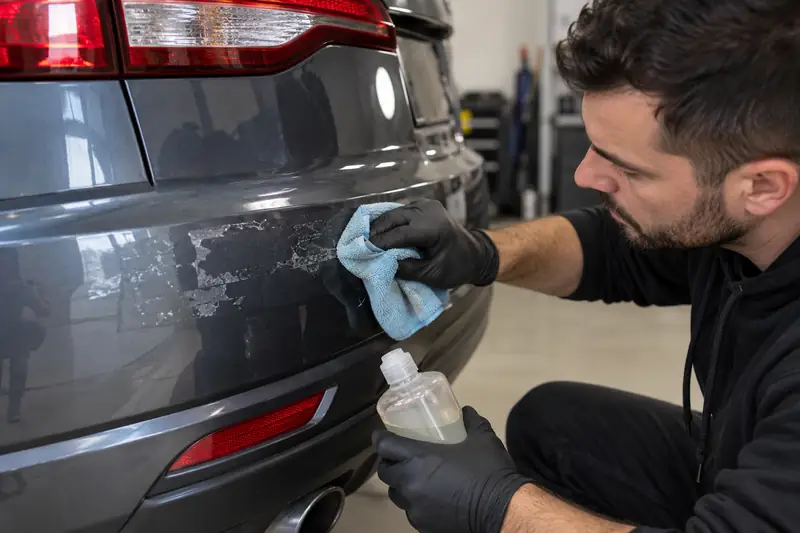
- Dissolve the rest. Dampen a folded microfiber towel with rubbing alcohol and hold it on the residue for 30–60 seconds, then wipe in one direction. Repeat with a clean side of the towel.
- Step up if needed. If the glue smears instead of lifting, apply a citrus or automotive adhesive remover, wait for the dwell time on the label, and wipe off.
- Wash, dry and protect. Shampoo the area to remove solvent film, then apply a spray wax or sealant.
A ghost outline sometimes remains where the sticker kept sun off the paint. That is uneven fading, not glue, and may need a light machine polish rather than more solvent.
How to remove sticker residue from glass
Glass is the easiest surface to clean because it resists solvents and scratches better than paint. To remove sticker marks from glass on a car window, warm the sticker, peel it, then wipe the residue with rubbing alcohol or glass-safe adhesive remover.
On flat exterior glass, a new metal razor blade held at about 30° in a holder lifts dried glue quickly. Keep the glass wet, push in one direction only, and never use a blade on:
- The inside of a rear window with defroster lines or antenna traces.
- Any window with tint film on it.
- Coated or heated windshields where the coating could be damaged.
On those surfaces, use a plastic blade and solvent only. If the "residue" is actually old tint glue left behind by peeling film, see our guide on how to remove window tint, which covers getting tint glue off a window with steam, soapy water and scrapers.
How to get sticker residue off plastic
Plastic trim, bumpers and interior panels are more sensitive than paint or glass. Many plastics soften, haze or crack when they meet strong solvents, so removing sticker residue from plastic calls for the mildest approach.
- Start with warm soapy water and a microfiber towel; fresh residue often rolls off with rubbing.
- Use isopropyl alcohol next. It is safe on most hard automotive plastics when wiped on and off quickly.
- Try a citrus-based remover only after a test spot on a hidden area.
- On textured black trim, use a soft brush with alcohol so glue does not stay in the grain.
- Avoid acetone and lacquer thinner completely. They can melt or permanently dull many plastics.
Clear plastics such as headlight lenses and instrument covers are the most delicate. Use alcohol sparingly and do not soak them.
How to remove tape residue
Tape residue behaves like sticker residue but often covers a long, thin strip, such as masking tape left in the sun, double-sided trim tape, or the outline of a removed emblem. The method is the same: warm, scrape, dissolve, clean.
For thick foam emblem tape, cut through the foam with fishing line or a plastic tool first, then work on the remaining adhesive. Installers removing pinstripes, old decals and large areas of glue often use a rubber eraser wheel on a drill at low speed, which rolls the adhesive off without solvent. Keep the wheel moving and the speed low, because friction heat can burn the clear coat.
Rubbing alcohol vs other sticker residue removers
Rubbing alcohol for sticker residue is the default because it is cheap, evaporates fast and leaves almost nothing behind. It is weaker than dedicated removers on thick, aged or rubber-based glue.
| Remover | Strength on adhesive | Paint safety | Notes |
|---|---|---|---|
| Warm soapy water | Low | Very safe | Good first step on fresh residue |
| Isopropyl alcohol 70–90% | Medium | Safe on cured paint | Fast drying; 70% stays wet longer, 90%+ cuts harder |
| Citrus-based remover | Medium to high | Generally safe; test first | Oily film; wash afterward |
| Automotive solvent remover | High | Labeled paint-safe products are OK on cured paint | Ventilate; flammable |
| Light penetrating oil | Medium | Usually safe | Leaves residue; wash well |
| Acetone, lacquer thinner | Very high | Not safe | Can soften clear coat and plastic |
For rubbing alcohol for adhesive removal, a 70% solution is often easier to use than 99%, because the water slows evaporation and gives the alcohol more contact time.
What not to use on car paint
Some household tips that work on a jar or a laptop can damage a car. Avoid:
- Acetone and nail polish remover. They can soften clear coat and stain plastic.
- Lacquer thinner and paint thinner. Too aggressive for automotive finishes.
- Steel wool, scouring pads and kitchen sponges with abrasive backs. They leave scratches that need polishing.
- Metal blades on paint. Even a careful pass can cut the clear coat.
- High heat. Keeping a heat gun in one spot can blister paint or warp plastic.
If a sticker is on a vinyl wrap rather than paint, use only mild methods: warm soapy water and diluted alcohol. Strong solvents can soften or dull wrap film. Our car wrap care guide covers cleaning wrapped surfaces, and removing a whole wrap is a separate job covered in how to remove a car wrap safely.
Supplies for detailers and wrap shops
Removing old decals, dealer stickers and adhesive is routine prep before a wrap, PPF or tint job, and the surface must be completely clean for new film to bond. Mars Decorative Film does not make adhesive removers or solvents, but it supplies the films and installation tools that follow the prep, including squeegees, knives and tapes in our wrap tools range and color-change films such as PVC vinyl wrap. Shops can request free samples to test film on prepared panels.
Frequently asked questions
How do I remove sticker residue from my car?
Warm the area with a hair dryer, scrape off the bulk with a plastic razor, then wipe the rest with 70–90% isopropyl alcohol on a microfiber towel. For thick or old glue, use an automotive adhesive remover after a test spot, then wash and wax the paint.
Does rubbing alcohol remove sticker residue?
Yes, rubbing alcohol removes most fresh and moderately aged sticker residue. Let it sit on the glue for 30–60 seconds before wiping so it can soften the adhesive. Very old or rubber-based glue may need a citrus or solvent-based remover.
How do you get sticker glue off glass?
Peel the sticker after warming it, then wipe the glue with rubbing alcohol or glass cleaner. On flat exterior glass, a metal razor blade held at a low angle on wet glass lifts dried residue quickly. Use only a plastic blade on tinted glass or on the inside of a rear window with defroster lines.
How do you get sticky residue off plastic?
Start with warm soapy water, then isopropyl alcohol on a microfiber towel. Test any citrus or solvent remover on a hidden spot first, because some plastics haze or crack. Never use acetone on automotive plastic.
How do I remove tape residue from car paint?
Warm the residue, roll off as much as possible with your thumb or a plastic blade, then dissolve the rest with isopropyl alcohol or a paint-safe adhesive remover. For large areas, a rubber eraser wheel at low speed works well. Wash and re-protect the paint afterward.
What is the best way to remove sticker residue without damaging paint?
Combine gentle heat, a plastic razor and a mild solvent such as isopropyl alcohol, and work in small sections. Avoid acetone, thinners, abrasive pads and metal blades. Finish by washing the area and applying wax or sealant.