Tools & installation · 7 min read
Wrap gloves and cut resistant gloves for vinyl, PPF and tint installers
Cut resistant gloves and wrap gloves for installers: cut levels A1 to A9 and EN 388 explained, fiber types, fit and which gloves suit vinyl, PPF and tint.
Short answer: Cut resistant gloves are work gloves knitted from high-strength fibers such as HPPE, aramid or glass blends that resist blade cuts. Wrap installers usually pair a thin, lint-free wrap glove for handling and gliding over vinyl with a cut-rated glove of about ANSI A2 to A4 on the non-knife hand when trimming. Higher levels trade dexterity for protection.
Cut resistant gloves are work gloves made from high-strength fibers that resist slicing by blades and sharp edges. In vehicle wrapping, tint and PPF work, installers handle snap-off knives, razor scrapers and freshly cut film edges all day, so gloves matter for safety as much as for finish quality. This guide explains the two glove types installers use, wrap gloves and cut-rated gloves, how cut levels such as A1 to A9 and EN 388 work, which fibers and coatings to look for, and how to choose a pair you will actually wear. It is for shop owners equipping a team and for installers buying their own.
Key takeaways
- Wrap gloves are thin, lint-free knit gloves that let a hand or squeegee glide over vinyl without fingerprints or drag; most are not cut rated.
- Cut resistant gloves are rated under standards such as ANSI/ISEA 105 (levels A1 to A9) in North America and EN 388 (levels A to F) in Europe.
- For wrap and tint trimming, a thin glove around A2 to A4 often balances protection and feel; high levels such as A9 are bulky and meant for heavy industry.
- Common fibers are HPPE (high-performance polyethylene), aramid, and blends with glass or steel fiber; coatings such as polyurethane or nitrile add grip.
- No glove is cut proof. Gloves reduce injuries from slips; they do not replace safe knife technique, sharp blades and knifeless tape.
What are wrap gloves?
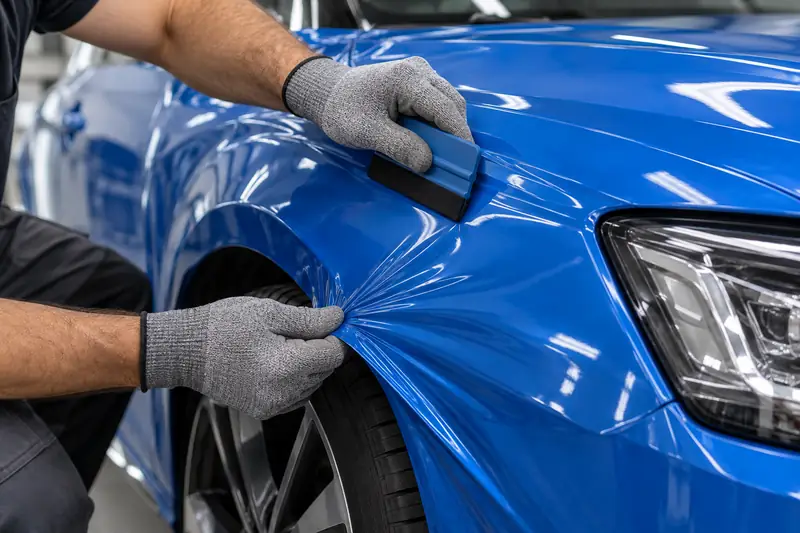
Wrap gloves, also called vinyl wrap gloves or vehicle wrap gloves, are lightweight knit gloves made for handling film. They are usually nylon or polyester knit, sometimes with a textured or slippery palm, and some versions are fingerless or have open fingertips for feeling edges and peeling liners.
Installers wear them because:
- Bare fingers drag on vinyl and leave fingerprints and skin oils on adhesive and film faces.
- A gloved hand can glide over a panel to push film down into curves without friction marks.
- They protect the film from skin heat and moisture during long installs.
Many installers wear a wrap glove only on the hand that glides over the film and keep the squeegee hand bare or in a thin cut-rated glove. A wrap glove is not cut protection unless the product states a cut rating.
How cut levels work
Cut ratings come from laboratory tests that measure how much force a blade needs to cut through the glove material. Two systems are common.
| Standard | Region | Scale | What it measures |
|---|---|---|---|
| ANSI/ISEA 105 | North America | A1 to A9 | Grams of load to cut through with a straight blade (TDM-100 test) |
| EN 388 cut (ISO 13997) | Europe and many other markets | A to F | Newtons of force in the same type of blade test |
| EN 388 coup test | Europe (older or supplementary) | 1 to 5 | Rotating blade cycles; less reliable on high-performance fibers |
Approximate ANSI cut levels by grams to cut:
| ANSI level | Grams to cut (approx.) | Typical use |
|---|---|---|
| A1 | 200–499 | Light handling, minimal cut hazard |
| A2 | 500–999 | Light assembly, film handling |
| A3 | 1,000–1,499 | General trimming, light metal handling |
| A4 | 1,500–2,199 | Frequent knife use, sharp edges |
| A5–A6 | 2,200–3,999 | Glass handling, sheet metal |
| A7–A9 | 4,000 and above | Heavy metal stamping, high-hazard work |
"Level 5 cut resistant gloves" can mean different things: level 5 on the older EN 388 coup scale or the pre-2016 ANSI scale, or A5 on the current ANSI scale. Check which standard and edition the label refers to before comparing gloves.
Which cut level do wrap and tint installers need?
For most vinyl and PPF work, a thin glove in roughly the A2 to A4 range on the hand that steadies the film near the blade is a practical choice. It reduces the severity of a slip without making it impossible to feel film edges or handle small pieces.
- Light handling and liner peeling: a plain wrap glove or A1–A2.
- Trimming film on the car with snap-off knives: A2–A4 on the non-knife hand.
- Cutting on a bench, handling sheet glass or metal trim: A4–A6.
- Heavy-duty or industrial use: A7–A9, rarely needed in a wrap shop.
A9 cut resistant gloves exist, but they are thicker, stiffer and warmer. In detailed film work, a glove that is too bulky can cause more slips than it prevents.
Cut resistant glove materials
Fiber choice decides cut level, thickness, comfort and price.
- HPPE (high-performance polyethylene). Light, cool, smooth and very cut resistant for its thickness. The most common fiber in thin cut gloves.
- Aramid. A para-aramid fiber, often known by the trade name "Kevlar", that resists both cuts and heat. A kevlar cut glove or aramid glove suits work near heat guns but can feel warmer.
- Glass or steel fiber blends. Wrapped into HPPE or nylon yarn to raise cut levels in thin gloves. Thin cut resistant gloves at A4 and above often use these.
- Cut resistant leather gloves. Leather with a cut-resistant liner; durable but less dexterous, better for workshop jobs than for film.
Coatings and grip
Most cut-rated work gloves are dipped in a palm coating:
- Polyurethane (PU): thin, good feel, low lint; popular for detail work.
- Nitrile: better oil and solvent resistance; cut resistant nitrile gloves suit prep work with degreasers.
- Foam nitrile or latex: grippy and breathable but thicker.
Coatings can leave marks on vinyl, so many installers keep coated gloves for prep and cutting, and uncoated knit gloves for gliding over film. Waterproof cut resistant gloves with a full coating are useful for wet PPF and tint work, where slip solution soaks knit gloves quickly.
How to choose cut resistant work gloves
Use this checklist when buying cut gloves for a shop:
- Check the standard on the label (ANSI/ISEA 105 or EN 388) and note the cut level.
- Match the level to the task, not the highest number available.
- Choose thin gauges for film work. Knit gauge 15 to 18 is thin and dexterous; lower gauge numbers are thicker.
- Fit matters most. Loose fingertips catch on film and blades. Try several sizes.
- Pick a low-lint knit so fibers do not end up under vinyl or PPF.
- Consider touchscreen compatibility if installers use tablets for patterns or plotter software.
- Plan for washing and replacement. Cut resistance falls as fibers wear, and worn or torn gloves should be replaced.
Gloves are one layer of knife safety
Even the best cut proof gloves only reduce injury risk. In a wrap or tint shop, knife safety also depends on:
- Snapping blades often, because a dull blade needs more force and slips more.
- Cutting away from your hand and body.
- Using knifeless tape for cuts on paint and near glass.
- Keeping a first-aid kit and clear procedures for cuts.
Our car wrap kit guide covers knives, squeegees and other tools, and the window tint tools guide covers tint-specific scrapers and blades.
Equipping a wrap or tint shop
Mars Decorative Film does not make gloves. Shops usually buy cut-rated gloves from safety equipment suppliers, who can provide test certificates. What we supply is film and installation hardware: wrap tools such as squeegees, knives and tapes, plus PVC vinyl wrap and other films with an MOQ of one roll, which can be combined into one mixed order. Shops can request free samples of films to train new installers on. For training resources, see how to wrap a car.
Frequently asked questions
What are wrap gloves used for?
Wrap gloves are thin, lint-free knit gloves that installers wear to glide a hand over vinyl, push film into curves and avoid fingerprints on the film and adhesive. Most are not cut rated, so they do not protect against knife slips unless the label states a cut level.
What cut level gloves do I need for vinyl wrapping?
A thin glove around ANSI A2 to A4 on the hand that steadies film near the blade suits most wrap and tint trimming. It cuts injury severity without losing the feel needed for film edges. Higher levels are usually too thick for detailed work.
Are cut resistant gloves cut proof?
No glove is fully cut proof. Cut resistant gloves raise the force a blade needs to cut through, which reduces injuries from slips, but a sharp blade with enough force or a sawing motion can still cut them. Safe technique remains essential.
What does A9 cut resistant mean?
A9 is the highest level on the ANSI/ISEA 105 scale, meaning the material needs about 6,000 grams or more of load to cut through in the standard test. A9 gloves are meant for high-hazard industrial work and are usually too bulky for film installation.
What is the difference between level 5 and A5 cut gloves?
"Level 5" usually refers to the older EN 388 coup test or the older ANSI scale, while A5 is a level on the current ANSI/ISEA 105 scale. They are not directly equivalent, so check which standard the label uses before comparing gloves.
Are waterproof cut resistant gloves good for PPF and tint?
They can be. PPF and tint are installed wet with slip solution, which soaks knit gloves quickly. A fully coated, thin cut-rated glove keeps hands drier, though coated palms should be kept clean so they do not mark the film.