Vinyl wraps · 7 min read
Liquid wrap vs vinyl wrap: peelable spray paint compared to wrap film
Liquid wrap vs vinyl wrap compared honestly: how peelable spray wrap works, cost, finish, durability and removal, and when each one is the better choice.
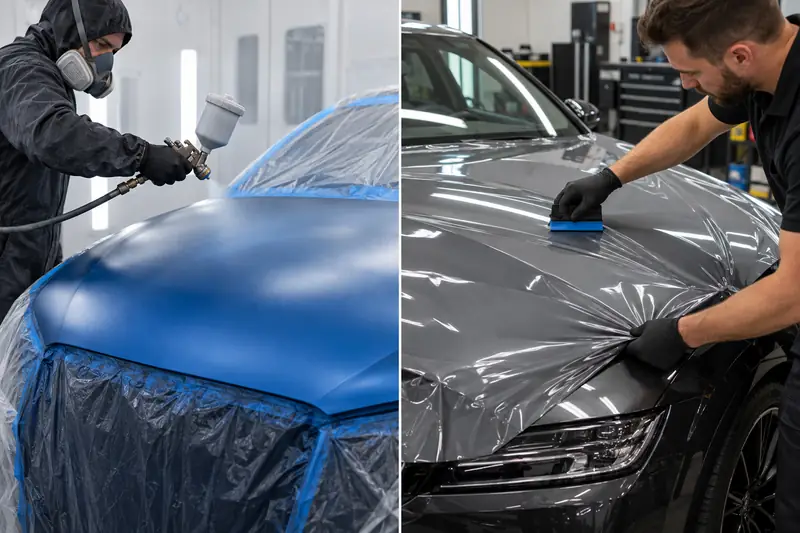
Short answer: Liquid wrap is a peelable, rubber-like coating sprayed onto a car in several thick coats, then peeled off later. Vinyl wrap is a pre-made adhesive film applied in sheets. Liquid wrap is cheaper and seamless on complex parts but less durable, while vinyl offers more finishes, sharper gloss and typically longer life with cleaner removal.
Liquid wrap is a sprayable, peelable coating that dries into a flexible, rubber-like skin over a car's paint, so it can change the color and later be peeled away. Vinyl wrap does the same job with a factory-made adhesive film. Both promise a reversible color change, but they behave very differently on cost, finish, durability and removal. This guide is for owners weighing a DIY spray wrap car project and for shops deciding whether to offer one, the other or both. It compares liquid car wraps and vinyl honestly, including where liquid wrap is the better tool.
Key takeaways
- Liquid wrap is a peelable coating sprayed in multiple coats; vinyl wrap is a pre-made film with adhesive, applied in sheets.
- Liquid wrap typically costs less in materials and has no seams, which suits wheels, emblems, grilles and complex shapes.
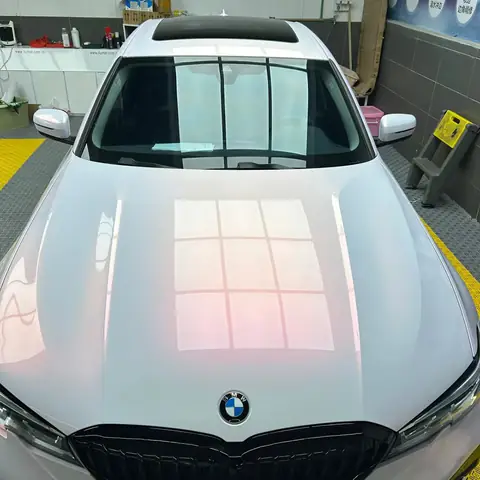
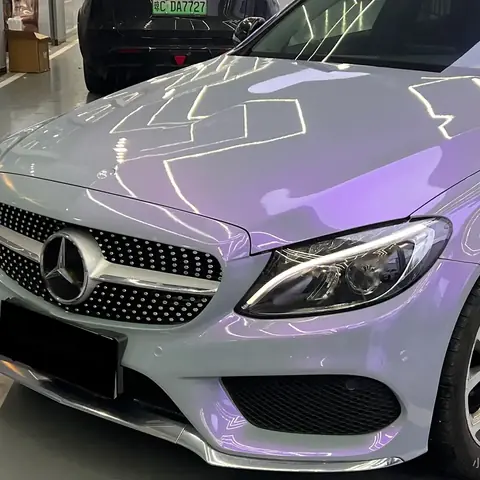
- Vinyl wrap offers more finishes, including true high gloss, chrome, color-shift, carbon and brushed textures, with uniform thickness.
- Vinyl typically lasts longer on body panels; liquid wraps are often expected to last a shorter time, especially on horizontal surfaces.
- Liquid wrap only peels cleanly when it is applied thick enough; thin or sun-baked coatings can be slow and messy to remove.
- Neither replaces paint correction: both show surface defects, and neither repairs chips or failing clear coat.
What is liquid wrap?
Liquid wrap, also called spray wrap, liquid car wrap or liquid vinyl wrap, is a flexible coating designed to be removable. It is usually a synthetic rubber or polymer dispersion that is sprayed with an HVLP or similar spray gun, or applied from aerosol cans on small parts. Each coat dries to the touch quickly, and the installer builds up many coats until the layer is thick enough to peel as a single sheet later.
Despite the name "liquid vinyl wrap," most peelable coatings are not vinyl film in liquid form. The term is marketing shorthand for "a wrap you spray."
Typical liquid wrap finishes are matte and satin. Gloss topcoats, pearls and metallic additives are available, but reaching the deep, flat gloss of a quality gloss vinyl or paint is difficult with a peelable coating.
What is vinyl wrap?
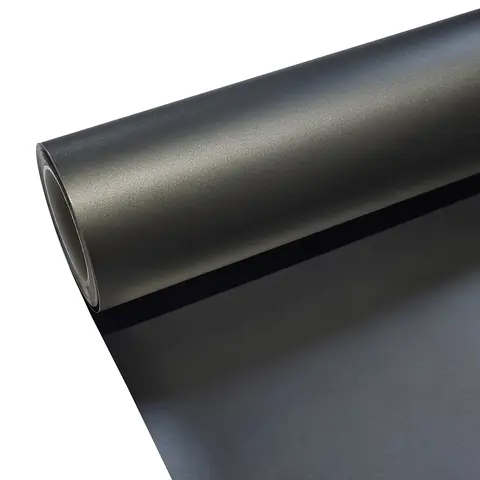
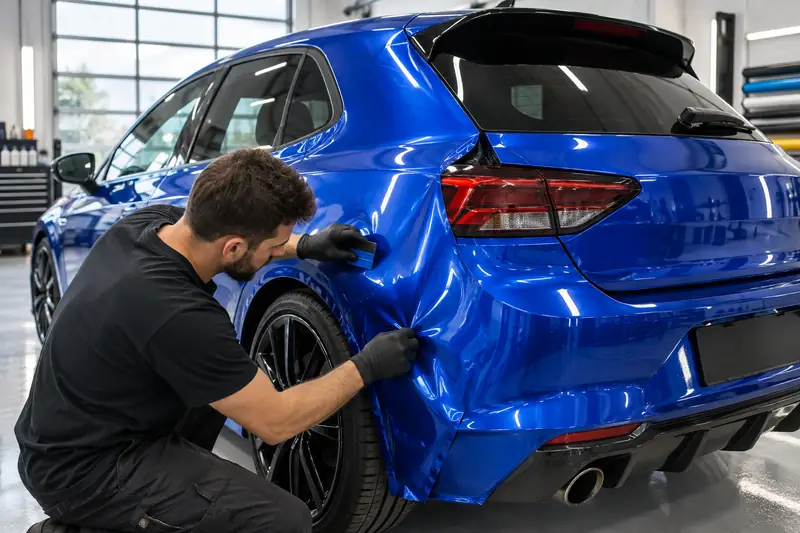
Vinyl wrap is a thin, colored film with a pressure-sensitive adhesive on the back, supplied on rolls usually 1.52 m (60 in) wide. Installers lay it over each panel, stretch it with heat into curves and trim it at panel edges. Cast and premium PVC films are designed to conform to car shapes; PET liner films give a paint-like, very smooth gloss. For a full overview, see what a car wrap is.
Liquid wrap vs vinyl wrap: side-by-side comparison
The table summarizes the main differences. Ranges are rough and vary by product, climate, vehicle and installer.
| Liquid wrap (peelable coating) | Vinyl wrap (film) | |
|---|---|---|
| How it is applied | Sprayed in many coats | Laid as sheets, stretched and trimmed |
| Typical pro cost, full car | Roughly USD 1,000–3,000 | Roughly USD 2,500–6,000 |
| DIY material cost | Roughly USD 300–900 with a liquid wrap kit | Roughly USD 500–1,500 in film |
| Finish options | Mostly matte and satin; gloss, pearl and metallic limited | Gloss, satin, matte, metallic, chrome, color-shift, textures |
| Seams | None | Some seams and relief cuts on large or deep panels |
| Thickness | Varies with spray technique | Uniform, set at the factory |
| Typical life on body panels | Often shorter; about 1–3 years is common | Often several years with quality film |
| Repairs | Respray area; blending can show | Replace film on the damaged panel |
| Removal | Peels if thick enough; thin areas flake | Peels with heat; residue is usually minor |
| Workspace | Needs a clean spray area and masking | Needs a clean, dust-controlled bay |
| Health and safety | Overspray and solvent fumes; use proper ventilation and respiratory protection | Minimal fumes; cutting tools and heat guns |
Pros and cons of liquid wrap
Liquid wrap is not a lesser vinyl. It is a different tool, and on some jobs it is the better one.
Where liquid wrap does well
- Complex shapes. Wheels, grilles, badges, emblems and intakes can be coated without any seams or relief cuts.
- Low entry cost. A liquid wrap kit lets an owner try a color change for less material cost than full rolls of quality film.
- No visible seams. The coating flows across edges and gaps.
- Easy touch-up. Small damage can be resprayed, though matching sheen takes skill.
Where liquid wrap struggles
- Durability. Peelable coatings are softer than vinyl's top layer, so they can scuff, stain and wear faster, especially on hoods, roofs and lower panels.
- Fuel and chemical sensitivity. Fuel spills, bug remover and strong solvents can mark or soften some coatings.
- Gloss and texture limits. True mirror gloss, chrome, carbon fiber and brushed metal looks are not practical.
- Removal depends on thickness. If too few coats were applied, the coating tears into small pieces instead of peeling in sheets.
- Spray skill matters. Runs, orange peel, dry spray and uneven thickness are all common in DIY work.
Pros and cons of vinyl wrap
Where vinyl does well
- Consistency. Every square meter has the same color, thickness and finish, batch to batch when you order from one batch.
- Range of looks. Gloss, satin and matte colors plus metallic, chrome, color-shift, carbon and printed graphics. See car wrap finishes compared.
- Durability. Quality films have UV-stable layers and tougher top surfaces; see how long a car wrap lasts.
- Clean, predictable removal within the film's rated life.
Where vinyl struggles
- Higher upfront cost, mainly labor.
- Seams and relief cuts on deep bumpers and very large panels.
- Skill curve. Wrapping complex bumpers well takes training and practice. Our how to wrap a car guide shows the process.
Which one should you choose?
Choose by the part, the look and how long you want it to last. Use this sequence as a quick decision guide:
- Decide the timeframe. For a short-term look of a year or two, liquid wrap can make sense. For several years, vinyl is usually the better value.
- Decide the finish. If you want high gloss, chrome, color-shift or a texture, choose vinyl. If matte or satin is fine, both work.
- Look at the part. For wheels, emblems and grilles, liquid wrap is often easier. For hoods, doors and roofs, vinyl is more durable.
- Check your workspace. Spraying needs ventilation, masking and protective equipment. Vinyl needs a clean, warm, dust-controlled space.
- Set the budget. Compare the full cost, including labor, prep and future removal, not only materials.
Many owners combine the two: vinyl on the body for durability and finish, liquid wrap on the wheels for a seamless match. For cost background, see how much it costs to wrap a car, and for paint as a third option, vinyl wrap vs paint.
Liquid wrap, hydro dipping and other coatings
Spray wrapping auto parts is sometimes confused with hydro dipping. Hydro dipping, or water transfer printing, floats a printed film on water, activates it and dips the part through it so the pattern wraps around the shape. It is widely used for camo, carbon and graphic patterns on wheels, interior trim, helmets and sporting equipment, and firearm dipping graphics are a common niche. Unlike liquid wrap, hydro dipping is usually sealed with a clear coat and is permanent, not peelable.
For large flat or gently curved panels, printed vinyl can achieve similar camo and graphic looks reversibly. See the camo vinyl wrap guide for printed options.
Supplying vinyl wrap film for your shop
Shops that offer both services often use liquid wrap for wheels and small parts and vinyl for full color changes. If vinyl is your main product, consistency and range matter most.
Mars Decorative Film manufactures PVC vinyl wrap in gloss, satin, matte and metallic finishes, PET liner vinyl for paint-like gloss, and chrome, carbon and color-shift films in its printed and effect range. Mars does not make liquid wrap or spray coatings. Rolls are 1.52 m wide, MOQ is one roll with mixed colors allowed, and you can request free samples to compare finishes against a sprayed panel.
Frequently asked questions
Is liquid wrap better than vinyl wrap?
Neither is better for every job. Liquid wrap is cheaper and seamless on complex parts like wheels and grilles, while vinyl wrap offers more finishes, true high gloss and typically longer life on body panels. Choose by the part, the finish you want and how long it must last.
How long does liquid wrap last on a car?
Liquid wrap on body panels often lasts about one to three years, depending on product, thickness, climate and care. Horizontal surfaces in strong sun usually wear first. Quality vinyl wraps typically last longer.
Does liquid wrap damage car paint?
Applied over healthy factory paint and removed correctly, peelable coatings are designed not to damage paint. Problems usually come from thin coats that will not peel cleanly, aggressive removal, or applying over damaged or freshly painted surfaces.
How many coats of liquid wrap do you need?
Most peelable coatings need several full, wet coats to build enough thickness to peel later, often five or more. Follow the specific product's instructions, since thin coverage is the most common cause of difficult removal.
What comes in a liquid wrap kit?
A typical liquid wrap kit includes the base color coating, sometimes a gloss or pearl topcoat, and may include a spray gun, strainers and masking supplies. Kit contents vary by supplier, so check what is included and how much coverage it provides.
Is spray wrap cheaper than vinyl wrap?
Usually yes, especially for DIY projects, because the material is cheaper and seams are not an issue. Professional liquid wrap jobs still involve significant labor for prep, masking and spraying, so the price gap narrows for high-quality work.