Signage & printable · 7 min read
Perforated window vinyl and car window decals: one-way vision explained
Perforated window vinyl explained: how one-way vision film works, 50/50 vs 60/40 holes, which vinyl to use for car window decals, lamination and legality.
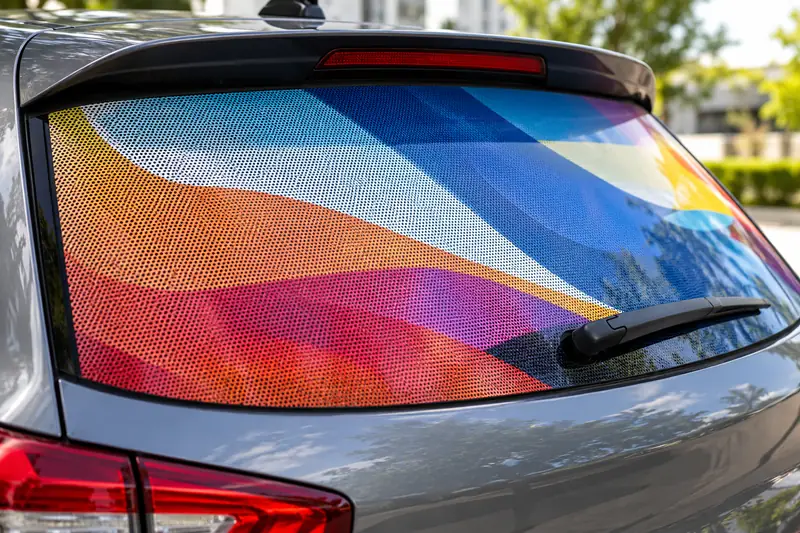
Short answer: Perforated window vinyl is a printable self-adhesive film punched with small holes and backed with black adhesive, so a printed image shows from outside while people inside can see out. Common patterns are 50/50 and 60/40 (printed area to holes). Solid vinyl suits small car window decals; perforated film suits full-window graphics.
A sticker on the window can be anything from a small vinyl decal in the corner of a car's rear glass to a full storefront graphic you can still see through from inside. Perforated window vinyl, also called one-way vision film, makes the second possible: a printed film full of tiny holes that shows an image from outside while keeping the view out. This guide is for sign shops, print shops and wrap shops producing car window decals, truck window decals and window graphics. It explains how perforated vinyl works, 50/50 vs 60/40 perforation, which vinyl to use for each window job, lamination, installation and legal caveats.
Key takeaways
- Perforated window vinyl is printable film with a regular pattern of holes, a white printable face and a black adhesive and backing side.
- It works because the outside is brighter than the inside in daylight; at night, with interior lights on, the effect reverses.
- 50/50 means half printed film, half holes; 60/40 gives more image and less visibility.
- Small car window stickers and lettering are usually made from solid cut or printed vinyl, not perforated film.
- Laminating perforated vinyl with an optically clear laminate keeps rain and dirt out of the holes.
- Rules on window graphics vary by country and state; windshields and front side windows are commonly restricted.
What is perforated window vinyl?
Perforated window vinyl is a self-adhesive PVC film punched with small holes, typically about 1.5 mm (around 1/16 in) across, with a white printable face and a black layer behind it. It is applied to the outside of glass and printed with a full-color image.
From outside, the eye reads the printed dots as one image and ignores the holes. From inside, the black backing absorbs light and the eye looks through the holes to the brighter scene outside. The film is supplied on a heavy liner that supports the holes during printing and cutting.
This is why it is also called one way glass film for windows. It is different from one way mirror window film, which is a metallized tint film that reflects light; that kind of film belongs with tint products rather than printed graphics. See the car window tint guide for how tint films work.
50/50 vs 60/40 perforation
The ratio describes how much of the surface is printable film vs open holes. It is the main trade-off between image strength and visibility.
| Pattern | Printed area | Open area | Image | View from inside | Typical use |
|---|---|---|---|---|---|
| 50/50 | ~50% | ~50% | Lighter, softer colors | Clearer | Vehicle rear and side windows where allowed |
| 60/40 | ~60% | ~40% | Stronger color | Slightly darker | Storefronts, buses, where image impact matters |
| 70/30 | ~70% | ~30% | Strongest | Darkest | Building glass and signage, rarely vehicles |
For vehicles, many shops default to 50/50 for better driver visibility, though local rules decide what is permitted. For shop windows, 60/40 is common because brand impact matters more and nobody is driving behind the glass.
What vinyl to use for car window decals
Choose by size and whether the driver or occupants need to see through the area.
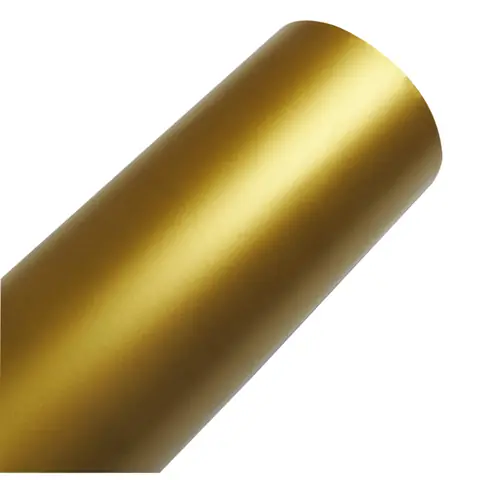
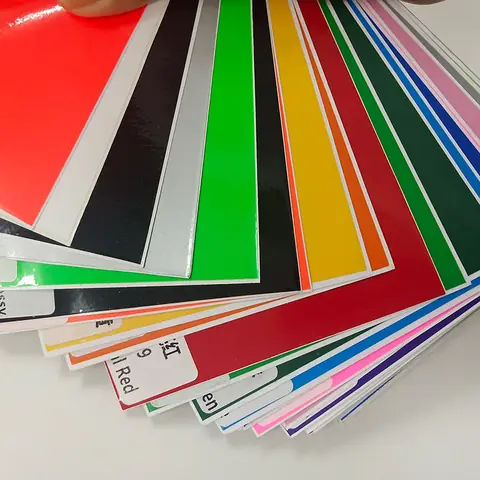
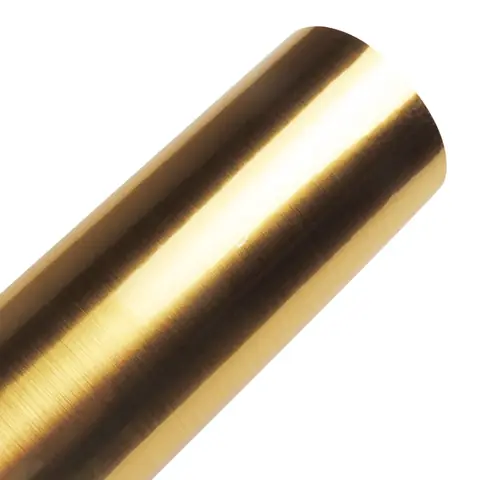
- Small car window stickers, logos and lettering: solid cut vinyl or printed vinyl. White cutting vinyl and metallic colors such as gold read well on dark glass. The car decals guide covers film choice.
- Custom rear window decals for trucks and full rear window graphics: perforated window vinyl, so the glass stays see-through.
- Business hours and window lettering on storefronts: cut polymeric vinyl or frosted vinyl.
- Clear-background window graphics: clear printable vinyl, covered in the clear adhesive vinyl guide.
- Darkening or heat control: window tint, not vinyl graphics. Rear window tint and back window tint are tint film jobs.
Solid vinyl window decals block vision entirely, so keep them small and out of the driver's sight lines. Truck back window stickers are a classic example: small solid decals in a corner, or perforated film for full coverage.
Laminating perforated vinyl
Laminating perforated window vinyl with an optically clear laminate is strongly recommended for vehicles and anything that faces rain. Without it, water and dirt collect in the holes and the view from inside becomes blurry, especially when wet.
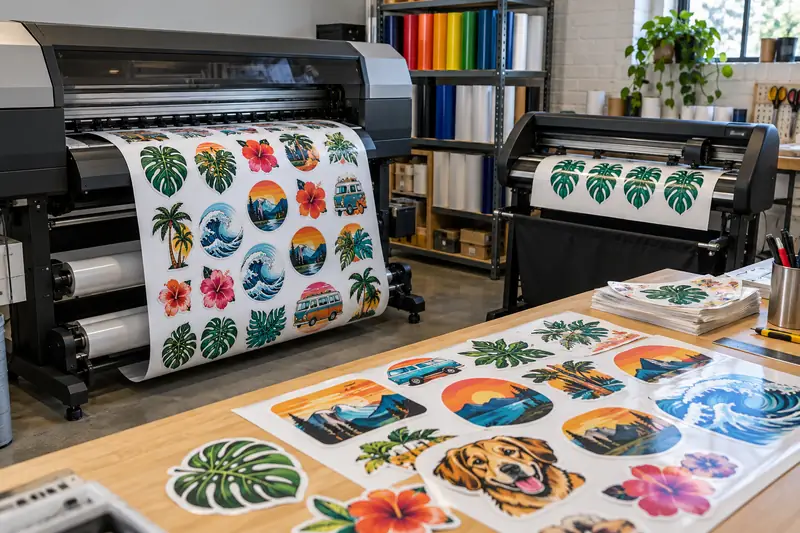
- Print on the perforated film with eco-solvent, latex or UV ink, using a profile with modest ink load so ink does not pool in the holes.
- Let the print cure. Eco-solvent prints typically need about 24 hours to outgas before laminating.
- Laminate with an optically clear cast or polymeric laminate made for window graphics; general-purpose laminates can look hazy over glass.
- Trim the edges and keep the laminate slightly inside the window frame edge so it seals the holes without overhanging rubber seals.
Unlaminated perforated film is acceptable for short-term indoor-facing promotions, but outdoor life drops and visibility in rain suffers. The printable vinyl guide covers printer and laminate setup.
How to install perforated window film
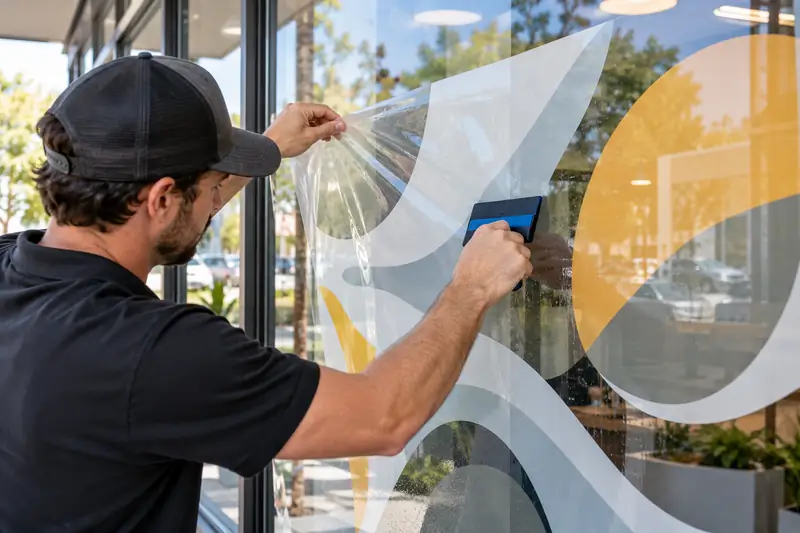
Perforated film is installed dry on the outside of the glass, generally in one piece per window.
- Clean the glass inside and out; remove old adhesive and wax with a glass-safe scraper and cleaner.
- Measure the visible glass and plan the graphic to stop just inside the seals or dot-matrix band.
- Hinge the panel with masking tape along the top.
- Peel the liner back a section at a time and squeegee horizontally from the hinge downward.
- Trim carefully along the seals with a sharp blade and light pressure, never cutting into the rubber.
- Do not use wet application, as water trapped in the holes and adhesive slows curing and can blur the view.
- Avoid running wipers or car washes over the graphic for a day or two.
For full vehicle jobs that combine perforated windows with body graphics, see the fleet wraps and vehicle graphics guide and the truck and van wraps guide.
Are rear window decals legal?
Rules on window graphics vary widely by country, state and vehicle type, and they change. Windshields and front side windows are commonly restricted to a small top strip or nothing at all. Rear windows are often treated more leniently, sometimes on condition that the vehicle has working side mirrors on both sides, but that is not universal.
Some authorities treat perforated film as a form of tint and apply light transmission limits; others set separate rules for signs and decals. Commercial vehicles, taxis and buses may have their own rules. Before installing, check with your local DMV or transport authority and keep the customer informed. The window tint laws guide explains how limits are typically structured.
Putting a sticker on the window without perforated film
Not every window job needs one-way vision film.
- Exterior window wrap for storefronts: perforated film where staff need to see out; solid printed vinyl where the glass is a display only.
- Privacy on office glass: frosted vinyl gives an etched look and lets light through.
- Temporary promotions: removable vinyl or static cling for short campaigns.
For vehicle personalization such as personalized window decals for cars, solid cut vinyl stays the most durable and lowest-cost option, since it contains no ink to fade.
Sourcing window vinyl for your shop
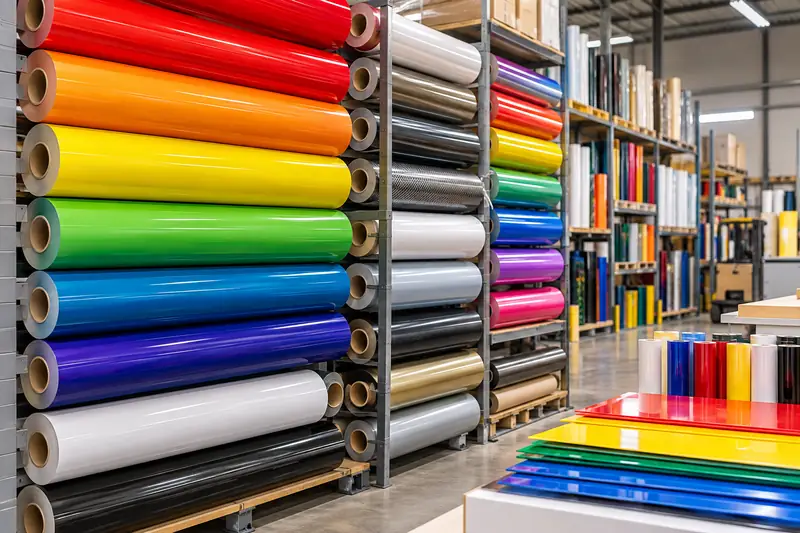
Mars Decorative Film manufactures printable self-adhesive vinyl, white self-adhesive vinyl and cutting vinyl for window decals and lettering, and window tint film for shops that also handle rear window tint. The MOQ is one roll with mixed products allowed. If you need perforated one-way vision film specifically, ask what is in the current range when you request free samples, and test print density and visibility on a real window first.
Frequently asked questions
What vinyl should I use for car window decals?
For small decals and lettering, use solid cut or printed vehicle-grade vinyl. For full rear window graphics that must stay see-through, use perforated window vinyl with an optically clear laminate, where local rules allow it.
Can you see out of perforated window vinyl?
Yes, in daylight. The black backing and holes let people inside see out while those outside see the printed image. At night, with interior lights on, people outside can see in more easily.
What is the difference between 50/50 and 60/40 perforated vinyl?
50/50 has half printed film and half holes, giving better visibility and a softer image. 60/40 has more printed area, giving stronger color but a slightly darker view from inside.
Does perforated window vinyl need lamination?
Lamination is strongly recommended for vehicles and outdoor windows. A clear laminate keeps water and dirt out of the holes so the view stays clear in rain and the print lasts longer.
Is it legal to put a sticker on the rear window of a car?
It depends on where you live. Many places allow rear window graphics, sometimes only with dual side mirrors, while restricting windshields and front side windows. Check with your local DMV or transport authority before installing.
Is one way vision film the same as one way mirror tint?
No. One way vision film is printed perforated vinyl with holes. One way mirror tint is a metallized window film that reflects light, and it is installed and regulated as tint.