Signage & printable · 8 min read
How to make vinyl stickers: printable vs cut vinyl, lamination and cutting
How to make vinyl stickers that last: printable vs cut vinyl, eco-solvent, latex and UV inks, lamination, kiss cut vs die cut, sheets vs rolls and costs.
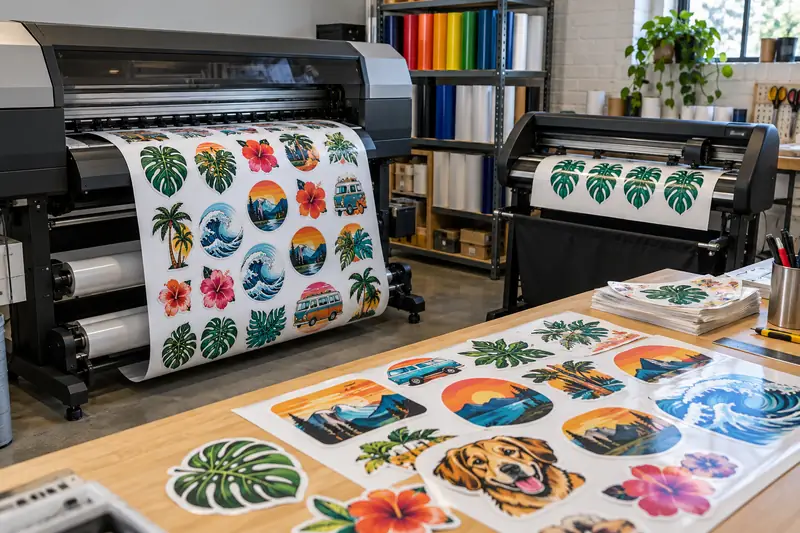
Short answer: To make vinyl stickers, print your design on white printable self-adhesive vinyl with an eco-solvent, latex or UV printer, let the ink cure, laminate it, then contour cut around each shape on a plotter. Single-color logos and lettering can instead be cut from colored cutting vinyl, weeded and applied with transfer tape.
Vinyl stickers are self-adhesive graphics made from a thin PVC film, a pressure-sensitive adhesive and a protective liner, either printed in full color or cut from solid-color vinyl. This guide is for sign shops, print shops, wrap shops and small businesses that want to make custom vinyl stickers in house. It covers the two production routes (printable vs cut vinyl), which inks to use, why lamination matters, kiss cutting vs die cutting, sticker sheets vs rolls, and what stickers typically cost to produce and buy.
Key takeaways
- There are two ways to make vinyl stickers: print on white printable vinyl and contour cut, or cut shapes from solid-color cutting vinyl.
- Eco-solvent, latex and UV inks all make durable vinyl stickers; eco-solvent prints need roughly 24 hours to outgas before laminating.
- A clear laminate adds scratch, UV and water resistance and is what turns a print into a waterproof vinyl sticker.
- Kiss cutting cuts the vinyl but leaves the liner intact; die cutting (through cutting) cuts vinyl and liner to the sticker shape.
- Calendered vinyl suits flat surfaces and short to medium life; cast vinyl suits curves, vehicles and longer outdoor life.
Printable vs cut vinyl: two ways to make stickers
Printed stickers carry full-color artwork, photos and gradients; cut stickers are single-color shapes or letters cut from colored film. Choose by artwork, not by habit.
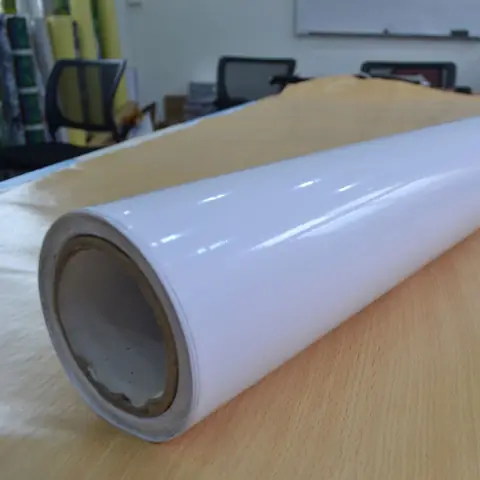
Printed vinyl stickers start as white (or clear) printable self-adhesive vinyl. The design is printed with a wide-format printer, laminated, then contour cut around the outline. This is the route for logo stickers with several colors, photo stickers, product labels and sticker sheets. Our printable vinyl guide covers printer and media choices in more depth.
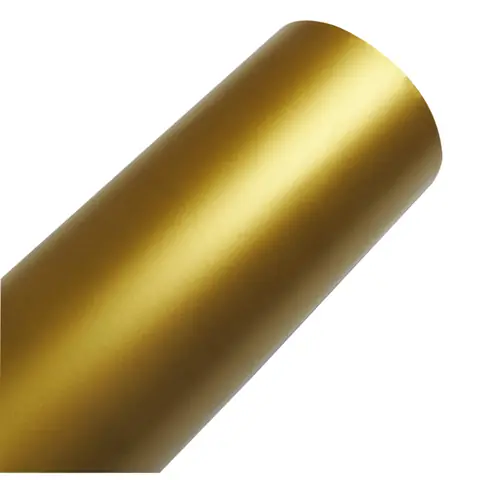
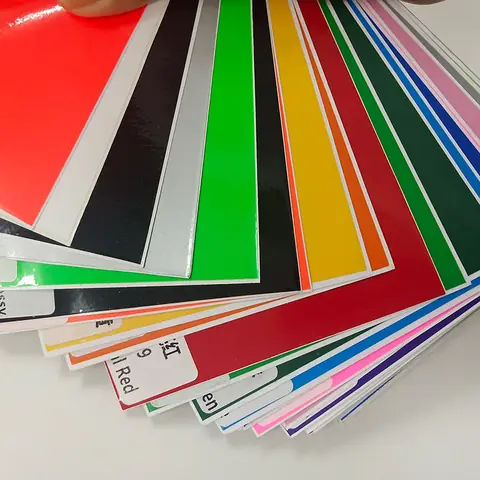
Cut vinyl stickers are made from colored cutting vinyl on a plotter. The cutter traces the letters or shape, the waste is weeded away, and transfer tape carries the design to the surface. There is no ink to fade, so solid colors such as a matte gold logo or white lettering keep their color for years outdoors. It suits vinyl letter stickers, window lettering and simple vehicle graphics. See the vinyl cutter and sign vinyl guide for blade and plotter setup.
| Printed (printable vinyl) | Cut (cutting vinyl) | |
|---|---|---|
| Artwork | Full color, photos, gradients | One color per layer |
| Equipment | Wide-format printer, laminator, plotter | Plotter (vinyl cutter) |
| Typical result | Die-cut or kiss-cut stickers, sheets, labels | Lettering, logos, decals with no background |
| Weakness | Ink fades without UV laminate | Fine detail is slow to weed |
| Best for | Custom sticker printing, labels, photo stickers | Vinyl letter stickers, window and car lettering |
What do you need to make vinyl stickers?
For printed stickers you need a printer that uses solvent-based, latex or UV inks, a roll laminator and a contour cutter with an optical sensor; for cut stickers, a plotter alone is enough. Desktop inkjet printers can print on special inkjet sticker paper, but water-based inks on standard vinyl smear and fade, so they are not a professional route.
A typical in-house setup includes:
- Printer: eco-solvent, latex or UV wide-format printer (a print-and-cut model combines printing and contour cutting).
- Media: white printable self-adhesive vinyl in gloss or matte, plus clear printable vinyl for custom clear stickers.
- Laminate: gloss, matte or satin overlaminate film matched to the vinyl's life.
- Cutter: a plotter with registration-mark reading for contour cuts.
- Finishing: weeding hooks, transfer tape for cut lettering, a squeegee and a cutting mat or trimmer.
Which ink is best for a vinyl sticker printer?
All three main wide-format ink types produce durable stickers; the right one depends on your volume, the substrates you run and whether you need fast turnaround.
| Ink type | How it dries | Lamination timing | Notes for stickers |
|---|---|---|---|
| Eco-solvent | Solvent evaporates into the vinyl | Outgas roughly 24 hours, often longer for heavy coverage | Low running cost, strong color, mild odor; the most common entry point |
| Latex | Heat-cured water-based polymer | Can usually be laminated soon after it exits the printer | Low odor, prints are dry at output, needs a heated printer |
| UV-curable | Cured instantly by UV lamps | Immediate; some UV prints are used unlaminated indoors | Can print white ink for clear stickers; ink sits on the surface and may crack if stretched hard |
If you print custom clear stickers, a printer with white ink lets you lay a white underbase so colors stay opaque. Without white ink, colors on clear vinyl look translucent, which is fine for some window graphics but not for logos that need to pop.
How to make vinyl stickers step by step
The process below is for printed, contour-cut vinyl stickers, which cover most custom sticker printing jobs.
- Prepare the sticker design. Build artwork at final size, in CMYK, with images at around 300 dpi at print size. Add a bleed of about 2–3 mm (roughly 1/8 in) beyond the cut line.
- Create the cut path. Draw a vector contour around each sticker on its own layer, usually as a named spot color your RIP or cutter software recognizes. Keep corners slightly rounded; sharp points lift sooner.
- Nest the layout. Arrange stickers to use the media width efficiently and add registration marks for the cutter.
- Print on printable vinyl. Load white or clear printable self-adhesive vinyl and print with the correct media profile so ink density and drying match the film.
- Let the ink cure. Eco-solvent prints should outgas, typically for about 24 hours, unrolled or loosely rolled. Laminating too early traps solvent and can cause curling, bubbles or adhesive failure.
- Laminate. Apply a cold overlaminate with a roll laminator, keeping tension even to avoid silvering and wrinkles.
- Contour cut. Load the laminated print into the plotter, read the registration marks and kiss cut or through cut along the contour.
- Weed and finish. Remove the waste matrix if required, then trim into sheets or cut into individual die-cut stickers.
For cut lettering, the steps are simpler: cut the mirrored or standard design from colored vinyl, weed the waste, apply transfer tape and squeegee. The transfer tape guide explains how to pick the right tack for each vinyl.
Kiss cut vs die cut stickers
A kiss cut goes through the vinyl and laminate but not the liner, so stickers stay on a shared backing sheet; a die cut (also called through cut) goes through everything, giving a loose sticker the exact shape of the design.
- Kiss-cut sticker sheets hold several stickers on one sheet. They are fast to produce, easy to peel and popular for printable stickers, product kits and label stickers.
- Die-cut stickers have a backing that matches the shape. They look more finished for giveaways, logo stickers and retail packs, but cutting through a liner needs more blade force or a separate cutting pass.
- Sticker rolls suit labeling lines and personalised sticker rolls for products, where stickers are applied by hand or machine from a roll.
Many plotters can kiss cut the shape and then perforate or through cut the sheet edge in one job, which is how many print shops produce sticker sheets efficiently.
Making waterproof and outdoor vinyl stickers
Vinyl itself does not absorb water, but the print and edges need protection to survive outdoors. A laminate with UV inhibitors is the main reason waterproof vinyl stickers last.
- Unlaminated eco-solvent prints outdoors may start to fade or scuff within months, depending on climate and sun exposure.
- Laminated calendered stickers commonly last roughly 2–5 years outside; cast vinyl with matched cast laminate can last longer.
- Rounded corners, a clean surface and firm squeegee pressure all reduce edge lift.
For vinyl stickers for cars and stickers for trucks, use a film rated for vehicles and curved surfaces. The car decals guide and the outdoor vinyl and weatherproof stickers guide cover film life and surface prep in detail.
How much do vinyl stickers cost?
Sticker pricing is driven by size, quantity, shape and finish. In many markets, a run of 100 custom vinyl stickers of about 3 in (7.5 cm) costs buyers roughly USD 60–150 from a print shop, with the price per sticker dropping sharply on runs of 500 or 1,000. Cheap custom stickers usually mean standard shapes, uncoated or thin film and large quantities.
For shops, material cost per sticker is usually small; labor, setup, cutting time and waste make up most of the price. Custom shapes, clear or metallic film, white ink and small runs all push the price up. Prices vary by market, shop and job, so treat these as starting points rather than quotes.
Buying sticker vinyl for your shop
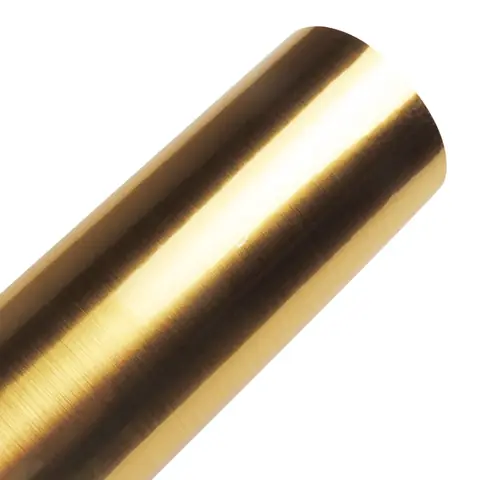
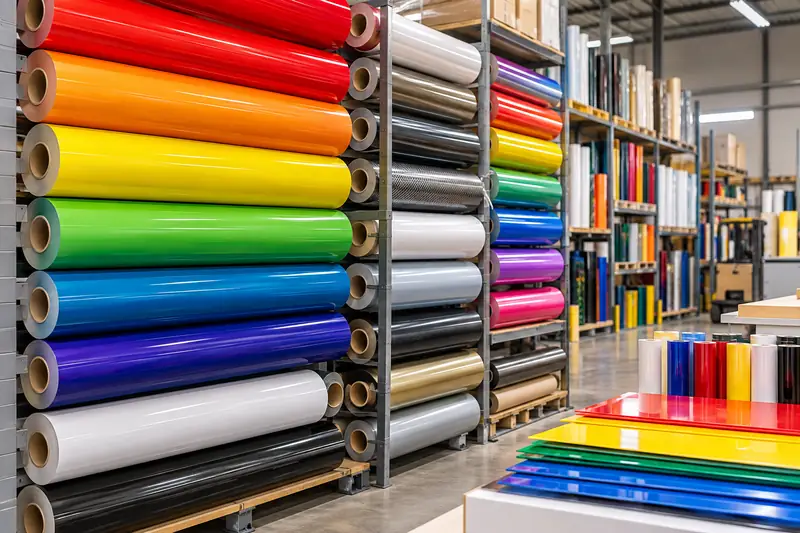
Mars Decorative Film manufactures printable self-adhesive vinyl, white self-adhesive vinyl and cutting vinyl for sign, print and wrap shops, including solid colors such as matte gold cutting vinyl for logos and lettering. Orders start at one roll and colors can be mixed in one shipment, which helps smaller print shops test before stocking. You can request free A4 samples to run print and cut tests on your own equipment, or talk to us about private-label packaging if you resell media.
Frequently asked questions
How do you make a vinyl sticker at home or in a small shop?
Print the design on printable self-adhesive vinyl, let the ink dry or outgas, laminate it, then cut around the shape with a plotter or by hand. For a single-color sticker, cut it from colored vinyl on a plotter, weed the waste and apply it with transfer tape.
Where can I get vinyl stickers made?
Local sign shops and print shops make custom vinyl stickers and can advise on film and laminate for your use. Online sticker printers suit standard shapes and larger runs. Businesses with steady demand often bring printing in house with a printer, laminator and plotter.
Where can I print vinyl stickers?
You can print vinyl stickers at any sign or print shop with an eco-solvent, latex or UV wide-format printer. Standard desktop inkjets need special inkjet sticker media, and those prints are usually less durable outdoors than wide-format prints.
How much are stickers for a car?
Custom vinyl stickers for cars typically range from a few dollars for a small decal to well over USD 100 for large rear window or side graphics, depending on size, film and installation. Prices vary by market and shop.
Are vinyl stickers waterproof?
The vinyl film is water resistant, and a laminated vinyl sticker is effectively waterproof for normal outdoor use and washing. Unlaminated prints can scuff or fade sooner, especially with eco-solvent ink in strong sun.
How do you get sticker adhesive off?
Peel the sticker slowly, warming it with a hair dryer or heat gun on a low setting so the adhesive softens. Remove leftover residue with isopropyl alcohol or a purpose-made adhesive remover, testing first on an inconspicuous spot.