Signage & printable · 7 min read
Clear adhesive vinyl and frosted vinyl: uses on glass and vehicles and how to apply
Clear vinyl explained: clear adhesive vinyl, frosted glass film and clear printable vinyl for windows and vehicles, plus wet application and how to choose.
Short answer: Clear vinyl usually means transparent self-adhesive PVC film with a clear adhesive, used for window graphics, clear stickers, labels and laminates. Frosted vinyl is a translucent etched-glass look film for privacy on glass. On cars, a clear protective wrap is normally TPU paint protection film rather than clear PVC vinyl.
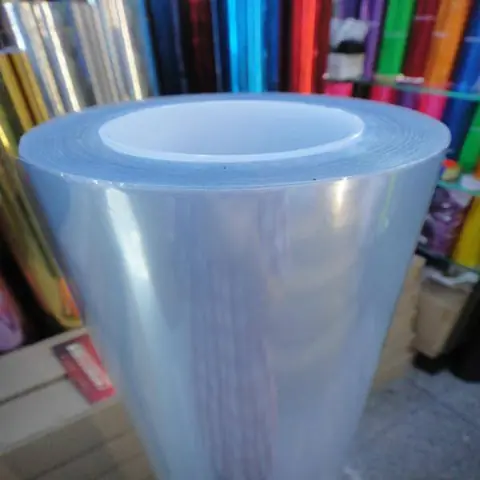
Clear vinyl is a transparent PVC film, and in sign and print shops the term usually means clear adhesive vinyl: a see-through self-adhesive film with a clear adhesive that lets the surface behind it show. Frosted vinyl is its translucent cousin, used to imitate etched glass. This guide is for sign shops, print shops, wrap shops and businesses working on glass and vehicles. It explains the main types of clear and frosted film, where each one is used, how clear printable vinyl works, how clear vinyl differs from clear protective film for cars, and how to install transparent film without bubbles.
Key takeaways
- Clear adhesive vinyl is a transparent face film with a clear adhesive; any bubble, dust or fingerprint underneath will show.
- Frosted vinyl gives an etched-glass look for privacy bands, office glass and glass door safety marking.
- Clear printable vinyl needs a white ink underbase for opaque colors; without it, prints look translucent.
- A "clear car wrap" for protection is usually TPU paint protection film, not clear PVC vinyl.
- Wet application with a mild application fluid is the standard way to install clear and frosted film on glass.
- Clear vinyl sheeting sold by gauge (20 gauge, 40 gauge) is usually non-adhesive material for covers and enclosures, not sticker film.
What is clear adhesive vinyl?
Clear adhesive vinyl is a transparent calendered or cast PVC film, typically about 50–100 µm (2–4 mil) thick, coated with an optically clear permanent or removable adhesive on a paper or PET liner. It can be cut on a plotter, printed on a wide-format printer or used as a protective overlay.
Common uses include:
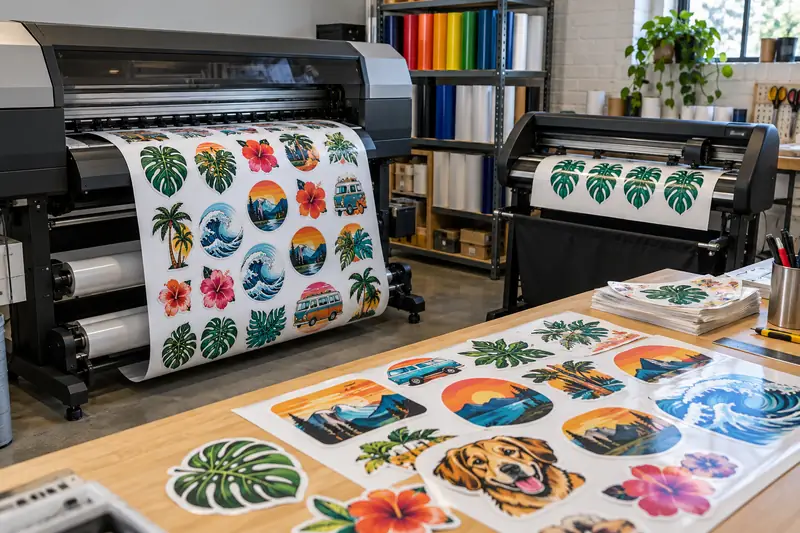
- Custom clear stickers and labels where the product or bottle color should show through
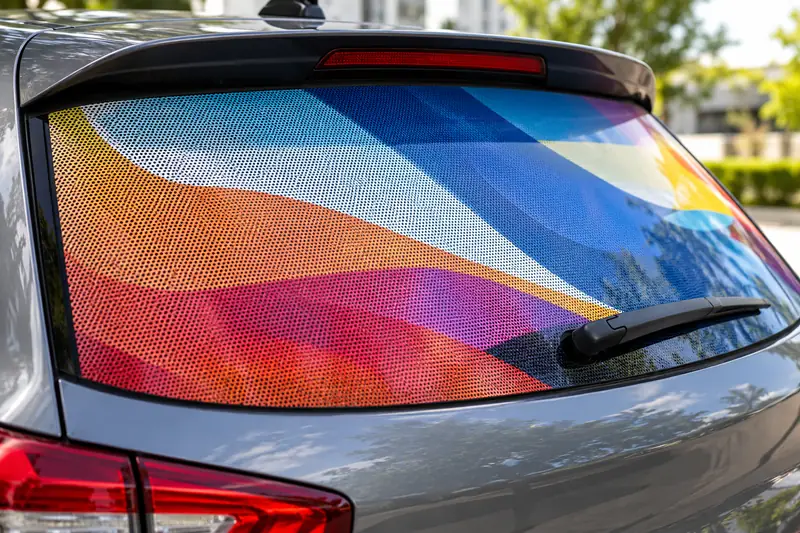
- Window graphics printed on clear film for a no-background look
- Second-surface graphics applied inside glass and read from outside
- Clear self adhesive film for protecting printed menus, posters and control panels
- Transparent permanent vinyl labels on equipment and packaging
Clear adhesive sheets are useful for small runs; for production, rolls cost less per square meter. The adhesive vinyl guide explains how to read face film, adhesive and liner specs.
Types of clear and frosted vinyl
Clear and frosted films share the same construction but differ in face film and purpose.
| Film | Appearance | Typical uses | Notes |
|---|---|---|---|
| Clear gloss vinyl | Fully transparent | Clear stickers, labels, window prints | Shows everything underneath; needs clean wet install on glass |
| Clear printable vinyl | Transparent, ink-receptive | Custom adhesive vinyl transparent logo stickers | White ink underbase for opaque colors |
| Frosted vinyl (etched-glass look) | Translucent, matte | Privacy bands, office glass, glass door markings | Cut lettering out of it or cut it into designs |
| Colored transparent vinyl | Tinted but see-through | Stained-glass effects, light boxes, accent windows | Color shifts with light behind it |
| Clear protective film (PPF) | Transparent TPU | Paint protection on vehicles | Different material; installed with slip solution |
Frosted glass vinyl is the go-to frosted film for glass doors because it adds privacy while letting light through. Many building codes and workplace rules call for visible markings on large glass doors and panels, and frosted bands are a common way to meet them; check local requirements.
Clear printable vinyl: how to print on transparent film
Clear printable vinyl is printed like white printable vinyl, but inks are transparent, so color depends on what is behind the film.
- Decide on white ink. For opaque colors and logos that must read on dark glass, print a white underbase under the color. Printers without white ink give a translucent, stained-glass effect.
- Choose print direction. For first-surface graphics (outside the glass), print normally. For second-surface graphics read through glass, print mirrored with color first and white behind it.
- Cure and laminate. Eco-solvent prints should outgas, roughly 24 hours, before laminating; latex and UV prints can be laminated sooner. Use a clear laminate for scratch and UV resistance.
- Contour cut and weed close to the design, since any clear border remains visible on some surfaces.
Clear printable paper for desktop inkjets is a different product for short-life indoor labels; it is not built for outdoor or vehicle use. For more on printers and inks, see the printable vinyl guide and how to make vinyl stickers.
Clear vinyl on cars: wrap, decals and protective film
On vehicles, "clear vinyl wrap" can mean three different things, and shops should clarify which the customer wants.
- Clear decals and lettering: clear printable or clear cut vinyl for window and body graphics with no background. Use a vehicle-grade film; see the car decals guide.
- Clear protective film for cars: a clear car wrap or transparent car bra for stone chips and scratches is almost always thermoplastic polyurethane (TPU) paint protection film, typically around 150–200 µm (6–8 mil) thick, with a self-healing top coat. Our paint protection film guide explains how it differs from vinyl.
- Clear laminates over printed wraps: cast PVC overlaminate protects printed vehicle graphics from UV and scuffs.
Clear PVC vinyl is thinner and softer than PPF and does not offer meaningful chip protection. If a customer wants automotive clear protective film, quote PPF.
Clear vinyl sheeting vs adhesive film
Searches for clear vinyl sheeting, thick clear vinyl, 20 gauge clear vinyl and 40 gauge clear vinyl usually refer to non-adhesive flexible PVC sheet, not sticker film. In this usage, gauge roughly equals thousandths of an inch, so 20 gauge is about 0.5 mm (0.020 in) and 40 gauge about 1 mm (0.040 in). It is sewn or clamped into covers, enclosures, table protectors and boat or patio curtains.
Adhesive clear vinyl is far thinner and is applied like a sticker. Clear sewable vinyl and clear plastic vinyl sheeting are useful materials, but they are a separate product category from sign and sticker film.
How to apply clear and frosted vinyl to glass
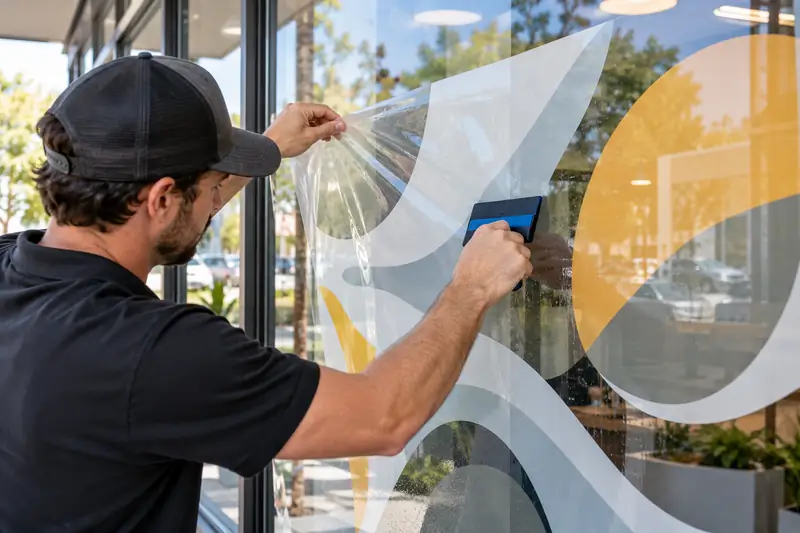
Wet application is the standard method for clear vinyl for windows and frosted film for glass doors, because it lets you position the film and push out water instead of trapping air.
- Clean the glass thoroughly. Scrape with a glass-safe blade, then clean with a lint-free cloth and a streak-free cleaner. Any speck will show through clear film.
- Mix application fluid. A few drops of mild, additive-free soap per liter of water is common; check the film's data sheet, as some adhesives are not suited to wet application.
- Wet the glass and the adhesive side as you remove the liner.
- Position the film and slide it into place.
- Squeegee from the center out with overlapping strokes, pushing all water to the edges. A felt-edged squeegee reduces scratches.
- Trim and dry. Trim edges with a sharp blade, wipe the edges dry and let the adhesive cure, which can take several days in cool weather.
For cut lettering on glass, clear transfer tape makes alignment easier because you can see the layout underneath. The transfer tape guide covers tack levels, and the wrap squeegee guide covers edge types.
Sourcing clear and printable vinyl for your shop
Mars Decorative Film manufactures printable self-adhesive vinyl, white self-adhesive vinyl and cutting vinyl for sign and print shops, and clear TPU paint protection film for shops quoting clear protective wraps on vehicles. The minimum order is one roll with mixed products allowed. Tell us your application when you request free samples so you can test clarity, printing and wet application on your own glass and equipment.
Frequently asked questions
What is clear vinyl used for?
Clear vinyl is used for transparent stickers and labels, window graphics, second-surface prints on glass and protective overlays. Frosted vinyl adds privacy on glass, and colored transparent vinyl creates stained-glass effects.
Can you print on clear vinyl?
Yes, with clear printable vinyl and an eco-solvent, latex or UV printer. For opaque colors, print a white ink underbase; without white ink the colors look translucent against the surface behind.
Is frosted vinyl the same as frosted glass film?
Mostly yes. Frosted glass vinyl and frosted glass film both describe a translucent self-adhesive film that imitates etched or sandblasted glass. Some window films use different constructions, but the look and use are similar.
Is a clear car wrap the same as PPF?
In most cases, yes. A clear car wrap for protection is paint protection film made from TPU, which is thicker, tougher and self-healing compared with clear PVC vinyl.
How do you apply clear vinyl without bubbles?
Clean the glass carefully, use a wet application with mild soapy water if the film allows it, and squeegee from the center out with overlapping strokes. Small water haze usually clears as the film cures.
What does 20 gauge clear vinyl mean?
It is non-adhesive flexible clear vinyl sheeting roughly 0.5 mm (0.020 in) thick. It is used for covers and enclosures, not as sticker or window film.