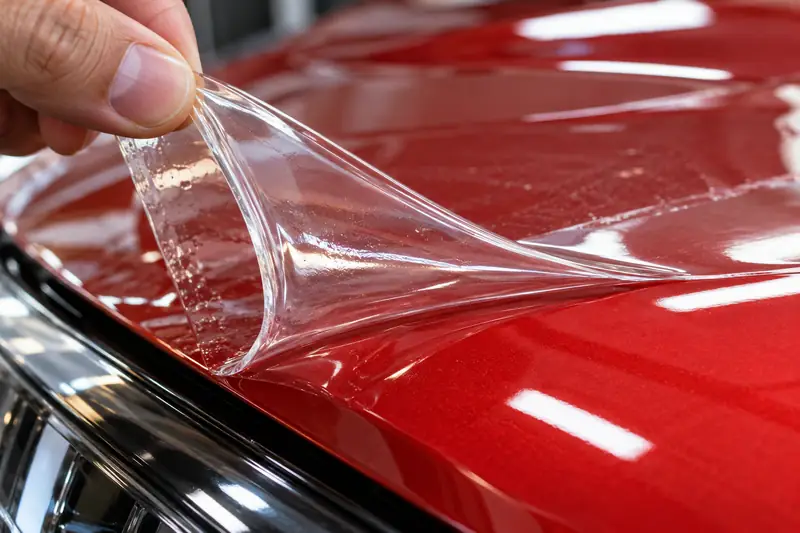
PPF · 8 min read
PPF coverage options and PPF calculator: how much film each package needs
PPF calculator guide: partial front, full front, track pack and full body PPF coverage compared, with how many meters of 1.52 m film each package uses.
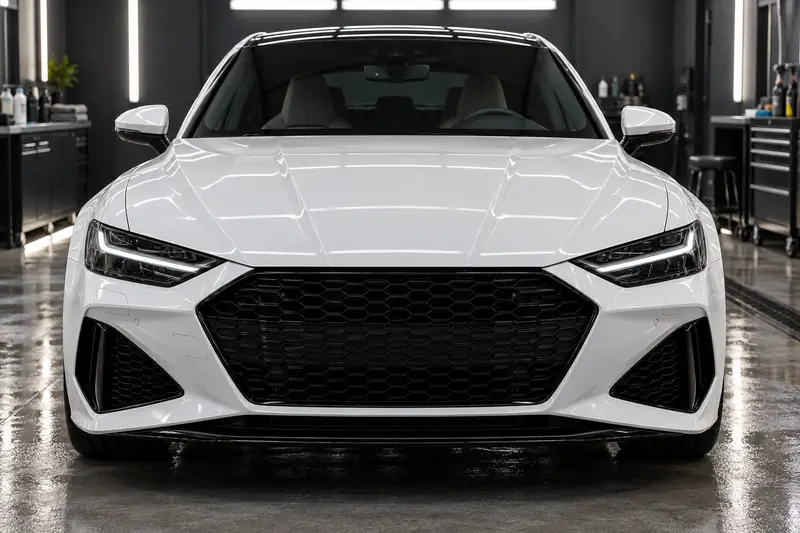
Short answer: A PPF calculator works out film needed from coverage. On 1.52 m wide film, a front bumper typically uses about 1.8–2.5 m, a partial front 3–4.5 m, a full front 5–7 m, a track pack 7–10 m, and full body PPF roughly 15–20 m for a sedan or 18–25 m for a large SUV, before waste allowance.
PPF coverage options are the standard packages shops use to decide which painted panels get paint protection film, from a single front bumper to every panel on the car. The package drives both the protection you get and how much film the job consumes. This guide compares partial front, full front, track pack and full body coverage, gives a film-quantity table for 1.52 m wide rolls, and explains how to use a PPF calculator approach to estimate meters, waste and rough cost. It is for installers planning stock and quotes, and for owners deciding how much of the car to protect.
A note on search terms: "PPF calculator" is also used in India for the Public Provident Fund savings scheme. This guide is only about paint protection film.
Key takeaways
- The four common PPF packages are partial front, full front, track pack and full body; small add-ons cover door cups, door edges and loading sills.
- Most stone chips hit the front bumper, hood leading edge, fenders and mirrors, which is why full front PPF is the most popular package.
- On standard 1.52 m wide film, a full front typically uses about 5–7 m, and full body PPF on a sedan about 15–20 m.
- Add roughly 10–20% waste for bulk, hand-trimmed installs and less for well-nested pre-cut patterns.
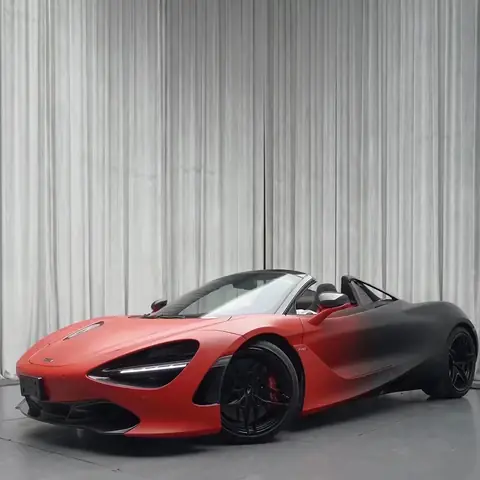
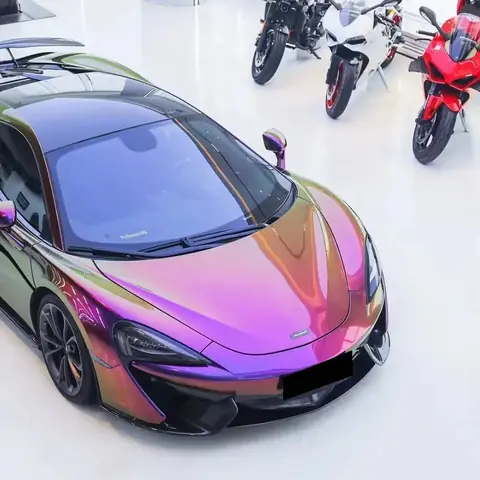
- Color PPF and matte PPF are usually installed full body, because partial coverage would show a visible change in color or sheen.
The main PPF packages explained
Paint protection film packages are named a little differently from shop to shop, but most fall into these groups.
Front bumper PPF
Front bumper PPF, also sold as bumper protection film, covers only the front bumper, often including the lower grille surrounds and fog light areas. It is the entry point for owners who mainly worry about chips on the most exposed panel.
Partial front PPF
Partial front PPF, the classic "clear bra," covers the front bumper, the leading 45–60 cm (18–24 in) of the hood and fenders, and the mirror caps. The film edge across the hood is visible up close, and it can collect dirt over time.
Full front PPF
Full front PPF covers the front bumper, the whole hood, both full fenders, the mirrors and often the headlights. Because film ends at natural panel edges, there is no line across the hood. It protects the areas that take most stone chips on highway driving.
Track pack PPF
A track pack (or PPF track package) adds the areas that take grit and tire spray at speed: A-pillars, the front edge of the roof, rocker panels and often the rear bumper top and the area behind the rear wheels. It suits cars used on track days, on gravel roads or in winter conditions.
Full body PPF
Full body PPF, also called full car PPF, covers every painted panel. It is the only practical choice for color PPF or for turning a gloss car satin, and it protects doors and quarter panels from parking-lot scuffs and swirl marks as well as chips.
How much PPF film do you need? Film quantity by package
The table below gives approximate film use on standard 1.52 m wide rolls. Figures are rough planning ranges, not exact cuts; the real number depends on vehicle size, pattern nesting and whether edges are wrapped.
| Package | Typical coverage | Film used on 1.52 m roll (approx.) | Waste allowance |
|---|---|---|---|
| Front bumper | Front bumper and lower grille surrounds | 1.8–2.5 m | 10–20% |
| Partial front | Bumper, 45–60 cm of hood and fenders, mirrors | 3–4.5 m | 10–20% |
| Full front | Bumper, full hood, full fenders, mirrors, headlights | 5–7 m | 10–15% |
| Track pack | Full front plus A-pillars, roof edge, rockers, rear impact areas | 7–10 m | 10–15% |
| Full body, compact or sedan | All painted panels | 15–20 m | 10–15% |
| Full body, large SUV or pickup | All painted panels | 18–25 m | 10–15% |
| Small add-ons | Door cups, door edges, loading sill, headlights | 0.2–0.5 m each | Minimal |
With most PPF rolls at 15 m, a full front fits comfortably on one roll with film left over, while full body PPF on a sedan usually needs one roll plus part of a second. Large hoods are the limiting piece: a 1.52 m width lets most hoods be covered in one seamless piece, but very wide trucks may need a different plan.
How to estimate film like a PPF calculator
An online PPF calculator usually asks for vehicle type and package, then returns a film length. You can do the same calculation for any car in a few steps.
- Choose the package and list every panel and add-on it includes.
- Measure each panel's largest length and width with a soft tape, following curves rather than straight lines, and add 5–10 cm (2–4 in) per side for handling or wrapped edges.
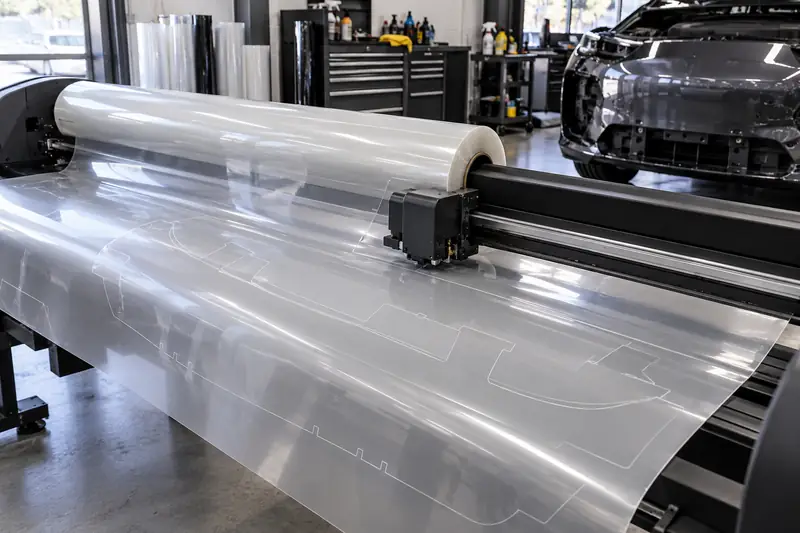
- Lay the pieces out on a 1.52 m wide strip. Sketch or use software to nest small parts, such as mirrors and door cups, beside larger ones.
- Add the total length of the layout.
- Add a waste factor: around 10–20% for hand-trimmed bulk installs, less for good pre-cut nesting, more for a new installer or complex bumpers.
- Round up to whole meters and check against the roll length you stock.
Shops that cut from digital pattern files get film length directly from the nested layout. Our comparison of pre-cut PPF vs bulk rolls covers how plotter nesting affects waste.
Which PPF package is best for your car?
The right PPF coverage depends on how the car is used, how much the paint is worth and the budget.
| Driver profile | Suggested package | Why |
|---|---|---|
| City commuter, tight budget | Front bumper or partial front | Covers the most chip-prone panel |
| Highway daily driver | Full front | Protects the hood, fenders and mirrors with no visible hood line |
| Track days, gravel or winter roads | Track pack | Adds rockers, pillars and roof edge exposed to grit |
| New high-value car or special paint | Full body | Protects every panel and keeps paint uniform |
| Color change or satin look | Full body color or matte PPF | Partial coverage would show color or sheen differences |
| Matte factory paint | Full body matte PPF | Clear gloss film would change the matte look |
PPF for matte paint
Cars with factory matte paint need matte or satin PPF, because gloss film would turn protected panels shiny. In practice that means full body coverage, so every panel keeps the same sheen. See our matte and satin PPF guide.
Color PPF
Color PPF changes the visible color as well as protecting the paint, so it is almost always a full body job. Our color PPF buyer's guide explains how colored TPU differs from clear.
What each package typically costs
Labor dominates PPF pricing, and the price climbs with coverage. In many markets, rough installed prices for quality clear film on a standard car are:
| Package | Rough price range (USD) |
|---|---|
| Front bumper PPF | 400–900 |
| Partial front | 900–2,000 |
| Full front PPF | 1,500–3,000 |
| Track pack | 2,000–4,000 |
| Full body PPF (clear) | 4,500–8,000+ |
These are indicative ranges that vary by country, vehicle and shop. Large SUVs, trucks and complex bumpers sit at the top of each range or above it. The full breakdown of full car PPF cost, film grades and shop factors is in our PPF cost guide.
Coverage details that change the result
Two installs of the same "full front" can look quite different. Ask or decide upfront:
- Wrapped edges or edges stopped short? Wrapping film around panel edges hides the film line but uses more film and skill.
- Hood: one piece or seamed? Most hoods fit a 1.52 m width in one piece; check very wide hoods.
- Headlights included? Often included in full front, sometimes extra.
- Sensors and badges: cut-outs for parking sensors and emblem removal and reinstallation affect time.
- Paint correction first? Film magnifies swirls, so polishing is often recommended before PPF for the hood and any other panel being covered.
For the full installation process, see paint protection film installation, and for longevity see how long PPF lasts.
Stocking PPF for different packages
Knowing how many meters each package uses makes ordering simpler. A shop doing mostly full fronts can often get two full fronts on smaller cars from one 15 m roll, while full body work calls for more stock per job. Mars Decorative Film makes clear TPU PPF and self-healing color PPF on 1.52 m wide rolls, with an MOQ of one roll and mixed products in one order. Installers can request free samples to compare clarity, stretch and self-healing before committing to stock.
Frequently asked questions
How much PPF do I need for a full front?
On 1.52 m wide film, a full front package (bumper, full hood, fenders, mirrors and usually headlights) typically uses about 5–7 m including normal nesting, plus a 10–15% waste allowance. Larger SUVs and trucks sit at the top of the range.
How much film is needed for full body PPF?
Full body PPF on a compact car or sedan typically uses roughly 15–20 m of 1.52 m wide film, and a large SUV or pickup roughly 18–25 m. Exact amounts depend on vehicle size, wrapped edges and how well the pieces are nested.
What is included in a track pack PPF?
A track pack usually includes everything in a full front plus the A-pillars, the front edge of the roof, the rocker panels and often the rear impact areas behind the wheels. It targets the panels hit by grit and stones at higher speeds.
What is the difference between partial front and full front PPF?
Partial front covers the bumper, mirrors and the first 45–60 cm of the hood and fenders, leaving a visible film edge across the hood. Full front covers the whole hood and fenders, so film ends at natural panel edges and protection is more complete.
How much does front bumper PPF cost?
In many markets, a front bumper PPF install on a standard car typically costs roughly USD 400–900. Complex bumpers with many sensors, intakes or grilles, and premium shops, can cost more.
Is there a PPF calculator for paint protection film?
Some pattern software and shops offer online estimators. You can calculate it yourself by measuring each panel, laying the pieces out on a 1.52 m wide strip, adding the lengths and then adding a 10–20% waste allowance.