PPF · 7 min read
Pre-cut PPF vs bulk PPF rolls: plotter patterns, software, waste and labor
Precut PPF vs bulk rolls compared: how plotter-cut patterns work, software subscriptions, film waste, labor time and edge quality, and which suits your shop.
Short answer: Precut PPF is paint protection film cut to vehicle-specific shapes on a plotter from digital patterns, so installers apply it with little or no knife work on the car. Bulk PPF is installed from the roll and trimmed by hand, allowing wrapped edges and custom coverage. Pre-cut saves labor and lowers waste; bulk demands more skill but needs no software subscription.
Precut PPF is paint protection film cut into vehicle-specific shapes before it touches the car, usually on a plotter using digital pattern files. The alternative is bulk installation, where the installer lays film straight from the roll and trims it by hand on the vehicle. Both methods produce excellent results in skilled hands, but they differ in labor, film waste, equipment cost and edge finish. This guide explains how pre cut PPF works, what pattern software and a PPF pre cut machine involve, how waste and labor compare, and which approach suits different shops. It is written for PPF installers, detailers adding film services and distributors advising them.
Key takeaways
- Pre-cut PPF uses vehicle-specific digital patterns cut on a plotter; bulk PPF is trimmed by hand on the car.
- Pre-cut reduces knife work on paint, speeds installation and makes results more consistent across installers.
- Bulk install allows wrapped edges, fewer visible film lines and custom coverage, but needs more skill and time.
- Pattern software is usually sold by subscription or per-cut credits, and a plotter is a separate equipment cost.
- Good pattern nesting typically wastes less film than bulk trimming, though exact savings depend on the job and installer.
- Many shops use a hybrid: pre-cut patterns with extended edges, wrapped by hand where it matters.
What is pre-cut PPF?
Pre-cut PPF is film that has been cut to the exact outline of each panel, for a specific make, model and year, before installation. Patterns come from a database of vehicle templates created by scanning or measuring cars. The installer chooses the vehicle, selects the panels in the package, and sends the job to a cutting plotter.
Pre cut PPF kits are sets of these shapes for a package, such as a full front: bumper, hood, fenders, mirrors and headlights. Shops can cut kits in-house, or buy ppf precut kits from a cutting service that ships ready shapes.
How a PPF pre cut machine works
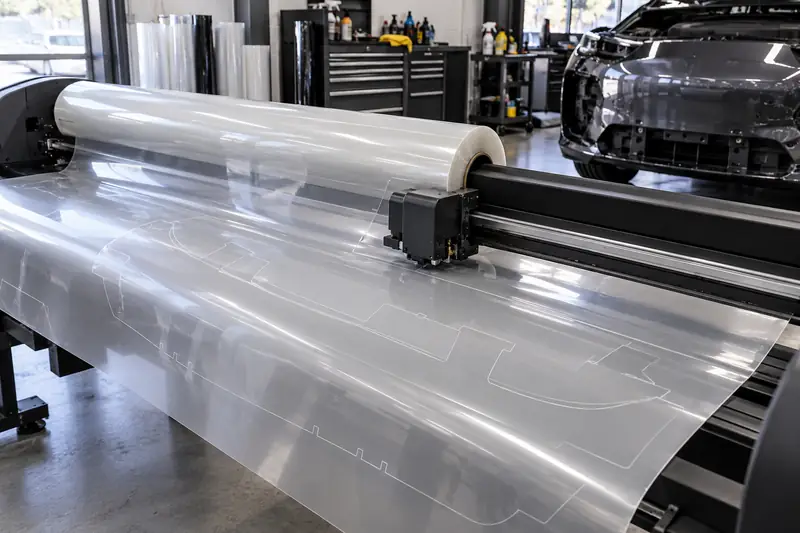
A PPF pre cut machine is a vinyl or film cutting plotter: a drag or tangential blade that follows a vector path across a roll fed by pinch rollers.
- Select the vehicle in the pattern software and choose the package and options, such as badges, sensors and wrapped edges.
- Nest the pieces on the film width. Software places shapes close together to use as little film as possible.
- Set blade depth and force so the blade cuts through the TPU film and adhesive but only scores the liner.
- Cut the film from the roll, typically 1.52 m wide.
- Weed the waste and label each piece by panel.
- Install using slip and tack solutions, squeegeeing each piece into position on the panel.
Plotters used for PPF need enough force and a stable feed to track the thicker, softer TPU film accurately over several meters. Blade wear and calibration directly affect edge quality.
Pre-cut PPF vs bulk install: side-by-side
| Factor | Pre-cut PPF | Bulk PPF (hand-trimmed) |
|---|---|---|
| Knife work on paint | Little or none | Required at panel edges and openings |
| Installer skill needed | Moderate; positioning is key | High; trimming and edge wrapping |
| Installation time | Faster on most panels | Slower, especially on complex bumpers |
| Film waste | Lower with good nesting | Higher, from trimming excess |
| Edges | Often stop a few mm short of the panel edge | Can wrap around edges for an invisible finish |
| Consistency across staff | High | Varies with each installer |
| Custom shapes and new models | Limited to available patterns | Any shape, any vehicle |
| Equipment | Plotter, computer, pattern software | Knives, knifeless tape, squeegees |
| Recurring cost | Software subscription or credits | Mainly labor and blades |
Neither method is automatically better. The choice comes down to the shop's labor model, the types of cars it sees, and the finish customers expect.
Pattern software and subscriptions
Pattern software is the core of a pre-cut workflow. Most providers sell access in one of these ways:
- Monthly or annual subscription for unlimited or capped cuts.
- Pay-per-cut credits, where each kit uses credits.
- Bundles with a plotter, with the software license included for a period.
Costs vary widely by provider and market. Many shops budget a recurring monthly fee comparable to a few hours of installer labor, plus the one-time cost of a capable plotter, which can run from a few thousand USD upward. Ask about:
- How quickly new vehicle models are added.
- Whether patterns include wrapped-edge or extended-edge versions.
- How the software nests pieces and whether you can edit patterns.
- Compatibility with your plotter and the film thickness you use.
- Contract length and what happens to access if you stop paying.
Pattern providers often supply patterns for both clear and colored PPF, but check how they handle color PPF and full body jobs, where seam placement matters more.
Film waste: pre-cut vs bulk
Waste is the film you pay for but do not put on the car. Nested pre-cut layouts typically waste less than bulk trimming, because software places small parts such as mirrors and door cups in the gaps between large panels, and nothing is cut away on the car.
Rough planning allowances many shops use:
| Method | Typical waste allowance |
|---|---|
| Pre-cut, well nested | About 5–15% |
| Bulk, experienced installer | About 10–20% |
| Bulk, new installer or complex bumper | 20% or more |
These are planning figures, not measured averages, and they vary with vehicle, package and skill. For film quantities by package, see our guide to PPF coverage options and film needed.
Labor and installation quality
Labor is usually the largest part of a PPF job's cost, so time saved matters. Pre-cut pieces arrive the right size, which shortens each panel and removes most knife work on the car. That also lowers the risk of blade marks in the clear coat, one of the most damaging mistakes in PPF installation.
Bulk installation takes longer, but skilled installers use the extra film to wrap edges around panel returns and into gaps, hiding the film edge and reducing places where dirt collects or edges lift. High-end shops often favor bulk or hybrid methods for full body and color PPF, where the customer will notice every edge.
Common middle-ground approaches:
- Extended-edge patterns: pre-cut pieces with extra film at chosen edges for hand-wrapping.
- Pre-cut for complex parts, bulk for flat panels: patterns for bumpers and mirrors, bulk for hoods and doors.
- Bulk with knifeless tape: hand installs that use knifeless tape for cuts over paint to avoid blade contact.
Our PPF installation guide walks through slip solution, positioning and squeegee technique for both methods.
Which should your shop choose?
Pre-cut PPF usually suits:
- New or growing shops training several installers.
- High-volume front-end work on popular models.
- Dealers and detailers offering PPF as one service among many.
Bulk PPF usually suits:
- Experienced installers who want wrapped edges and full control.
- Shops working on rare, classic, modified or brand-new models without patterns.
- Color PPF and full body jobs where seam placement and edge finish matter most.
Many established shops own a plotter and still keep strong hand-trimming skills, choosing per job.
Pre-cut and bulk film for your shop
Both methods start with the same material: quality TPU film on a consistent roll. Film thickness, liner stiffness and adhesive behavior all affect how cleanly a plotter cuts and how easily pieces position. Mars Decorative Film makes clear TPU PPF and self-healing color PPF on 1.52 m wide rolls with roll-by-roll inspection, alongside installation wrap tools such as squeegees, knives and tapes. Mars supplies film and tools, not plotters or pattern software. Shops can request free samples to test cut quality on their own plotter, and brands can explore private-label PPF.
Frequently asked questions
What is precut PPF?
Precut PPF is paint protection film cut on a plotter into vehicle-specific shapes from digital patterns before installation. Installers position and squeegee each piece onto its panel with little or no knife work on the paint.
Is pre-cut PPF better than bulk?
Neither is better in every case. Pre-cut is faster, more consistent and uses less film, while bulk lets skilled installers wrap edges and cover any vehicle or custom shape. Many shops use both, choosing per job.
Do you need a subscription for PPF patterns?
Most pattern software is sold by monthly or annual subscription or by pay-per-cut credits. Shops that do not want that cost can install from bulk rolls or buy pre cut PPF kits from a cutting service.
What machine is used to pre-cut PPF?
A cutting plotter with enough blade force and feed stability to handle thick TPU film is used. It is paired with pattern software that holds vehicle templates and nests pieces on the roll.
Does pre-cut PPF waste less film?
Usually yes. Software nests pieces closely on the roll and nothing is trimmed away on the car, so waste is typically lower than bulk installation. Actual savings depend on the vehicle, package and installer skill.
Can pre-cut PPF wrap around edges?
Standard pre-cut patterns often stop a few millimeters short of panel edges. Many pattern libraries offer extended-edge versions that leave extra film for installers to wrap by hand for a cleaner finish.