Tools & installation · 7 min read
Tint tools: window tint squeegees, knives, heat guns and a starter kit
Window tint tools explained: the squeegees, knives, heat guns and cleaning supplies installers use, what each does, and a starter kit for DIY and shops.
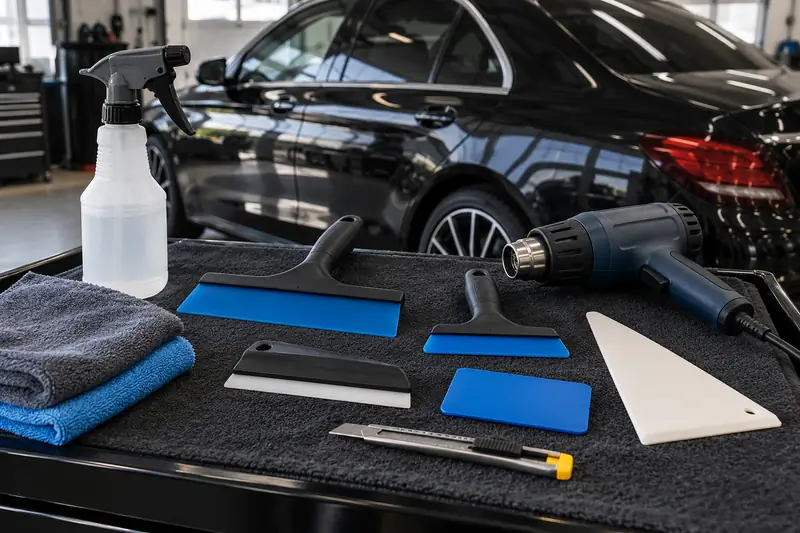
Short answer: Essential tint tools are a spray bottle for slip solution, a scraper and pad for cleaning glass, a hard card and a softer squeegee for pushing out water, a sharp snap-off knife, lint-free towels and a heat gun for shrinking film on curved glass. Shops add edge tools, a cutting surface and often a plotter.
Tint tools are the hand tools and supplies used to clean glass, cut window film, apply it with slip solution and push out the water so the film bonds clear. Good tools do not make a beginner an expert, but bad ones guarantee scratches, contamination and lifted edges. This guide is for new tint installers, DIYers buying their first window tint tools set, and shops restocking supplies. It explains what each tool does, how tint tools differ from wrap tools, what a starter kit should contain and how to keep tools in working order.
Key takeaways
- Window tint is a wet install, so tint tools focus on cleaning glass, managing water and cutting film precisely.
- A hard card pushes out most water; a softer squeegee handles the first pass and protects the film's scratch-resistant coat.
- Use a snap-off knife with sharp blades and snap often; a dull blade drags film and scratches glass.
- A heat gun shrinks film to fit curved back glass and windshields; it is the hardest tool to learn.
- Lint-free towels, clean slip solution and a dust-free space prevent most bubbles and contamination.
- Replace worn squeegee edges early; a nicked edge leaves lines and traps water.
What tools do you need for window tint?
A basic set of car tint tools covers four jobs: cleaning, cutting, applying and finishing. Here is the core list and what each tool does:
| Tool | Job | Notes |
|---|---|---|
| Spray bottles (2) | Slip solution and plain water or cleaner | Use separate, labeled bottles |
| Glass scraper | Removes paint specks, glue and grime from glass | Use a fresh blade, never on defroster lines |
| Scrub pad | Cleans glass before scraping | Non-scratch white pad is common |
| Hard card | Pushes out water, wicks edges | Wrap in a lint-free towel for edges |
| Soft or medium squeegee | First pass and large areas | Gentler on the film surface |
| Long-handled edge tool | Reaches bottom edges under door seals | Narrow, angled blade |
| Snap-off knife | Trims film on glass and on the bench | 9 mm with 30° blades is common |
| Heat gun | Shrinks film on curved glass | Variable temperature helps |
| Lint-free towels | Wipe edges, wrap tools, dry gaskets | Low-lint paper towels also work |
| Measuring tape and cutting mat | Rough cutting from the roll | Protects the bench and blades |
Most of these overlap with a wrap kit, but tint work uses more water management tools and fewer stretch tools. See our vinyl wrap tools guide for the wrap side.
Window tint squeegees explained
A window tint squeegee pushes slip solution out from between the film and glass so the adhesive can bond. Different squeegees do different parts of that job.
- Soft squeegees (rubber or soft polyurethane blades) are used for the first pass. They glide over the film without scratching and move most of the water.
- Medium and hard squeegees apply more pressure to remove the remaining water and are used for final passes.
- Hard cards are thin, stiff plastic cards. Installers use them to tack the film, push water to the edges and wick edges when wrapped in a towel.
- Edge and reach tools have a long handle and a narrow blade for pushing water out from the bottom of roll-down windows, under the seal, and in tight corners of rear windows.
A car window tint squeegee should have a straight, smooth, undamaged edge. Check edges under light before each job and sand or replace any nicked blades. Our squeegee guide covers squeegee hardness and edge materials in more depth.
Window tint knives and blades
Window tint knives are usually snap-off utility knives with thin, sharp blades. A 9 mm knife with 30° blades is common because the narrow tip trims tight corners and follows the edge of glass precisely.
Three rules keep cuts clean:
- Snap the blade often. Many installers snap after every window. A dull blade drags film and needs more pressure, which scratches glass.
- Cut with light pressure. You only need to cut the film, not score the glass.
- Never cut on defroster lines or ceramic frit edges. Cut on the bench or along the glass edge instead.
For DIY installers, precut window tint removes most cutting. For cutting on paint or near trim, some installers also use knifeless tape, though it is far more common in wrap work than in tint.
Heat guns for window tint
A heat gun shrinks tint film so it lies flat on curved glass such as back windows, windshields and some quarter windows. The installer lays the film dry on the outside of the glass, sprays it lightly, and heats the "fingers" (ripples) while pressing them flat with a hard card. The film shrinks into the compound curve, then gets cut and installed on the inside.
What to look for:
- Variable temperature and airflow. Shrinking polyester tint film needs controlled heat, typically in the range of roughly 200–400 °C (about 390–750 °F) at the nozzle, depending on distance and film.
- Comfortable weight and cord length. You will hold it above your head on back glass.
- A stable stand. It should rest safely when hot.
Practice on scrap glass before touching a customer's car. Too much heat can haze, warp or burn the film. See heat gun for vinyl wrap for general heat gun selection.
Cleaning and prep supplies
Clean glass is the foundation of a bubble-free install. Most contamination under tint comes from dust on the glass, gaskets or the installer's hands.
- Slip solution: clean water with a small amount of mild baby shampoo or a dedicated tint solution. Mix fresh and keep it clean.
- Scrub pads: loosen grime before scraping.
- Scraper blades: remove stuck particles. Keep the blade flat and wet.
- Lint-free towels: dry and clean gaskets and edges.
- Water filter: some shops filter water to remove minerals and particles.
- Gloves: lint-free gloves reduce fingerprints on the adhesive. See wrap gloves for options.
Avoid ammonia-based cleaners on installed film and keep oily products away from the glass during install.
Starter window tint tools set
A good window tint tools set for a beginner does not need to be large. Start with these, then add specialist tools as jobs demand them:
| Starter kit | Shop kit additions |
|---|---|
| 2 spray bottles | Pressurized sprayers |
| Glass scraper and spare blades | Long-reach and angled scrapers |
| Scrub pad | Several squeegee hardnesses |
| Hard card and one soft squeegee | Long-handled edge tools for door seals |
| 9 mm snap-off knife and blades | Cutting table or plotter |
| Lint-free towels | Water filter and clean workspace lighting |
| Heat gun (for back glass) | Second heat gun and tool belt |
For a full step-by-step, see our guide on how to tint car windows. After install, the window tint aftercare guide explains cure times and cleaning.
Tint tools vs wrap tools: what is different?
Tint and wrap tools look similar, but the jobs differ. Window tint is applied wet on glass, so tint tools are built to move water and work under seals. Vinyl wrap is applied dry on paint, so wrap tools focus on stretching, heating and trimming film around body panels.
- Squeegees: wrap squeegees often have felt or microfiber buffers to glide over dry vinyl; tint squeegees are often bare edges built to push water.
- Heat: wraps use heat to stretch and post-heat; tint uses heat to shrink film before install.
- Cleaning: tint relies on scrapers and scrub pads on glass; wraps rely on degreasers and alcohol on paint.
Some tools, like snap-off knives, hard cards and gloves, work for both.
How to maintain tint tools
Tint tools wear out faster than most people expect. Keep them in shape with a few habits:
- Rinse squeegees and cards after each job and store them flat.
- Inspect squeegee edges under light; sand lightly or replace when nicked.
- Change scraper and knife blades often.
- Wash towels separately without fabric softener to keep them lint-free.
- Clean spray bottles regularly so slip solution does not grow residue.
When removing old film, see how to remove window tint for the tools that job needs.
Buying window tint supplies for your shop
For shops and distributors, window tint supplies wholesale make sense when you buy film and tools together. Mars Decorative Film supplies squeegees, knives, tapes and other installation tools along with window and light tint film on 1.52 m wide rolls. Mixed orders start from one roll, and in-stock goods typically ship in about 3 business days. We do not make heat guns, so source those locally. You can request free samples of film to test with your own tools.
Frequently asked questions
What is the best squeegee for window tint?
Most installers use more than one: a soft squeegee for the first pass and a hard card or harder squeegee for final passes and edges. The best choice is one with a clean, straight edge that suits the film and window shape you are working on.
Do you need a heat gun for window tint?
You need a heat gun for curved glass, especially back windows and windshields, where the film must be shrunk to fit. Flat or gently curved side windows can usually be tinted without one, particularly with precut film.
What knife is best for cutting window tint?
A snap-off utility knife with thin 9 mm blades at a 30° angle is the most common choice. Snap the blade frequently, use light pressure and avoid cutting over defroster lines.
What should be in a window tint tools set?
A basic set includes spray bottles, a glass scraper with spare blades, a scrub pad, a hard card, a soft squeegee, a snap-off knife and lint-free towels. Add a heat gun if you plan to tint back glass.
Can I use vinyl wrap tools for window tint?
Some tools overlap, such as knives, hard cards and gloves. Felt-edged wrap squeegees are not ideal for wet tint work, because the felt holds water and grit. Dedicated tint squeegees and edge tools give better results.