Signage & printable · 7 min read
Outdoor vinyl for signs and weatherproof stickers: what lasts outside
Outdoor vinyl for signs and stickers explained: calendered vs cast durability, inks, lamination, exterior sign materials and how to make graphics last.
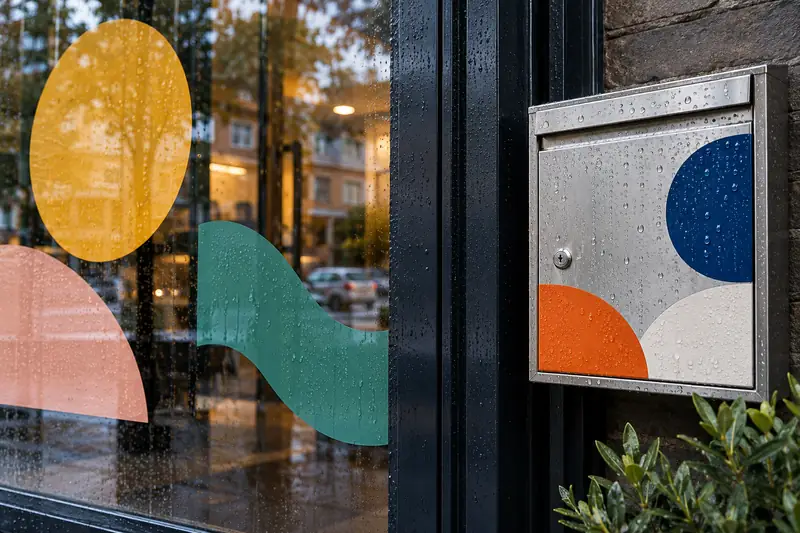
Short answer: For outdoor signs, use an outdoor-rated self-adhesive vinyl with permanent adhesive. Calendered monomeric vinyl typically lasts 1–3 years outside, polymeric calendered about 3–7 years and cast vinyl roughly 7–10 years unprinted. Printed graphics need a UV laminate, and climate, sun exposure and surface prep shorten or extend real life.
Outdoor vinyl is self-adhesive PVC film made to survive sun, rain, temperature swings and washing, and it is the material behind most signs outdoor, from shop fascia lettering to yard panels, vehicle stickers and window graphics. This guide is for sign shops, print shops, wrap shops and small businesses choosing outdoor sign vinyl. It explains how long each film type lasts, how printing and lamination change that, which exterior sign materials to apply vinyl to, and how to install outdoor graphics so they do not lift, crack or fade early.
Key takeaways
- Outdoor durability depends mostly on face film type: monomeric calendered, polymeric calendered or cast vinyl.
- Unprinted cut vinyl usually outlasts printed vinyl, because ink fades before the film does.
- Printed outdoor graphics need a UV-protective laminate matched to the base vinyl's life.
- Permanent adhesive is the norm for outdoor self-adhesive vinyl signs; removable adhesive is for short campaigns.
- Strong sun, heat and vertical vs horizontal mounting change real-world life; horizontal surfaces age fastest.
- Surface prep and post-application dwell time prevent most early edge lift.
What makes vinyl suitable for outdoor signs?
Outdoor vinyl combines a UV-stabilized face film, pigments that resist fading and an adhesive that holds through heat, cold and moisture. Indoor craft vinyl and decorative contact paper may look similar on the roll, but they are not engineered for years of weather.
Three properties matter most:
- Face film stability. Calendered vinyl is rolled and stretched into a sheet, so it tends to shrink back slightly over time. Polymeric plasticizers slow that; cast vinyl, poured as a liquid and dried, barely shrinks at all.
- UV resistance. Pigments and UV absorbers in the film, plus the laminate on printed work, protect color.
- Adhesive. Permanent solvent acrylic adhesives build bond over a day or two and hold through rain and freeze-thaw cycles.
How long does outdoor vinyl last?
Typical outdoor life ranges are below. They assume vertical exposure in a temperate climate and correct installation; manufacturer data sheets give the figure for each specific film.
| Film type | Typical thickness | Typical outdoor life (unprinted, vertical) | Common outdoor uses |
|---|---|---|---|
| Monomeric calendered | ~80–100 µm (3–4 mil) | Roughly 1–3 years | Short promotions, event signs, temporary stickers |
| Polymeric calendered | ~60–80 µm (2.5–3 mil) | Roughly 3–7 years | Shop signs, flat vehicle graphics, window lettering |
| Cast | ~50 µm (2 mil) | Roughly 7–10+ years | Vehicle wraps, curved surfaces, long-term signage |
Printed vinyl usually has a shorter warranty-style life than the same film unprinted, because inks fade sooner than solid pigmented film. Horizontal surfaces such as hoods, roofs and sign tops see more sun and standing water, so expect noticeably less life there. Hot, high-UV climates can roughly halve the figures above.
Best vinyl for outdoor signs by application
The best vinyl for outdoor signs is the cheapest film whose rated life matches how long the sign needs to stay up. Overspecifying wastes money; underspecifying means a callback.
- Shop window and door lettering: polymeric calendered cut vinyl. Long life on flat glass, easy to weed.
- Personalised outdoor signs and yard panels: printed polymeric or monomeric vinyl, laminated, on rigid board.
- Large outdoor signs and fascias: polymeric or cast vinyl on aluminum composite; use matched laminate for printed panels.
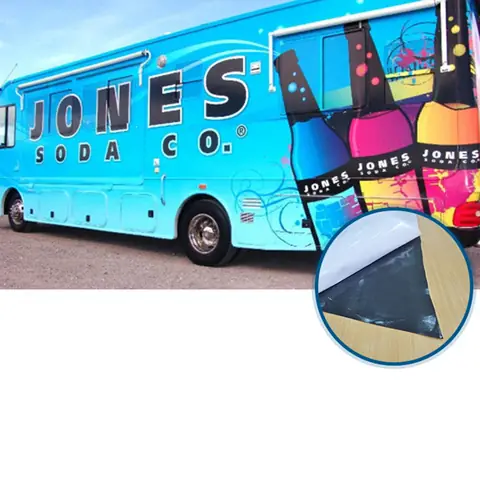
- Vehicle stickers and fleet graphics: cast or high-grade polymeric vinyl that can handle curves and rivets. See the fleet wraps and vehicle graphics guide.
- Outdoor decorative signs and short promotions: monomeric calendered, often with removable adhesive.
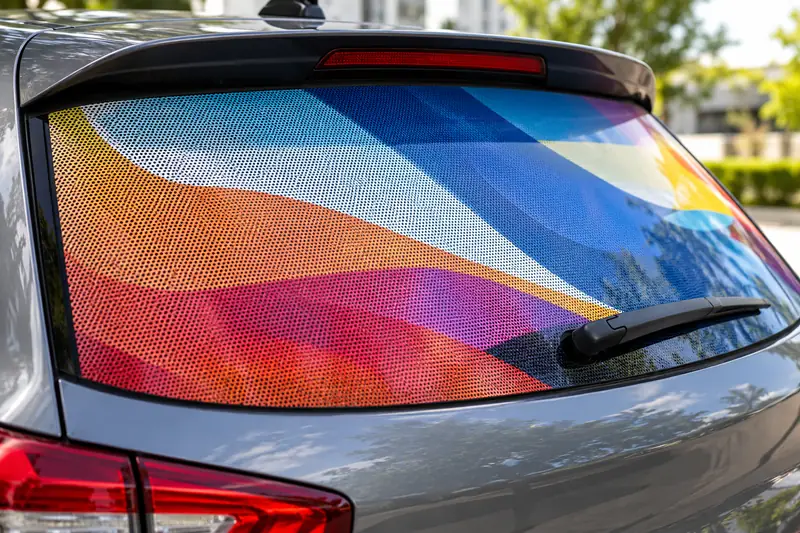
- Exterior window wrap with visibility: perforated window vinyl, covered in the one-way vision guide.
Printing outdoor vinyl: inks and lamination
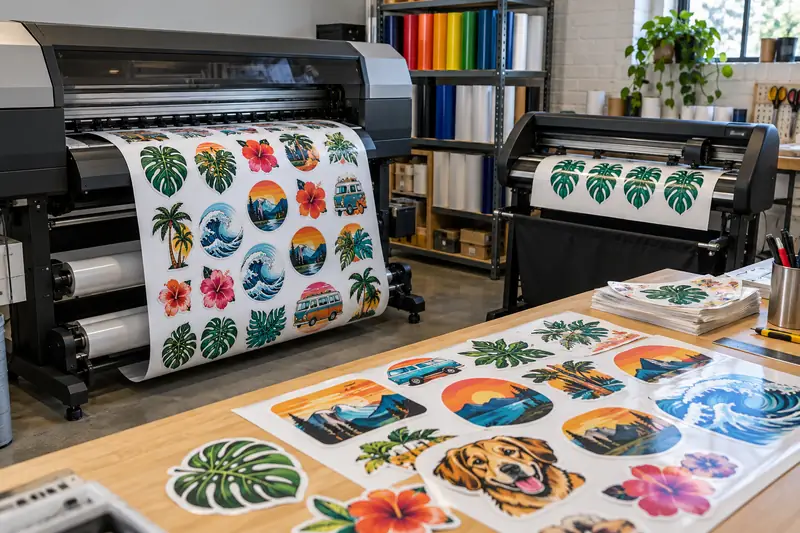
Waterproof printable vinyl is only as durable as the ink and laminate on top of it. Eco-solvent, latex and UV inks all work outdoors when laminated.
- Use an outdoor-rated printable vinyl with a permanent adhesive and a liner that suits your printer.
- Print with the right profile so ink load does not exceed what the film can dry.
- Let the print cure. Eco-solvent prints should outgas for roughly 24 hours before laminating; latex and UV prints can usually be laminated sooner.
- Laminate with a UV overlaminate in the same class as the base film (calendered with calendered, cast with cast).
- Trim and seal edges where water or pressure washing will hit the sign.
An unlaminated outdoor print may look fine for months, but scuffing, fading and staining usually appear well before the film wears out. For more on printer and media setup, see the printable vinyl guide.
Exterior sign materials: what to put the vinyl on
Exterior sign materials are the rigid substrates that carry vinyl graphics. Vinyl sticks best to smooth, non-porous, stable surfaces.
| Substrate | Typical outdoor life | Notes |
|---|---|---|
| Aluminum composite panel (ACM) | Many years | Flat, rigid, the standard for permanent signs; clean off protective film residue first |
| Aluminum sheet | Many years | Durable for road-style and property signs |
| Acrylic | Several years | Glossy look; apply vinyl first or second surface |
| Corrugated plastic (coroplast) | Months to about 2 years | Cheap yard signs; some grades have low surface energy and need testing |
| PVC foam board | Short to medium term outdoors | Can warp in heat; best for sheltered spots |
| Glass | Many years | Ideal for cut lettering and frosted or clear graphics |
Painted walls, brick and textured surfaces are poor bases for standard sign vinyl. Low-energy plastics may need an adhesion promoter; our adhesion promoter guide explains when it helps.
How to apply outdoor vinyl so it lasts
Most early failures come from installation, not film. Follow the same steps whether it is a small sticker or a fascia panel.
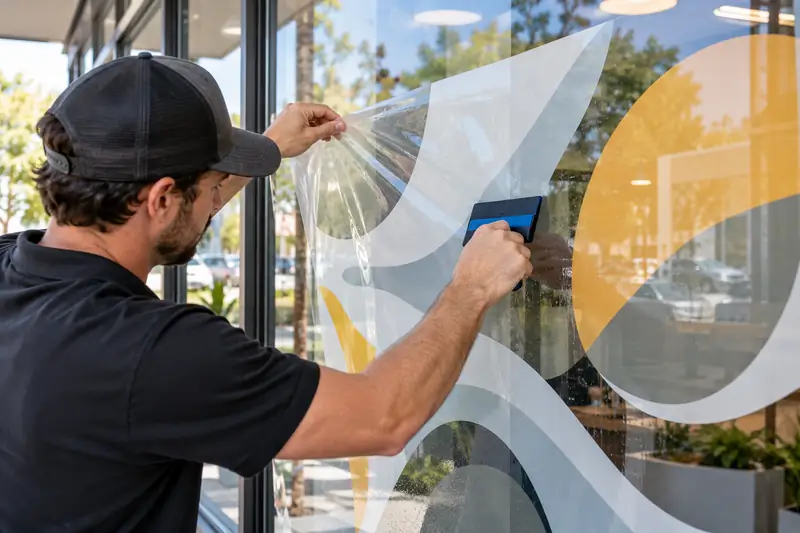
- Check temperature. Apply within the film's stated range, commonly about 10–30 °C (50–86 °F). Cold adhesive will not wet out.
- Clean thoroughly. Wash, then wipe with isopropyl alcohol solution and let it flash off. Remove wax, silicone and dust.
- Position with tape hinges. Use a center or top hinge so long graphics go down straight.
- Squeegee firmly from the center out, overlapping strokes so no air or water remains under the film.
- Burnish edges and avoid ending graphics right on a panel edge where water runs.
- Let it dwell. Keep the sign dry and avoid pressure washing for at least a day or two while the adhesive builds bond.
Cut lettering needs transfer tape with the right tack; see the transfer tape guide.
Waterproof vinyl tape and outdoor vinyl sheets
Outdoor vinyl tape is narrow self-adhesive vinyl, typically used for pinstripes, borders, floor and safety marking and quick repairs. It uses the same film and adhesive logic as sign vinyl, just slit into narrow rolls. Waterproof vinyl sheets are pre-cut sheets of the same films, handy for small runs and desktop cutters but more expensive per square meter than rolls. For roll vs sheet choices and how to read face film, adhesive and liner specs, see the adhesive vinyl guide.
Stocking outdoor vinyl for your shop
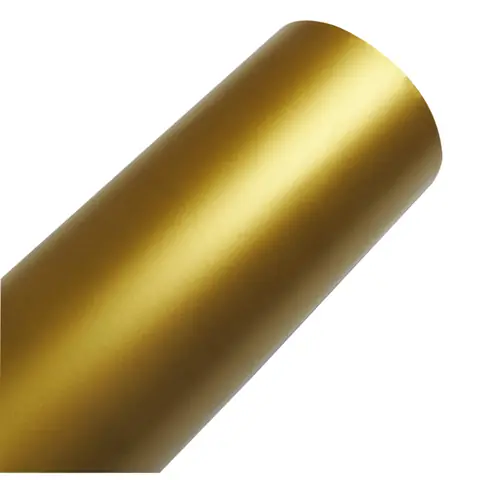
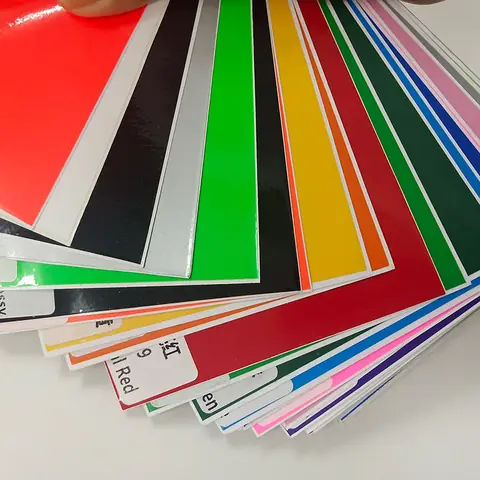
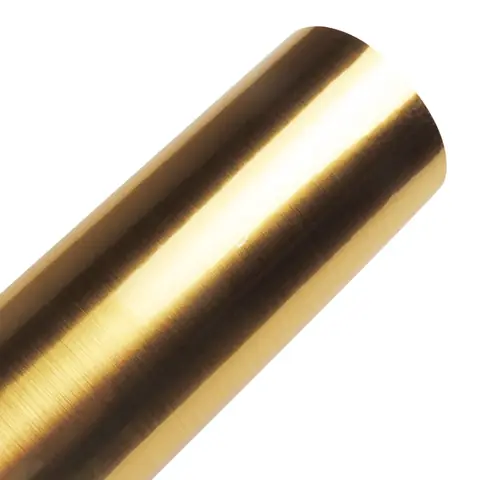
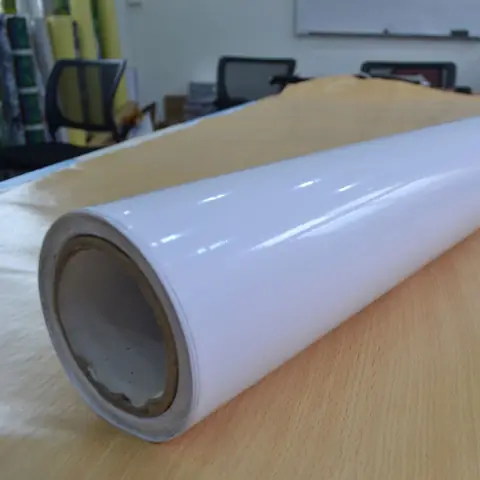
Mars Decorative Film makes printable self-adhesive vinyl, white self-adhesive vinyl and cutting vinyl for sign, print and wrap shops, alongside wrap films for vehicle work. Orders start at one roll with mixed colors allowed, batch numbers are recorded and each roll is inspected, which helps when a customer comes back for a matching reprint. You can request free A4 samples to run your own outdoor exposure and print tests before committing to stock.
Frequently asked questions
What is the best vinyl for outdoor signs?
For most permanent outdoor signs, polymeric calendered vinyl with permanent adhesive is the practical choice, giving roughly 3–7 years of life on flat surfaces. Use cast vinyl for curved surfaces, vehicles and the longest life, and monomeric vinyl for short-term signs.
Is permanent outdoor vinyl really permanent?
No. Permanent describes the adhesive, which bonds strongly and is not meant to peel off cleanly. The graphic still has a finite outdoor life and can be removed later with heat and an adhesive remover.
Is printable outdoor vinyl waterproof?
The vinyl film and permanent adhesive resist water, so printed outdoor vinyl handles rain well. The ink is the weak point, which is why a UV laminate is recommended for any printed graphic that will live outside.
Do outdoor vinyl stickers need lamination?
Printed outdoor vinyl stickers should be laminated for UV, scratch and chemical resistance. Cut solid-color vinyl does not need lamination, because the color runs through the film.
What temperature is too cold to apply outdoor vinyl?
Many films specify a minimum application temperature around 10 °C (50 °F). Below that, the adhesive does not flow into the surface properly and edges may lift, so warm the surface or wait for better conditions.
What is the best outdoor sign board material?
Aluminum composite panel is the usual choice for long-life signs because it is flat, rigid and weatherproof. Corrugated plastic suits cheap short-term signs, and PVC foam board is better kept in sheltered locations.