Window tint · 8 min read
Window tint repair and aftercare: drying time, bubbles and cleaning
Window tint repair and aftercare: how long new tint takes to dry, which bubbles go away, how to fix bubbling tint, and how to clean tinted car windows safely.
Short answer: Window tint repair depends on the cause. Small water bubbles and haze in new tint usually dry out on their own within days to a few weeks. Dust, air or adhesive bubbles do not go away and need the window re-tinted. Old bubbling or purple film should be removed and replaced. Clean tinted windows with ammonia-free cleaner and a soft microfiber cloth.
Window tint repair and aftercare cover everything that happens after film goes on the glass: the curing period, the bubbles that appear in new tint, the faults that develop years later, and how to clean tinted windows without damaging the film. Most problems owners worry about in the first week are normal parts of drying. Others mean the film or install has failed. This guide is for car owners with new or aging tint and for shops answering aftercare questions. It explains cure times, which bubbles go away, what can be repaired, and safe cleaning.
Key takeaways
- New tint is installed wet; the remaining water causes haze and small water pockets that usually disappear as the film cures.
- Window tint cure time is typically a few days in warm, sunny weather and up to 2–4 weeks in cold or humid conditions.
- Keep windows rolled up for roughly 3–5 days after install so the bottom edge does not peel.
- Water bubbles go away; dust, hair, air and adhesive bubbles do not, and need the window redone.
- Bubbling or purple tint after years means the film or adhesive has failed and should be replaced, not patched.
- Clean tinted windows with ammonia-free cleaner and soft microfiber, never with abrasive pads or blades.
How long do tinted windows take to dry?
Tinted windows usually look clear within a few days to two weeks, and fully cure within about 2–4 weeks. Window tint is applied with slip solution, so a thin layer of water is trapped between the film and glass. That water slowly evaporates through the film, and the adhesive bonds as it goes.
Cure time depends on:
- Temperature and sun. Warm, sunny weather speeds drying. Cold and overcast weather slows it.
- Humidity. Damp climates slow evaporation.
- Film type. Thicker films and some ceramic or metallized films take longer to dry than thin dyed film.
- Install quality. A well-squeegeed install leaves less water behind. Our guide on how to tint car windows explains the squeegee technique.
| Conditions | Typical time to look clear | Typical full cure |
|---|---|---|
| Hot, sunny | 2–5 days | 1–2 weeks |
| Mild | 5–10 days | 2–3 weeks |
| Cold or humid | 1–3 weeks | 3–4+ weeks |
Parking in the sun helps. Running the rear defroster during the first few days is generally fine on most films, but ask your installer.
Window tint aftercare in the first week
Most window tint aftercare advice is about not disturbing the film while the adhesive bonds. Follow these steps after a new install:
- Keep windows up for about 3–5 days. Rolling them down can catch the bottom edge on the seal and peel the film. In cold weather, wait longer.
- Do not clean the inside of the glass for about a week. Wiping can shift or crease uncured film.
- Do not pick at haze or bubbles. Pressing water pockets can push dirt under the film or stretch it.
- Avoid stickers, suction cups and tape on the film. They can lift it as they are removed.
- Keep seat belts and sharp items off the glass. A belt buckle hitting the window during closing is a common cause of chips at the edge.
Can you wash your car after getting your windows tinted?
Yes. Tint is installed on the inside of the glass, so washing the outside of the car is usually fine right away. Avoid high-pressure water aimed directly at window edges and seals for the first few days, and do not wipe the inside of the glass until the film has cured.
Tint bubbles: which go away and which don't?
Small bubbles in tint are common right after install, but not all of them are normal. The type of bubble tells you whether to wait or call the installer.
| Bubble type | What it looks like | Will it go away? | What to do |
|---|---|---|---|
| Water pockets | Small, soft, cloudy patches or blisters | Yes, usually within days to weeks | Wait; park in sun |
| Haze or milky look | Uniform cloudiness | Yes, as film dries | Wait |
| Dust or dirt specks | Tiny bump with a speck in the center | No | Re-tint if it bothers you |
| Air bubbles | Clear, round, firm bubble | No | Usually re-install |
| Edge lift | Edge peeling from glass | No, may spread | Contact installer |
| Bubbles after years | Large, spreading bubbles, often with purple fade | No | Remove and replace |
Will small bubbles in tint go away?
If they are water bubbles, yes. They usually fade within a week or two and almost always by the end of the cure time. If bubbles in tint after a week still look the same size with a clear center or a visible speck, they are probably dust or air and will not go away.
Window tint dust bubbles
Dust bubbles come from particles trapped during install. They look like tiny raised dots and are permanent. A few small dust specks are common even in good shop work; many installers set a standard for how many are acceptable per window. Clusters or large specks are reason to ask for a redo.
How to fix bubbling window tint
Fixing bubbling window tint depends on age and cause.
New tint (within the cure period): Wait. Pushing on water pockets with a card risks creasing the film. If bubbles remain after the full cure time, return to the installer; most shops redo the window under their workmanship warranty.
Small air bubbles in otherwise good film: Some installers can lift a corner on very fresh film, re-wet and re-squeegee. Once cured, this is rarely successful. DIY tricks like pricking a bubble with a pin and pressing it flat may hide a single small bubble, but they leave a mark and do not fix the cause.
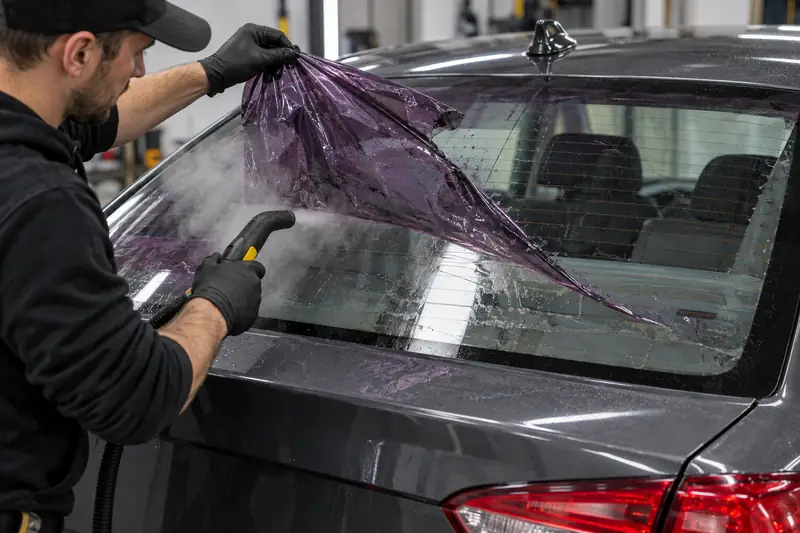
Old tint with bubbles after years: This means the adhesive or film has failed, often from heat and UV over time. Dyed films are also prone to turning purple. There is no reliable repair; the film needs to be removed and replaced. See how to remove window tint for the process, and our ceramic vs carbon vs dyed tint comparison for films that hold their color longer.
Window tint repair: what can be fixed and what needs replacing?
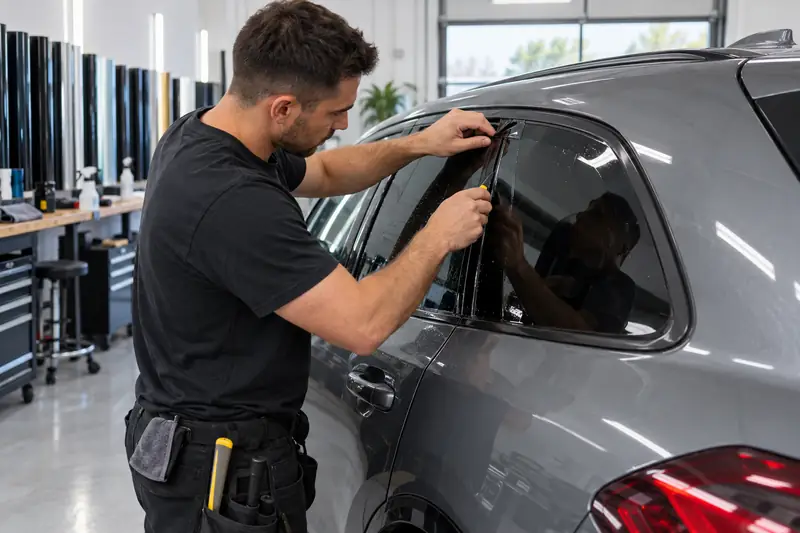
Auto window tint repair is usually done one window at a time. Film cannot be patched invisibly, because any seam shows against the light.
- Scratches in the film: cannot be polished out. Replace the window's film.
- Peeling edges on new tint: the installer may re-seat them if caught early.
- Peeling edges on old tint: usually means adhesive failure; replace.
- Creases or folds: permanent; replace.
- Purple or brown color shift: dye breakdown; replace.
- Small chip at the top edge: often from the window seal or a belt; may be acceptable or need replacing depending on size.
Re-tinting a single window is usually much cheaper than the whole car. A shop can match the film type and shade if you know what was used; the window tint VLT guide helps you identify common shades.
How to clean tinted car windows
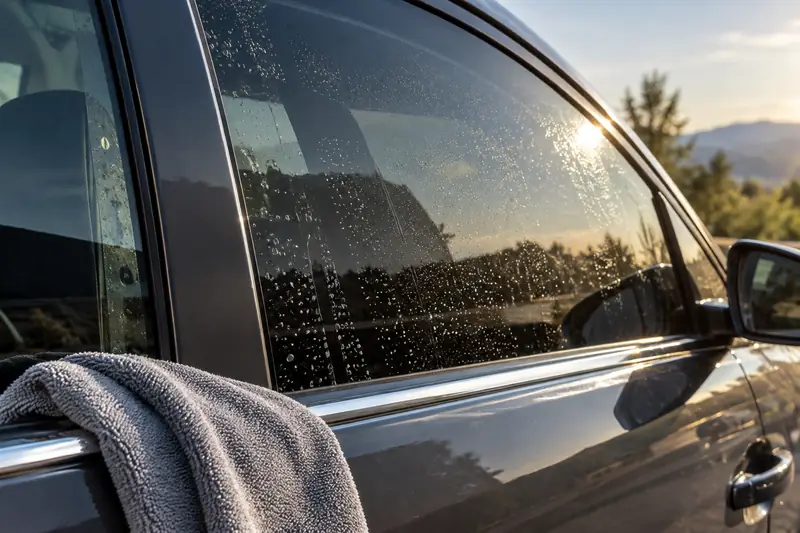
Clean tinted windows with a mild, ammonia-free cleaner and two soft microfiber cloths. Ammonia and abrasive tools can damage the film's scratch-resistant coat and adhesive over time.
- Wait until the film has cured, typically about a week, before cleaning the inside.
- Spray the cloth, not the glass. This stops cleaner running down into the door seal and onto electronics.
- Wipe gently in straight lines, top to bottom.
- Buff dry with a second clean microfiber cloth.
- Wipe the top edge last, gently, so you do not catch and lift it.
What to use to clean tinted windows
Good options are an ammonia-free glass cleaner labeled safe for tint, or a mix of water with a few drops of mild soap. Avoid ammonia, vinegar-heavy cleaners, abrasive pads, paper towels that shed lint, and razor blades on the inside. Clean the outside of the glass normally; the film is on the inside.
For cleaning the inside of a car with tinted windows, also take care around the rear defroster. Wipe along the lines, not across them.
Stocking film that holds up for customers
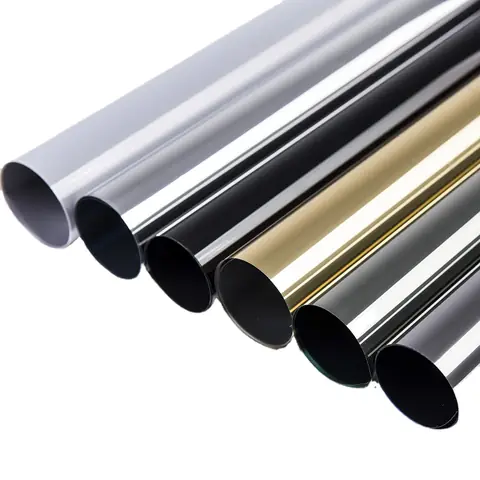
Fewer comebacks start with film that cures clear and stays stable. When choosing film for your shop, look for clear optics, an adhesive that does not haze or yellow, and color stability over years. Mars Decorative Film makes window and light tint film in 1.52 m wide rolls, with batch numbers and roll-by-roll inspection, and an MOQ of one roll. Shops can request free A4 samples to test cure behavior on their own glass. For buying guidance, see the best window tint for cars guide and the car window tint guide.
Frequently asked questions
How long until bubbles in tint go away?
Water bubbles in new tint usually fade within a few days to two weeks, depending on temperature and humidity. In cold or damp weather it can take three to four weeks. Bubbles still there after the full cure time are probably dust or air and will not go away.
How long do tints take to cure?
Window tint typically takes a few days to look clear and about 2–4 weeks to cure fully. Warm, sunny weather speeds it up, while cold and humid conditions slow it down. Keep windows rolled up for the first several days.
Can you wash your car after getting windows tinted?
Yes. Tint sits on the inside of the glass, so you can usually wash the outside right away. Avoid aiming a pressure washer at window edges for the first few days and do not clean the inside of the glass until the film has cured.
How do you get bubbles out of window tint?
Water bubbles in new tint work themselves out as the film dries, so leave them alone. Air or dust bubbles in cured film cannot be removed reliably. A fresh install can sometimes be re-squeegeed by the installer, but older bubbling film needs to be replaced.
What should you use to clean tinted windows?
Use an ammonia-free glass cleaner or water with a few drops of mild soap, applied to a soft microfiber cloth. Avoid ammonia, abrasive pads and blades on the inside of the glass, because they can damage the film's coating and adhesive.
Why is my window tint bubbling after years?
Bubbling in old tint means the adhesive or film has broken down, usually from years of heat and sun. It often comes with a purple or brown color change in dyed films. The film cannot be repaired and should be removed and replaced.