Window tint · 8 min read
Heat control window film: how tint rejects heat, IR and UV in cars
How heat control window film works on cars: TSER, IR and UV rejection explained, why a darker tint is not always cooler, and how to compare solar film specs.
Short answer: Heat control window film reduces the sun energy entering a car by absorbing and reflecting infrared and visible light. The best measure is TSER (total solar energy rejected), typically about 30–45% for dyed film, 40–55% for carbon and 50–65% or more for ceramic. Darkness alone does not predict heat, and most quality films block about 99% of UV.
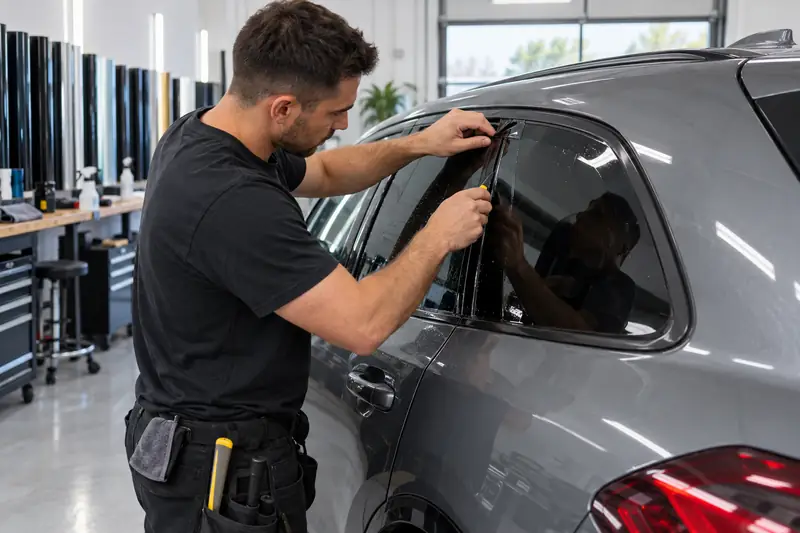
Heat control window film is a thin polyester film applied to the inside of car glass to cut the sun energy that reaches the cabin, along with UV rays and glare. It is the main reason many drivers tint at all. This guide is for car owners comparing quotes and for tint shops explaining specs to customers. It covers how sunlight carries heat, what TSER, IRR and UV rejection mean, why a dark film is not automatically a cool film, how reflective and non-reflective films differ, and how to compare solar film fairly.
Key takeaways
- Sunlight reaching the earth is roughly half infrared, a little under half visible light and a few percent ultraviolet; all three carry heat into a car.
- TSER (total solar energy rejected) is the best single number for comparing how much heat a film blocks.
- IRR (infrared rejection) figures are often measured over a narrow band and can look higher than real-world performance.
- VLT (visible light transmission) shows darkness, not heat: a light ceramic film can outperform a dark dyed film.
- Most quality automotive films block about 99% of UV, including UVA, whatever their shade.
- Ceramic films reject heat without metal, so they stay non-reflective and do not block phone or GPS signals.
Does window tint block heat?
Yes. Window tint reduces heat by absorbing and reflecting part of the sun's energy before it passes through the glass. How much depends on the film. A basic dyed film may block roughly a third of total solar energy, while a good ceramic film can block well over half.
Tint does not turn a car into a fridge. On a hot day the cabin still warms up, but it heats more slowly, the seats and dashboard get less direct sun, and the air conditioning reaches a comfortable temperature sooner. The difference you feel most is on your skin: direct sun through a high-performance film feels much less intense than through clear glass.
How sunlight brings heat into a car
To understand window tint for heat reduction, look at what sunlight is made of. Solar energy reaching the ground is roughly:
- Infrared (IR), about 50%. Invisible wavelengths longer than visible light, felt as warmth on the skin.
- Visible light, about 40–45%. What you see, and also a real source of heat when it is absorbed by seats and trim.
- Ultraviolet (UV), about 3–5%. A small share of the energy, but responsible for sunburn, skin aging and interior fading.
Because heat comes from all three parts, a film that blocks only infrared, or only visible light, gives a partial picture. That is why the industry uses a combined measure.
TSER, IRR and UV rejection explained
These three numbers appear on most spec sheets. Each answers a different question.
TSER (total solar energy rejected) is the share of all solar energy, across UV, visible and infrared, that a film keeps out of the car when tested on a standard glass pane. It includes energy the film reflects and the part of absorbed energy that is re-radiated outward. A higher TSER means less heat gets in.
IRR (infrared rejection) is the share of infrared that the film blocks. The catch is the wavelength range. Some brands quote IRR at a single narrow band, for example around 900–1,000 nm, where ceramic particles are very effective, which can produce numbers in the 90s. Measured across the full infrared range, the figure is usually lower. IRR is useful for comparing films that are measured the same way, but it is not a heat number on its own.
UV rejection is the share of ultraviolet blocked. Quality automotive films typically block about 99% of UV, up to around 380–400 nm. This number is high on nearly every decent film, so it rarely separates good from great.
| Spec | What it measures | Typical use |
|---|---|---|
| VLT | Visible light passing through | Darkness and legality |
| TSER | Total solar energy rejected | Best overall heat comparison |
| IRR | Infrared rejected (band varies) | Compare IR performance between films tested the same way |
| UV rejection | Ultraviolet blocked | Skin and interior protection |
| Visible reflectance | How mirror-like the film looks | Appearance and some legal limits |
Why VLT alone doesn't predict heat
Darker does not always mean cooler. VLT, explained shade by shade in our window tint VLT guide, tells you how much visible light gets through, but visible light is less than half of the sun's energy. A dark dyed film blocks a lot of visible light by absorbing it, yet it may let most infrared pass. A light ceramic film lets more visible light through but stops a large share of infrared.
Absorption also matters. A dyed film absorbs energy and warms up, and some of that heat is re-radiated into the cabin. Films that reflect or selectively absorb infrared, then shed more of that energy outward, score better on TSER.
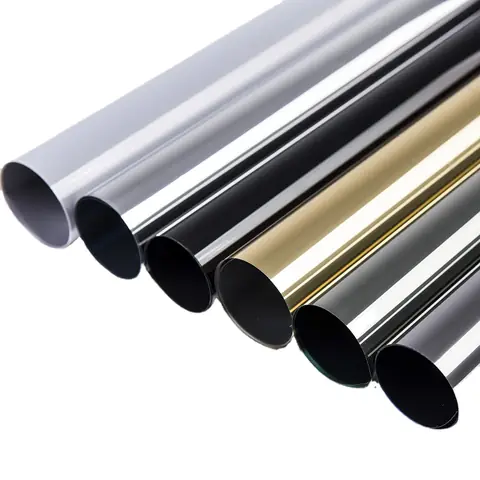
Typical ranges for common film types (values vary by shade and maker, measured on single-pane glass):
| Film type | Typical TSER range | Typical IRR range | UV rejection |
|---|---|---|---|
| Dyed | 30–45% | 10–30% | ~99% |
| Carbon | 40–55% | 40–60% | ~99% |
| Nano ceramic | 50–65% | 70–90% | ~99% |
| High-IR ceramic | 55–70% | 85–95%+ (narrow band) | ~99% |
| Clear UV/IR film (70%+ VLT) | 30–50% | 50–90% | ~99% |
The practical lesson: compare TSER at the shade you plan to buy. A 35% ceramic can beat a 5% dyed film on heat, and the ceramic vs carbon vs dyed tint comparison explains why each construction behaves differently.
Do tinted windows block UV rays?
Yes. Most automotive window films, including light and nearly clear ones, block about 99% of UV. This covers UVA, which passes through ordinary side and rear glass and contributes to skin aging, and UVB, which causes sunburn.
Factory glass differs by position. Laminated windshields already block most UV because of the plastic interlayer. Tempered side and rear windows usually block UVB but let a meaningful share of UVA through, and factory "privacy glass" on rear windows is darkened glass that is not the same as UV film. That is why clear UV blocking window film is popular for front side windows where dark tint is not allowed. If you want protection without darkness, see 70% tint and 50% tint.
Reflective vs non-reflective window tint
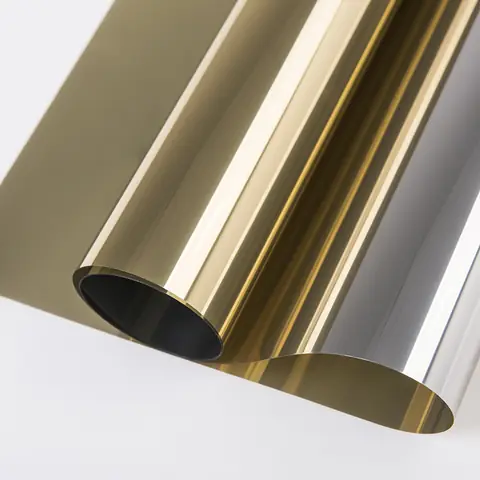
Reflective tint uses a thin metal or metal-oxide layer to bounce sunlight away, which gives a mirror look from outside. It can reject a lot of heat, but metal layers can interfere with phone, GPS, radio and toll-tag signals, and many places limit how reflective car windows may be.
Non reflective window tint, mainly carbon and ceramic film, rejects heat by absorbing and selectively blocking infrared. It looks like matte, neutral glass from outside and does not affect electronics. Reflective ceramic tint exists as a middle ground, with a slight sheen and higher rejection, but check local reflectance rules before choosing it. Our window tint laws guide explains how VLT and reflectance limits work; always confirm current rules with your local DMV or transport authority.
Anti glare window film and night driving
Anti glare window film reduces the brightness of sunlight and headlight glare reaching your eyes. Any tint cuts glare in proportion to its darkness, so a 35% film reduces daytime squinting more than a 70% film. At night, though, darker film also reduces how much you can see. For drivers who want comfort without losing night vision, a lighter ceramic usually balances glare, heat and visibility best.
How to compare heat control window film before buying
Use the same method a tint shop uses when choosing a solar control window film:
- Fix the shade first. Decide the VLT you want and can legally run on each window.
- Ask for spec sheets. Get TSER, IRR, UV rejection and visible reflectance for each film at that shade.
- Compare TSER first. A difference of 10 percentage points or more is usually noticeable on a sunny day.
- Check how IRR was measured. If one brand quotes a narrow band and another a full range, the numbers are not comparable.
- Feel it in person. Many shops have a heat lamp display. Hold your hand behind each sample.
- Weigh price against climate. In hot, sunny regions, a high-TSER ceramic is usually worth paying for. In mild climates, carbon may be enough.
For the full picture on film types and shades, see the car window tint guide and the ceramic window tint guide.
Stocking heat control film for your shop
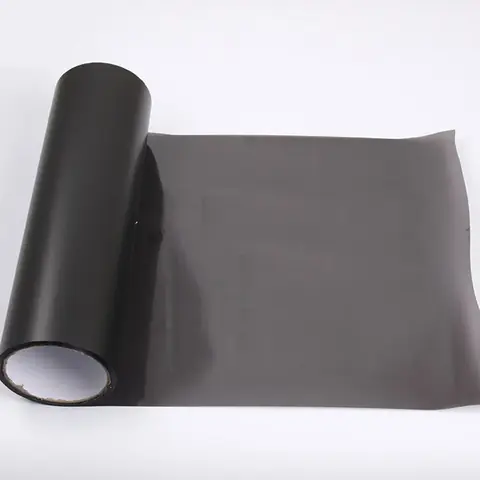
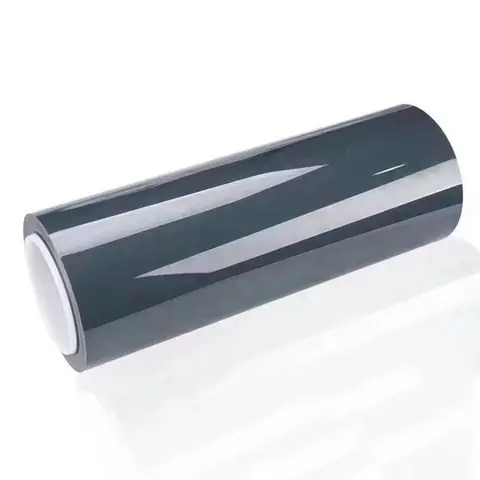
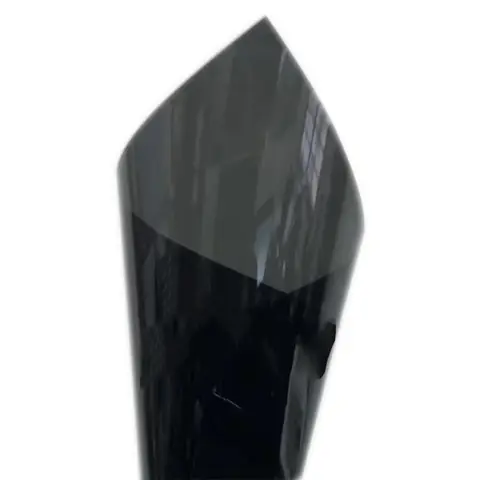
Customers who ask about heat usually need a clear explanation and a sample they can test. A practical range for most shops is one carbon line plus one nano ceramic solar film line, with at least one near-clear film for windshields and front doors where dark tint is not allowed. Mars Decorative Film makes window and light tint film on 1.52 m wide rolls, with an MOQ of one roll and mixed shades allowed in one order. You can request free A4 samples to test against your heat lamp display, and ask for spec data with each batch.
Frequently asked questions
Does window tint reduce heat in a car?
Yes. Window tint reduces heat by absorbing and reflecting part of the sun's energy. A dyed film may block roughly a third of total solar energy, while ceramic films commonly block more than half. The cabin still warms on hot days, but more slowly and with less direct sun on your skin.
Does ceramic tint block heat better than regular tint?
Usually, yes. Ceramic tint uses nano ceramic particles that block a large share of infrared while letting visible light through, so it typically has a higher TSER than dyed film at the same shade. Even light ceramic shades often outperform darker dyed film on heat.
Do tinted car windows block UV rays?
Yes. Most quality automotive films block about 99% of UV, including UVA, regardless of shade. Clear UV films give the same protection without darkening the glass, which helps where dark front windows are not allowed.
Does window tint block UVA?
Quality automotive tint blocks UVA as well as UVB, typically up to around 380–400 nm. This matters because ordinary side windows let much of the UVA through. Check the UV rejection figure on the spec sheet to confirm.
Is darker tint always cooler?
No. Darkness only tells you how much visible light passes. A dark dyed film can let most infrared through, while a lighter ceramic blocks much of it. Compare TSER rather than VLT when heat is your main goal.
How do you remove solar film from car windows?
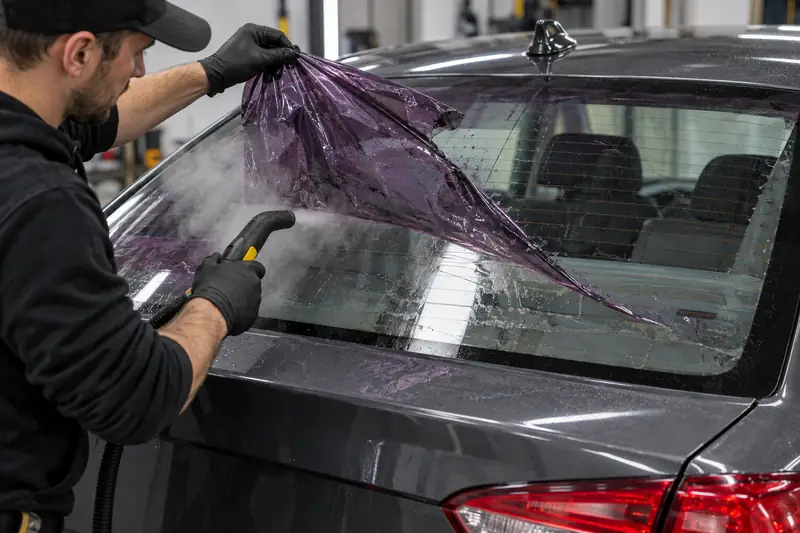
Solar film is removed by softening the adhesive with heat or steam, peeling the film slowly and then cleaning off any remaining glue with soapy water and a scraper. Avoid blades on rear defroster lines. Our guide on how to remove window tint explains each method step by step.