Window tint · 7 min read
How much does it cost to tint car windows? 2026 price guide
How much to tint car windows in 2026: typical window tint cost by film type and vehicle, ceramic tint prices, windshield jobs and what drives the price.
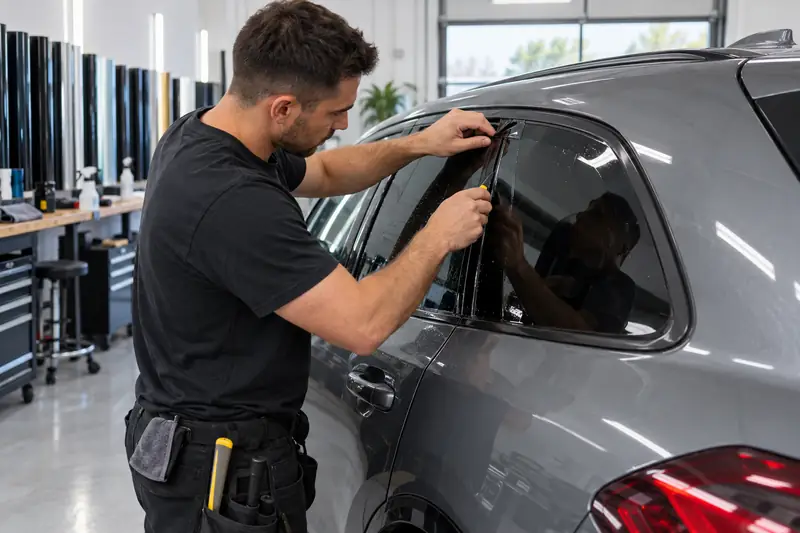
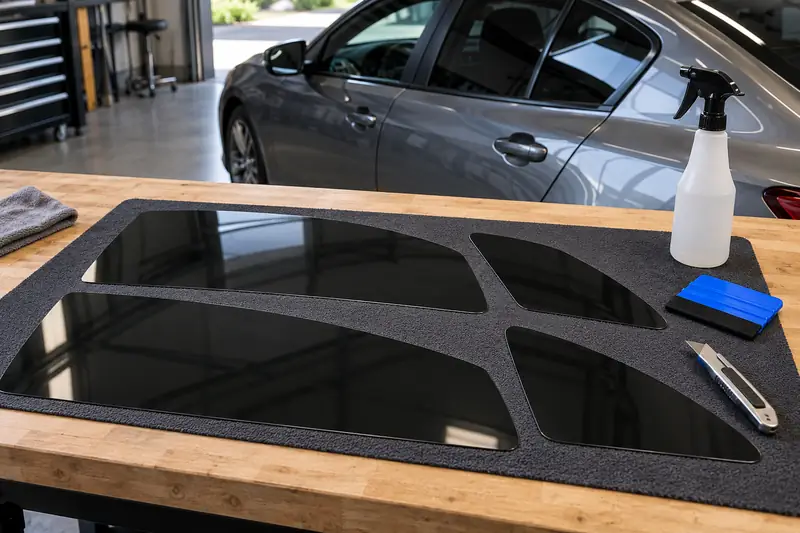
Short answer: How much to tint car windows depends mostly on film type and vehicle. In many markets, tinting the side and rear windows of a standard sedan costs roughly USD 150–350 with dyed film, USD 200–450 with carbon and USD 350–800 or more with ceramic. Windshields, large SUVs, old-tint removal and premium shops add to the price.
How much to tint car windows is a simple question with a range of answers, because window tint cost depends on the film, the vehicle, how many windows you tint and where you live. This guide is for car owners comparing quotes and for tint shops reviewing their pricing. It gives typical 2026 price ranges for professional automotive tinting by film type and vehicle, prices for single windows, windshields and sun strips, a simple way to estimate your own job, what pushes prices up or down, and whether ceramic tint is worth the extra money. All prices are rough USD ranges; they vary by market, vehicle and shop.
Key takeaways
- A standard sedan's side and rear windows typically cost roughly USD 150–350 with dyed film and USD 350–800+ with ceramic film.
- Film type is the biggest price driver after vehicle size; ceramic costs more because it blocks much more infrared heat.
- Full windshield film is usually priced separately, often roughly USD 100–400 depending on film and vehicle.
- Removing old tint can add roughly USD 100–300 or more, especially for back glass with defroster lines.
- Labor and the shop's warranty make up a large share of the price; the film itself is a smaller part.
- Very cheap tint jobs often mean low-grade film or rushed work, which can bubble, peel or fade early.
How much does it cost to tint car windows? Typical prices
For a standard four-door sedan, tinting all side windows and the back glass (not the windshield) commonly costs a few hundred dollars, with ceramic film at the top of the range. Coupes are often slightly cheaper, and SUVs, minivans and crew-cab trucks cost more because they have more or larger windows.
| Vehicle and coverage | Dyed film (USD) | Carbon film (USD) | Ceramic film (USD) |
|---|---|---|---|
| 2-door coupe, sides and back | 120–300 | 180–400 | 300–700 |
| 4-door sedan, sides and back | 150–350 | 200–450 | 350–800+ |
| SUV or crossover, all except windshield | 200–450 | 250–550 | 400–900+ |
| Pickup truck, crew cab | 180–400 | 230–500 | 350–850+ |
| Minivan or large SUV | 250–500 | 300–600 | 450–1,000+ |
These are indicative ranges for professional installation, not quotes. Premium shops in expensive cities can charge well above them, and small shops in lower-cost regions may charge less. Many shops also offer a mid-tier carbon or hybrid film between dyed and ceramic.
Prices for single windows, windshields and sun strips
Not every job is a full car. Shops typically price smaller jobs individually, often with a minimum charge.
| Job | Typical price range (USD) | Notes |
|---|---|---|
| Two front side windows | 80–250 | Common to match factory privacy glass in the rear |
| Single side window | 40–120 | Often a minimum charge applies |
| Back glass only | 80–200 | Curved glass needs heat shrinking |
| Windshield sun strip | 30–100 | See the windshield sun strip guide |
| Full windshield, clear ceramic | 150–400 | Usually around 70% VLT; see the 70% tint guide |
| Sunroof or panoramic roof | 80–300 | Depends on size and film |
| Old tint removal | 100–300+ | More if adhesive is baked on or the back glass has defroster lines |
How much to tint 2 car windows? For the two front doors, most shops quote somewhere around USD 80–250, depending on film. It is one of the most common jobs on SUVs and trucks that already have dark factory glass in the rear.
Window tint cost calculator: estimate your own job
There is no universal window tint cost calculator, but you can build a reasonable estimate in a few steps:
- Count the windows. List each side window, quarter glass, back glass and any windshield or sunroof work.
- Pick the film tier. Dyed, carbon or ceramic. Ceramic usually costs roughly 1.5–2.5 times dyed for the same car.
- Start from a base price. Use the sedan row above as a base for a typical four-door car, then adjust up for an SUV, truck or van.
- Add extras. Windshield film, sun strip, sunroof and old-tint removal are usually extra.
- Adjust for your area. Labor rates in large cities and high-cost regions are higher.
Example: a four-door sedan with ceramic film on sides and back (USD 350–800), a sun strip (USD 30–100) and no removal would land roughly between USD 380 and 900. Treat any estimate as a starting point and get written quotes.
What affects window tint cost?
Film type
Dyed film is the cheapest and mainly reduces glare and adds privacy. Carbon film costs more, holds its color better and rejects more heat. Ceramic film costs the most and blocks the largest share of infrared heat without metal, so it does not interfere with phone, GPS or radio signals. The differences are explained in ceramic vs carbon vs dyed tint.
Vehicle size and glass shape
More windows mean more film and labor. Strongly curved back glass, small quarter windows and frameless doors take extra time. Some vehicles need door panels or trim loosened to tint the full window.
Shade
Shade usually does not change the price much within the same film line. A 5% film and a 35% film from the same range often cost the same. Light windshield films can cost more because they need high optical clarity. Lighter or darker shades are a matter of look and local rules rather than budget.
Old tint removal
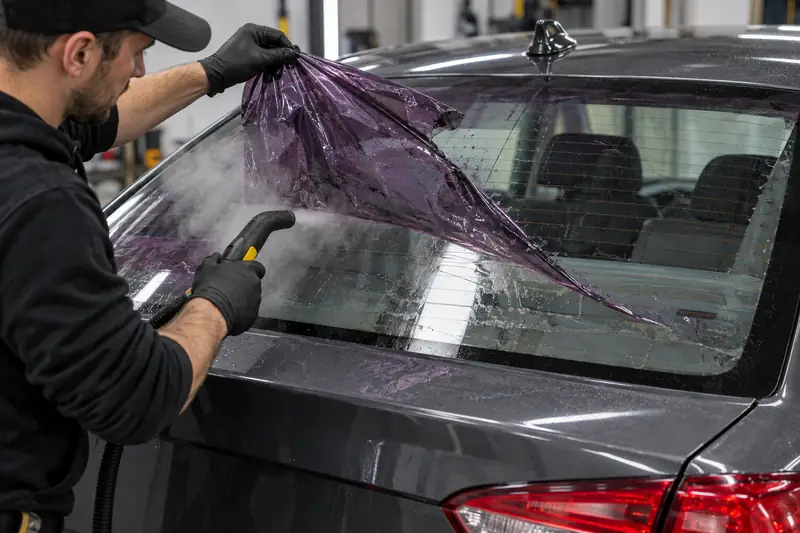
Removing faded or bubbling film takes time, especially when the adhesive stays on the glass. Back glass with defroster lines needs careful work. See how to remove window tint.
Shop, warranty and location
Experienced installers with clean, dust-controlled bays and written warranties usually charge more. Many ceramic films are sold with long warranties against fading, bubbling and peeling, which is part of their price.
Is ceramic tint worth it? Ceramic window tint cost explained
How much is ceramic tint? For a sedan's sides and back, ceramic window tint commonly costs roughly USD 350–800+, against roughly USD 150–350 for dyed. Is ceramic tint worth it? For many drivers, yes:
- You live in a hot or sunny climate, or park outside.
- You commute long distances in daylight.
- You want lighter, less noticeable tint but still want heat control.
- You plan to keep the car for years and want film that does not fade.
Ceramic tint is less worth it if you mainly want privacy in a mild climate, or if you are selling the car soon. Learn more in ceramic window tint explained.
Cheap tint vs inexpensive quality tint
Cheap car window tinting can be fine if a reputable shop is using an entry-level film, but very low prices often hide shortcuts: thin dyed film that turns purple, poor cleaning that leaves dust bumps, gaps at the edges or no warranty. Redoing a bad job means paying for removal and a new install.
For an inexpensive window tint that still lasts, ask for a carbon film from a shop with a written warranty, and skip extras you do not need. DIY is cheaper still; a precut window tint kit or bulk film costs much less than professional installation, but results depend on skill and conditions. Our how to tint car windows guide covers the process.
Window tint cost vs paint protection film cost
Searches for car tint prices often appear next to paint protection film prices, but the two are different products. Window tint is a thin film for glass that controls light and heat. Paint protection film (PPF) is a thick, clear urethane film for paint that stops stone chips, and it usually costs considerably more because of the larger area and wet installation. For PPF prices, see how much does PPF cost.
Pricing and film costs for tint shops
For shops, film is only part of the cost of a tint job. Labor, overhead, comebacks and warranty claims are usually larger. Buying film by the roll rather than in small precut pieces lowers material cost per car, and stocking two or three grades makes it easy to quote good, better and best options.
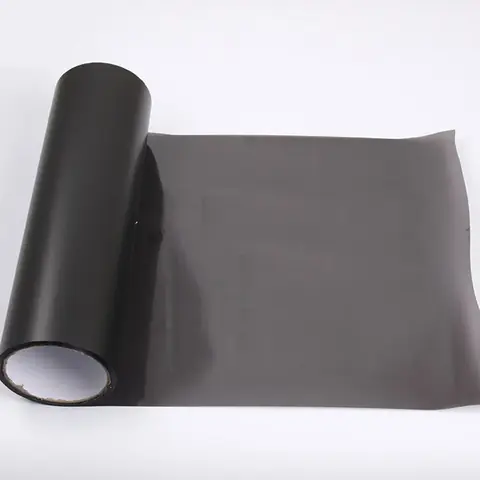
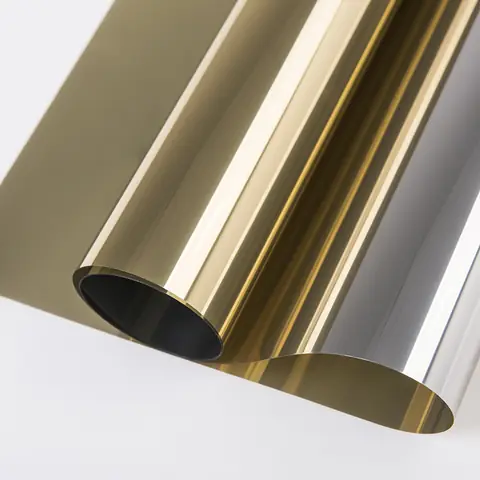
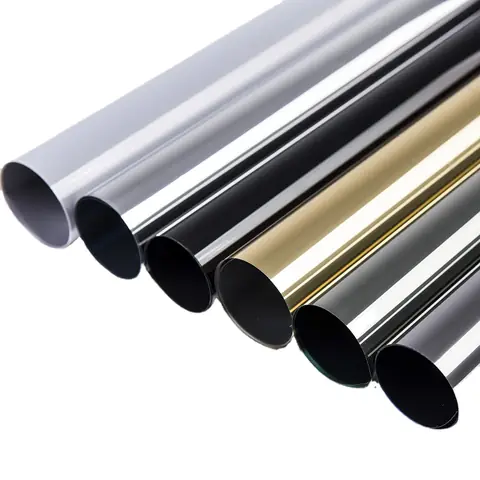
Mars Decorative Film manufactures window tint film in standard shades and grades, sold by the roll with an MOQ of one roll and mixed shades in one order. Shops can request free samples to compare grades before setting their price tiers, and the window tint rolls wholesale guide explains how to compare suppliers on cost per meter.
Frequently asked questions
How much does it cost to tint car windows?
For a standard four-door sedan's side and rear windows, expect roughly USD 150–350 with dyed film, USD 200–450 with carbon and USD 350–800 or more with ceramic. SUVs, vans and trucks usually cost more. Prices vary by market, vehicle and shop.
How much does ceramic tint cost?
Ceramic tint for a sedan's sides and back commonly costs roughly USD 350–800 or more. A full ceramic windshield is often priced separately, roughly USD 150–400. Premium films, large vehicles and high-cost areas sit at the top of the range.
Is ceramic window tint worth it?
For drivers in hot or sunny climates, long commuters and anyone who keeps a car for years, ceramic is usually worth it because it blocks much more infrared heat and resists fading. If you mainly want privacy in a mild climate, a carbon film may be enough.
How much to tint 2 car windows?
Tinting the two front side windows typically costs around USD 80–250, depending on film type and shop. It is a common job on SUVs and trucks that already have factory privacy glass in the rear.
How much does it cost to tint a windshield?
A full windshield film, usually a light ceramic around 70% VLT, typically costs roughly USD 150–400. A sun strip across the top is much cheaper, usually around USD 30–100. Check local rules before tinting any windshield.
Why is window tinting so expensive?
Most of the price is skilled labor, shop overhead and the warranty, not the film itself. Careful cleaning, heat shrinking curved glass and a dust-free finish take time. Better films such as ceramic also cost more to make.