Vinyl wraps · 8 min read
Boat wraps: vinyl boat wrap material, cost, prep and how long they last
Boat wrap guide: which vinyl boat wrap material to use, hull prep, below-waterline limits, aluminum boat wraps, typical cost, lifespan and aftercare tips.
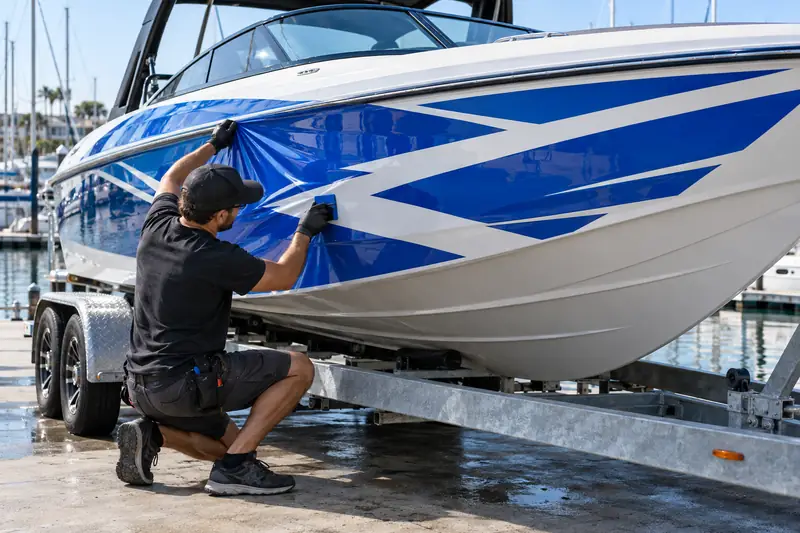
Short answer: A boat wrap is a vinyl film applied to a boat's hull above the waterline to change its color or add graphics. Wrap shops typically use conformable cast vinyl with a UV-protective laminate for printed designs. Most boat wraps last several years, depending on sun and care, and a wrap on a small to mid-size hull often costs roughly USD 1,500–5,000.
A boat wrap is a vinyl film applied to a boat's hull, and sometimes its deck and console, to change the color, add graphics or display a business brand without repainting the gelcoat. Vinyl boat wraps have become popular because they cost less than marine paint, can be removed later, and make full-color printed designs possible. This guide is for wrap shops taking on marine work and for boat owners planning a wrap. It covers boat wrap material, hull preparation, below-waterline limits, aluminum boat wraps, typical cost, lifespan and care.
Key takeaways
- Boat wraps are usually installed above the waterline; standard wrap vinyl is not designed for continuous immersion.
- Conformable cast vinyl, with an overlaminate for printed graphics, is the most common boat wrap material.
- Hull prep decides how long a wrap lasts: oxidation, wax and silicone must be removed and gelcoat damage repaired first.
- Boats kept in the water usually still need antifouling paint below the waterline; a wrap does not replace it.
- Most boat wraps last several years, with sun, saltwater, docking and care making the biggest difference.
- "Clear marine vinyl" in 20 gauge is an enclosure and window material, not a wrap film.
What is a boat wrap?
A boat wrap is the marine version of a vehicle wrap: large sheets of adhesive vinyl applied over the hull's gelcoat or paint, trimmed at the rub rail and waterline, and post-heated so it holds through sun and spray. It can be a solid color change, a printed design such as camo, fish scales or a company livery, or a partial wrap with stripes and graphics.
Owners choose a vinyl boat wrap to:
- Refresh an oxidized or faded hull without repainting.
- Get a full-color graphic that paint cannot easily reproduce.
- Brand charter, rental or fishing guide boats.
- Protect the gelcoat underneath and keep the option to remove the wrap later.
For background on how wraps work, see what a car wrap is; the same principles apply on water.
Boat wrap material: what to use
The best boat wrap material is a conformable, durable cast vinyl rated for long outdoor life, with a matching laminate if the design is printed. Boats face more UV from water reflection, more moisture and more abrasion than most cars, so cheap calendered sign vinyl usually fails early on curved hulls.
| Material | Typical use on boats | Notes |
|---|---|---|
| Cast wrap vinyl (solid color) | Full hull color changes | Conforms to curves; good dimensional stability |
| Printable cast vinyl with laminate | Printed designs, camo, liveries | Laminate adds UV and abrasion protection |
| PVC (calendered) vinyl | Flat areas, lettering, registration numbers | Less conformable; best on flat panels |
| Cut vinyl lettering | Names, numbers, logos | Check local registration marking rules |
| Clear TPU PPF | Protecting high-wear areas such as bow entry or gunwales | Thicker; used selectively |
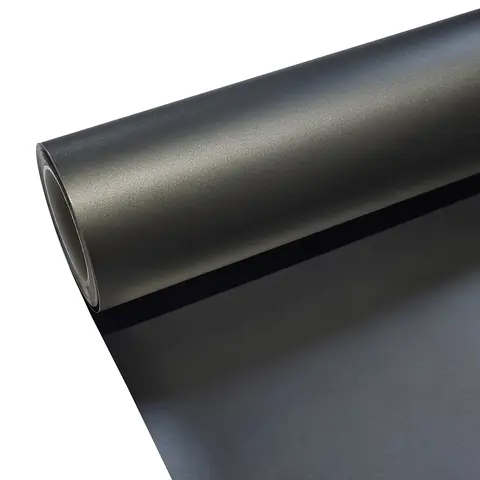
Shops use general-purpose cast and PVC wrap films on boat topsides, and Mars Decorative Film's PVC wrap films are among those wrap shops use. Mars does not make marine-specific vinyl, so check each film's data sheet for outdoor durability and any guidance on marine exposure, and test on the hull before committing to a full job.
Clear marine vinyl and 20 gauge marine vinyl
Clear marine vinyl, marine grade clear vinyl and 20 gauge marine vinyl are different products altogether. They are clear, flexible PVC sheeting used for boat enclosures, bimini and dodger windows and curtains. "20 gauge" refers to thickness, roughly 0.020 in (about 0.5 mm). This material is sewn or zipped into canvas, not adhered to the hull, and it is not a wrap film.
Hull preparation for a vinyl boat wrap
A boat wrap is only as good as the surface under it. Gelcoat oxidizes, holds wax and silicone, and often has chips, cracks or old repairs. A typical prep sequence:
- Wash and degrease. Remove dirt, salt, algae and fuel residue with a marine-safe degreaser and rinse thoroughly.
- Remove wax and silicone. Most hulls have been waxed for years. Use a wax and silicone remover, since adhesive will not bond to wax.
- Treat oxidation. Chalky, oxidized gelcoat must be compounded or cleaned until it is sound; vinyl stuck to loose chalk will lift.
- Repair damage. Fill chips, gouges and cracks and let repairs cure fully. Fresh fillers and gelcoat can outgas and create bubbles under film if wrapped too soon.
- Remove hardware. Take off rub rails, cleats, vents, lights and old lettering where practical so film can wrap behind them.
- Final wipe. Clean with an isopropyl alcohol solution immediately before applying film.
- Control conditions. Wrap indoors where possible, within the film's recommended application temperature, out of wind and direct sun.
Edges are the weak point on boats. Wrap film around the transom and rub rail edges where you can, use adhesion promoter on high-stress edges and post-heat everything thoroughly.
Can you wrap a boat below the waterline?
Usually, a wrap stops at or slightly above the waterline. Standard wrap vinyl and its adhesive are designed for outdoor exposure, not continuous immersion, and long periods underwater can cause adhesive failure, blistering and marine growth on the film.
Practical guidance:
- Boats kept in the water typically need antifouling paint below the waterline. A standard wrap does not replace antifouling, and film should not be applied over it.
- Trailered boats that are launched and retrieved the same day are sometimes wrapped lower, but check the film's guidance and accept that life may be shorter.
- Specialty antifouling films exist for below-waterline use, but they are a separate product category with their own installation requirements.
Antifouling paint and marine coatings are regulated in some places, so check local rules before choosing a below-waterline system.
Aluminum boat wraps
Aluminum boat wraps are popular on jon boats, bass boats and fishing boats, often with camo or brand graphics. Aluminum takes vinyl well when prepped correctly, but rivets, seams and ribs need care.
- Clean and degrease thoroughly, since aluminum hulls often carry oil and oxidation.
- Address chalky oxidation or flaking paint before wrapping; film will lift with any loose layer.
- Work rivet heads with heat and press film around them with a soft tool, or plan small relief cuts.
- Avoid trapping water at seams by sealing or wrapping edges carefully.
For camo patterns, our camo vinyl wrap guide covers printed options that work on boats, trucks and ATVs.
How much does a boat wrap cost?
Boat wrap cost depends mainly on hull length, height of the topsides, design complexity, prep needed and whether the deck or console is included. Many shops quote by length. Rough professional price ranges in many markets:
| Boat size and scope | Rough price range (USD) |
|---|---|
| Small boat (up to about 18 ft / 5.5 m), hull sides | 1,500–3,000 |
| Mid-size (about 18–25 ft / 5.5–7.6 m), hull sides | 2,500–5,000 |
| Larger (about 25–35 ft / 7.6–10.7 m), hull sides | 4,000–8,000+ |
| Partial graphics or stripes | 300–1,500 |
| Pre-printed boat wrap kit (DIY) | 300–1,500 depending on size |
These are indicative only; prices vary widely by region, boat and shop. Heavy oxidation, gelcoat repairs and hardware removal add to the bill. A boat wrap kit is usually a pre-printed, pre-cut set of panels for a specific hull length, which suits experienced DIY owners on simple hull shapes.
How long does a boat wrap last and how do you care for it?
Most boat wraps last several years. Quality cast film with laminate, a boat stored under cover and careful washing push toward the longer end; constant sun, saltwater and hard docking shorten it. Hulls see extra UV reflected from the water, so wraps on boats in hot climates often age faster than car wraps. See how long a car wrap lasts for how sun and climate affect film life.
Care tips:
- Rinse with fresh water after every saltwater trip to remove salt crystals.
- Wash with pH-neutral soap and a soft brush or mitt; avoid harsh hull cleaners and acid-based stain removers.
- Avoid pressure washers close to edges. Keep the nozzle well back and never aim at seams.
- Use fenders and careful docking to protect the film from abrasion.
- Cover or store the boat out of direct sun when not in use.
When it is time to remove the wrap, warm the film and peel slowly; the car wrap removal guide explains the technique.
Advice for wrap shops taking on boat work
Boat wraps are a good seasonal addition for wrap shops near water, but they need more prep time, larger work bays and careful job planning than car work. Price prep honestly, test a small area on old or repaired gelcoat first, and set customer expectations about lifespan and the waterline.
Mars Decorative Film supplies PVC vinyl wrap on 1.52 m rolls, printable vinyl for shops that print their own designs, and squeegees, knives and knifeless tape in its wrap tools range. It does not make marine-specific vinyl, so use the film data sheets to judge suitability and request free samples to test adhesion on a real hull before quoting a job.
Frequently asked questions
How long does a boat wrap last?
Most boat wraps last several years. Life depends on film quality, laminate, sun exposure, saltwater, storage and care. Boats stored under cover and rinsed after use usually keep their wraps looking good longer.
Is it cheaper to wrap or paint a boat?
Wrapping is usually cheaper than a quality marine paint job, especially for printed graphics or a color change on a mid-size hull. Paint can last longer and suits below-waterline work, while a wrap is reversible and protects the gelcoat beneath.
Can a boat wrap go below the waterline?
Standard wrap vinyl is not designed for continuous immersion, so wraps usually stop at or just above the waterline. Boats kept in the water typically need antifouling paint below the waterline, and specialty below-waterline films are a separate product.
What is the best boat wrap material?
Conformable cast vinyl rated for long outdoor life is the most common boat wrap material, with an overlaminate for printed designs. Check the film's data sheet for outdoor durability and marine guidance, and test adhesion on the hull first.
Can you wrap an aluminum boat?
Yes. Aluminum boat wraps are common on jon boats and fishing boats. The hull must be degreased and free of oxidation or loose paint, and rivets and seams need careful heat and pressure so the film does not lift.
What is clear marine vinyl used for?
Clear marine vinyl is flexible, transparent PVC sheeting used for boat enclosures, windows and curtains. It is often sold by gauge, such as 20 gauge (about 0.5 mm), and it is sewn into canvas rather than applied to the hull like a wrap.