Window tint · 8 min read
70% window tint: clear ceramic film for heat without darkening
70 window tint explained: what 70% clear ceramic tint looks like, 70 vs no tint, 70 vs 80 windshield tint, how much heat it blocks and whether it is worth it.
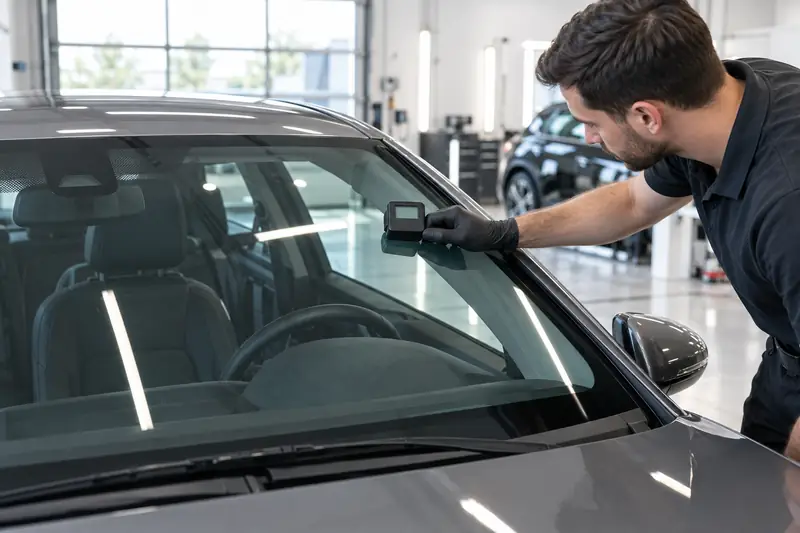
Short answer: 70 window tint is a light film that lets about 70% of visible light through, so it looks almost clear on a car. It is used mainly on windshields and front side windows to cut heat and UV without darkening the glass. Its value comes from ceramic or other infrared-blocking layers; a 70% film without them does very little.
70 window tint is film with a visible light transmission (VLT) of about 70%, which means it blocks only around 30% of visible light and looks nearly clear. It is not about looks or privacy. It exists to cut heat, UV and some glare on glass that cannot or should not be darkened, most often the front windshield. This guide is for owners considering clear ceramic tint and for installers explaining it. It covers what 70% tint looks like, 70 tint vs no tint, 70 vs 75 vs 80, how clear ceramic film blocks heat, legal caveats and when 70 percent tint is worth the money.
Key takeaways
- 70% tint has a VLT of about 70%; on a car it looks close to clear, with a faint neutral or slightly blue-grey tone.
- Its purpose is heat and UV control, not privacy; you can see into the car as easily as with untinted glass.
- Heat rejection comes from infrared-blocking ceramic or similar layers, so a 70% ceramic film can feel cooler than a darker dyed film.
- 70% is the most common shade for full-windshield film; 75% and 80% are even lighter options for strict areas.
- Factory glass already reduces light, so the total reading with 70% film on a windshield is usually below 70%.
- Rules for windshield film vary widely; check before installing, even with near-clear film.
What is 70 tint?
70 tint, also called 70 VLT tint or 70 light transmission tint, is a film that passes about 70% of visible light. VLT (visible light transmission) is the share of visible light passing through, so 70% is near the light end of the 5% to 70% VLT range.
Most 70% films sold for cars are ceramic or other spectrally selective films. "Spectrally selective" means the film blocks a large share of infrared (IR) light, which carries much of the sun's heat, while letting most visible light pass. That is why the terms 70 ceramic tint, clear ceramic tint and ceramic clear tint are used almost interchangeably.
What does 70 tint look like on a car?
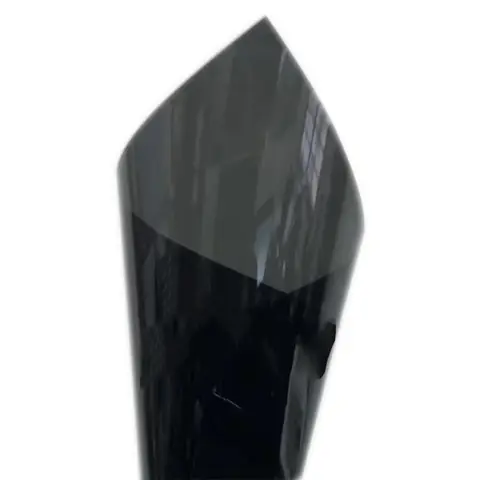
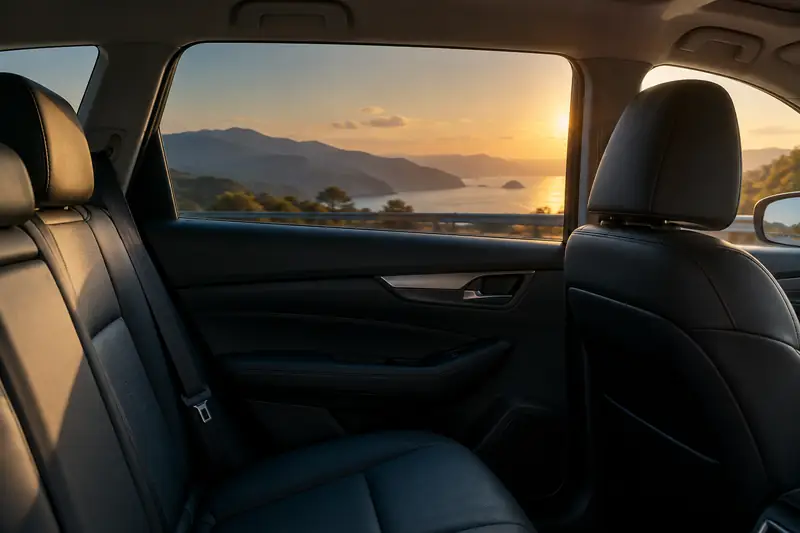
On a car, 70% tint looks almost like factory glass. From outside you see the driver, passengers and dashboard clearly. Up close you may notice a very slight smoky, neutral or bluish tone, and the glass can look a little richer in reflections. Most passers-by will not know the windshield is tinted.
70 window tint before and after
Before: clear glass, full sun on the dashboard and on the driver's arms and face. After: the same view in and out, with a faint tone, noticeably less heat felt on the skin on sunny days (with a ceramic film), and slightly less glare from bright skies. Photos of 70 window tint before and after often show almost no visual change, which is the point.
70 tint vs no tint
From outside, the difference between 70 tint and no tint is small. From inside, the difference is mainly felt rather than seen: less burning sensation from sun through the windshield, a dashboard that stays cooler, and reduced UV exposure. Night visibility remains close to untinted glass.
Does clear ceramic tint reduce heat?
Yes, a quality clear ceramic tint can reduce heat significantly even though it barely darkens the glass. Sunlight reaching a car is roughly made up of visible light, infrared and a small amount of UV. Infrared carries a large share of the heat. Ceramic nanoparticles in the film absorb or reflect much of that infrared while letting visible light through.
Heat performance is usually described with a few numbers on the spec sheet:
| Spec | What it means | How it applies to 70% film |
|---|---|---|
| VLT | Visible light transmitted | About 70%; looks near clear |
| UV rejection | Share of UV blocked | Typically 99% for quality automotive films |
| IR rejection | Share of infrared blocked (often at specific wavelengths) | Ranges widely; the main heat number for clear ceramic |
| TSER | Total solar energy rejected, all wavelengths | Lower than dark films, but meaningful with ceramic |
Be careful comparing IR rejection figures: some are measured at a narrow wavelength band and look higher than TSER. Ask for both. Our heat rejection window tint guide explains the measurements, and ceramic window tint explained covers how the particles work.
70 vs 75 vs 80 windshield tint
70%, 75% and 80% are all light, near-clear films. The higher the number, the clearer the glass and the less noticeable the film, especially at night.
- 70% windshield tint is the most common choice. It gives a faint tone and strong IR rejection when ceramic.
- 75 window tint is slightly clearer and helps where windshield rules are strict.
- 80 windshield tint and "air 80" style films are the clearest options, nearly invisible, usually chosen for compliance or for owners who dislike any tone.
Because factory windshields already transmit less than 100% of light, a 70% film on a windshield may produce a total reading in the 50s or 60s. If your area sets a minimum for windshield VLT, an 80% film may be the only compliant option. Darker windshield films such as 50% are covered in the 50% tint guide.
Where to use 70% film on a car
70% film is most useful where darker tint is impractical or restricted:
- Front windshield. The largest piece of glass and the main source of sun on the dashboard and driver.
- Front side windows in strict areas. Where front limits are light, 70% ceramic gives heat control without breaking the rule.
- Over factory privacy glass. Many SUVs have dark rear glass that blocks light but little heat; a clear ceramic layer adds IR rejection without making it darker.
- Sunroofs and panoramic roofs. A clear ceramic film reduces heat from above while keeping the open-sky feel.
- 70 tint all around. For drivers who want heat control on every window but no tinted look.
A top windshield sun strip can be combined with a 70% windshield film for extra glare control at the top.
Is 70% windshield tint legal?
Not everywhere. Rules on windshield film vary widely: some places allow only a strip above the AS-1 line, some allow a light film on the whole windshield above a minimum VLT, and some allow medical exemptions. Even near-clear film can be outside the rules if it reduces total VLT below a set level or adds reflectivity.
Check current rules with your local DMV or transport authority before installing, and remember the reading on a meter includes the factory glass. The window tint laws guide explains how windshield, front, rear and AS-1 rules are usually structured.
70 tint vs darker shades: who it suits
70% suits a specific driver: someone who wants comfort without changing the look of the car. It is a poor fit for anyone wanting privacy.
Choose 70% if you want to cool a windshield or front windows, drive a lot at night, live where front tint is heavily restricted, or own a car whose look you do not want to change. Choose 35% tint or darker if you want the car to look tinted, and 20% or 5% if privacy is the goal.
Is 70 tint worth it?
70 tint is worth it if the film is a quality ceramic or IR-blocking type and heat is your main complaint, especially through the windshield on long commutes or in hot regions. It is not worth it as a dyed or basic film, because a 70% film without IR-blocking layers changes little beyond UV. Ask for the TSER and IR rejection figures and compare them before buying.
Stocking clear ceramic tint for your shop
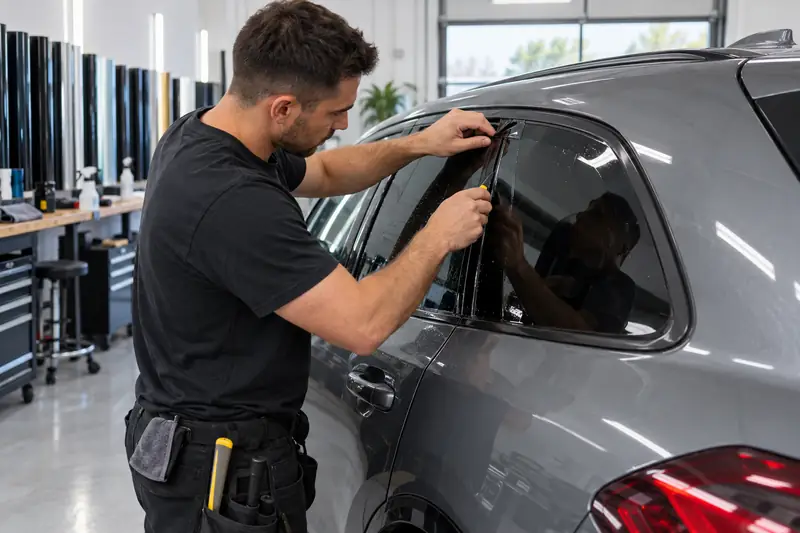
Clear ceramic film is a growing category because it lets shops sell heat control to customers who would never buy dark tint. It also needs wider rolls and careful handling, since windshields are large and any contamination or distortion is easy to see in a near-clear film.
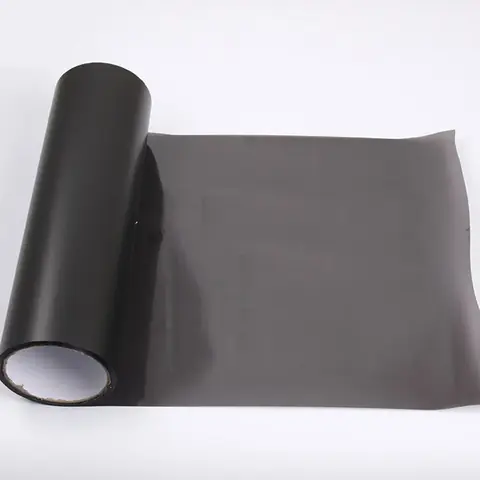
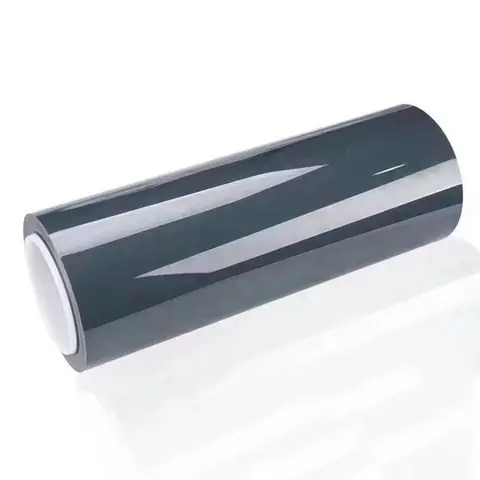
Mars Decorative Film manufactures window and light tint film, including light shades for windshield use, with an MOQ of one roll and mixed shades in a single order. Shops can request free samples to check optical clarity and heat-shrink behavior on a real windshield before stocking.
Frequently asked questions
What does 70 percent tint look like?
70 percent tint looks almost clear. From outside, people and the interior are easy to see, with only a faint neutral or slightly blue-grey tone on the glass. Most people will not notice it unless they look closely.
How dark is 70 tint?
70 tint is very light. It blocks only about 30% of visible light, so from inside it feels close to untinted glass, day and night. On a windshield the total reading is lower than 70% because the factory glass also absorbs some light.
Does clear ceramic tint reduce heat?
Yes. Quality clear ceramic film blocks a large share of infrared light, which carries much of the sun's heat, while letting most visible light through. The effect is felt as less heat on the skin and a cooler dashboard, even though the glass barely darkens.
Is 70 tint worth it?
It is worth it for drivers who want heat and UV control without changing the look of the car, especially on the windshield. It only pays off with a ceramic or other IR-blocking film; a basic 70% film gives little benefit beyond UV protection.
What is the difference between 70 and 80 windshield tint?
80% film is clearer than 70% and is often chosen where windshield rules are strict or where the owner wants no visible tone. 70% has a faint tone and is the more common choice. Both can reject meaningful heat if they are ceramic films.
Is clear ceramic tint the same as a ceramic clear coat?
No. Clear ceramic tint is a window film applied to glass to block heat and UV. A ceramic clear coat or ceramic coating is a liquid applied to paint for gloss and easier cleaning. They solve different problems and are not interchangeable.