Window tint · 8 min read
20% window tint: how dark it is, what it looks like and 20 vs 15 vs 35
20 percent tint explained: how dark 20% looks on a car by day and at night, 15 vs 20 vs 35 tint compared, ceramic 20 tint, legality and who it suits.
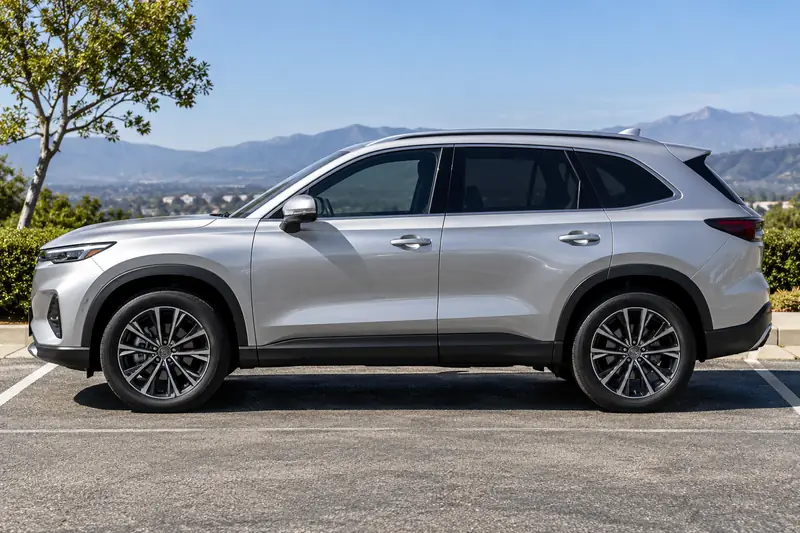
Short answer: 20 percent tint lets about 20% of visible light through, so it looks dark charcoal from outside and gives strong daytime privacy while staying usable at night. It sits between 15% (darker, near-limo) and 35% (lighter, more see-through). Many owners pick 20% for rear windows or all around where local rules allow it.
20 percent tint is window film that lets roughly 20% of visible light pass through and blocks about 80%. It is one of the most requested shades in tint shops because it is the point where a car starts to look properly dark without the night-time drawbacks of limo tint. This guide is for owners choosing between 15, 20, 25, 30 and 35 percent, and for shops explaining the options at the counter. It covers what 20% tint looks like on a car, how dark it is from inside and at night, 15 vs 20, 20 vs 35, ceramic 20 tint and the legal caveats.
Key takeaways
- 20% window tint has a VLT (visible light transmission) of about 20%, meaning one fifth of visible light gets through.
- From outside in daylight, 20 tint on a car looks dark charcoal; you can see silhouettes inside at close range but not details.
- From inside, 20% is comfortable in daylight and usable at night, though noticeably dimmer than 35%.
- 15% tint looks close to 20% at a glance but is a clear step darker at night; 35% is much lighter and more see-through.
- Front side window limits in many places are lighter than 20%, so 20% all around is not legal everywhere.
- A ceramic 20% film rejects much more infrared heat than a dyed 20% film of the same darkness.
How dark is 20 tint?
20 tint is dark but not blacked out. It blocks about 80% of visible light, roughly the darkness of a good pair of medium-dark sunglasses. On the VLT scale from 5% to 70%, it sits in the "dark" group with 15%, below the "medium" group of 30–35%.
Remember that the VLT on the box describes the film. On a window with clear factory glass, the final reading is usually a few points lower, around 17–19%. On factory privacy glass the result can be much darker, so a "20%" install on an SUV's rear doors may read well under 10% on a meter.
What does 20 tint look like on a car?
On a car, 20% window tint looks dark charcoal in daylight. From a few meters away you see reflections and a dark interior; up close or with the sun behind the car, you can make out headrests, a driver's outline and sometimes faces. It reads as clearly "tinted" without the uniform black of 5%.
Paint color changes the effect:
- On black, dark grey and dark blue cars, 20 tint all around blends with the body and looks clean and subtle.
- On white and silver cars, 20% gives a crisp two-tone contrast that many owners prefer to 5%, which can look heavy.
- On cars with factory privacy glass in the rear, 20% on the front doors is a common way to match the factory rear shade.
What does 20 percent tint look like from inside and at night?
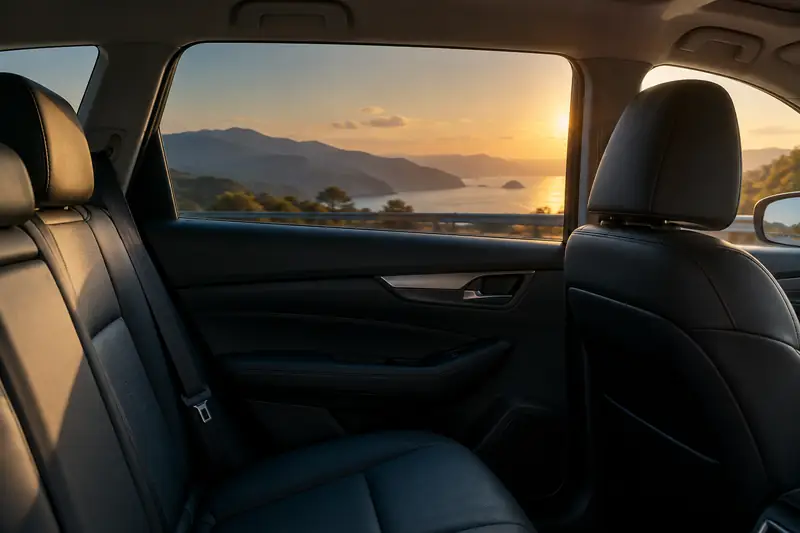
From inside in daylight, 20 percent tint feels like sunglasses: clear, a little dimmer, with less glare. Most drivers get used to it within a day. Side mirrors are easy to read through 20% film on the front doors.
At night, 20 tint is the shade where drivers start to notice a difference. Lit roads, headlights and street signs are fine. Dark side streets, unlit driveways and parking spots under trees are harder, and reversing without a camera takes more care. Compared with 5%, 20 tint at night is far more usable; compared with 35%, it is noticeably darker. If most of your driving is on dark rural roads, consider 35% on the front doors and 20% on the rear.
15 vs 20 percent tint: what is the difference?
15% tint transmits about 15% of light, 20% about 20%. The numbers look close, but 15% is roughly a quarter darker, and the difference shows most at night and from inside.
What does 15 tint look like? From outside, 15 percent tint looks near-black in most light, closer to limo tint than to 20%. From inside it is dimmer in shade and at dusk. How dark is 15 tint at night? Darker than many drivers expect, which is why 15% all around is a less common request than 20% all around.
Choose 15% if you want near-limo privacy on the rear with a little more visibility than 5%. Choose 20% if you want privacy plus easier night driving. For the darkest options, see the 5% tint guide.
20 vs 25 vs 30 vs 35 tint compared
Moving from 20% to 35% roughly doubles the visible light reaching your eyes, and the car goes from "dark" to "medium". 25% and 30% sit between the two and are less common shades that some shops stock and others do not.
| Shade | Approx. VLT | Outside look (day) | Inside view at night | Who it suits |
|---|---|---|---|---|
| 5% | ~5% | Near-black | Poor | Rear privacy only |
| 15% | ~15% | Very dark | Limited | Rear windows, dark style |
| 20% | ~20% | Dark charcoal | Fair | Rear, or all around where allowed |
| 25% | ~25% | Dark | Fair to good | Between dark and medium |
| 30% | ~30% | Medium-dark | Good | Fronts, all around |
| 35% | ~35% | Medium | Good | Fronts, all around, first-time tint |
20 window tint vs 35
20% gives more privacy and a darker look; 35% gives better visibility at night and is accepted on front side windows in more places. A common split is 20% rear and 35% front. Read the 35% tint guide for how 35 looks on different cars.
20 vs 30 tint and 20 vs 32
30% and 32% are lighter variants that sit just under 35%. Against 20%, they look noticeably lighter and you can see into the car more easily. They suit drivers who want a tinted look with near-35% visibility.
5 vs 20 window tint
5% is limo-black and privacy-first; 20% is dark but still lets you see shapes inside. 5% is mostly a rear-window film, while 20% is used on both rear and, where allowed, front windows.
Is 20 percent tint legal?
It depends on where the vehicle is registered and on which window the film goes. Many tint rules set a lighter minimum for front side windows than for rear windows, and in many places 20% on the front doors is darker than allowed. Rear windows often have more room, sometimes with a requirement for dual side mirrors.
Before installing 20 percent window tint:
- Check the current limits for each window position with your local DMV or transport authority.
- Account for factory glass: the legal limit usually applies to glass plus film together.
- Ask the installer to meter the window after install if you are near the limit.
- Keep the film's spec sheet in the car in case you need to show the VLT.
Our window tint laws guide explains how these rules are structured and enforced.
20 ceramic tint vs dyed 20%: is ceramic worth it at this shade?
At 20%, a dyed and a ceramic film look similar in darkness, but they behave very differently in the sun. Darkness controls glare; heat rejection comes mostly from blocking infrared (IR) light, which you cannot see.
- Dyed 20% absorbs visible light well and gives good privacy, but rejects comparatively little IR heat and may fade in color over several years in strong sun.
- Carbon 20% keeps a stable matte charcoal color and rejects more heat than dyed.
- Ceramic 20% uses non-metallic nano ceramic particles to block a large share of IR, so the cabin and your skin stay cooler, with no interference with phone or GPS signals.
20 percent ceramic tint is a strong choice for hot climates and for drivers who want the dark look plus real comfort. Compare film types in ceramic window tint explained and the best window tint for cars.
Stocking 20% and 15% tint for your shop
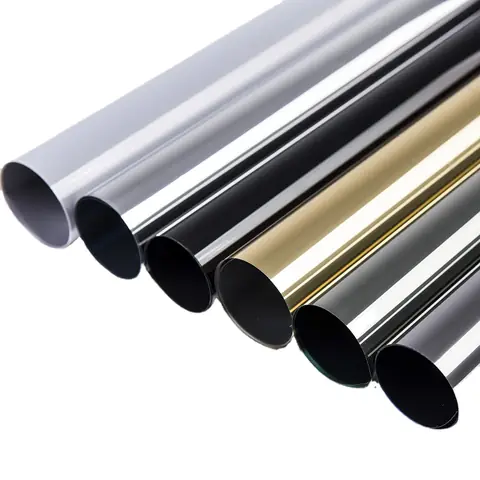
15% and 20% are high-volume shades for most tint shops, so running out of them costs jobs. Many shops stock 20% in two grades, an economy dyed or carbon film and a ceramic film, plus 15% for customers who want darker rear glass.
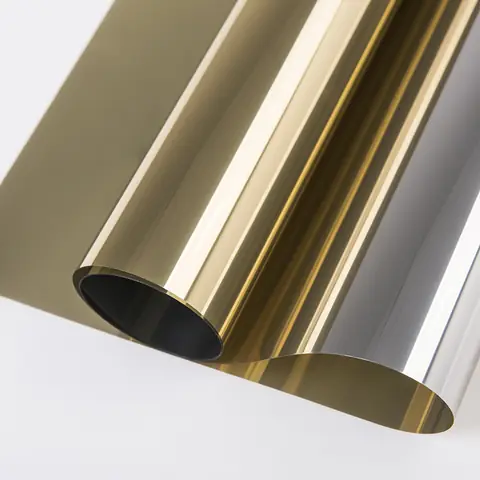
Mars Decorative Film makes window tint film across standard VLT shades, with an MOQ of one roll and mixed shades allowed in one order, so a shop can add 15% and 20% ceramic alongside other films. In-stock rolls ship in about three business days. Shops can request free samples to compare color tone and clarity on their own glass before ordering, and the window tint rolls wholesale guide covers what to check in a supplier.
Frequently asked questions
How dark is 20 percent tint?
20 percent tint blocks about 80% of visible light. From outside it looks dark charcoal and gives good daytime privacy; from inside it feels like medium-dark sunglasses. It is darker than 35% but far lighter than 5% limo tint.
What does 20 tint look like on a car?
In daylight, 20 tint looks dark and mostly private, though you can see outlines of people inside at close range. On dark cars it blends into the body; on white or silver cars it creates a sharp contrast. Lighting and paint color change how dark it appears.
What does 15 tint look like?
15% tint looks very dark, close to limo tint in most daylight conditions. You can occasionally see silhouettes inside when the sun is behind the car. From inside, it is noticeably dimmer than 20% at dusk and at night.
Is 15 or 20 tint better?
Neither is better in general. 15% gives more privacy and a darker look, while 20% is easier to see through at night. Many drivers pick 20% for a balance, or 15% on the rear only.
Can you see through 20 tint at night?
Yes. From inside you can see roads, lights and most objects, but dark areas and unlit obstacles are harder to spot than with 35% or no tint. A reversing camera helps when backing up with 20% rear glass.
Is 20 ceramic tint worth it?
If heat matters, yes. A ceramic 20% film blocks considerably more infrared heat than a dyed 20% film of the same darkness, keeps its color longer and does not interfere with electronics. If you mainly want privacy in a mild climate, a carbon or dyed film may be enough.