Window tint · 9 min read
5% tint (limo tint): what it looks like, night visibility and legality
5 window tint explained: what 5% limo tint looks like from outside and inside, night visibility, 5 vs 20 tint, double 5 tint, legality and ceramic vs dyed.
Short answer: 5 window tint is film that lets only about 5% of visible light through the glass, which is why it is called limo tint. From outside it looks nearly opaque black, while from inside you can still see out in daylight. At night visibility drops sharply, and many places restrict it on front side windows, so it is mostly used on rear glass.
5 window tint is the darkest common automotive window film: it transmits roughly 5% of visible light and blocks the other 95%. Installers call it limo tint or jet black tint because it is the shade used on the rear of limousines, executive cars and many SUVs. This guide is for car owners deciding whether 5 percent tint is right for them and for tint shops that stock it. It covers what 5% tint looks like from outside and inside, how it behaves at night, how it compares with 20%, what "double 5" means, the legal caveats and how ceramic and dyed versions differ.
Key takeaways
- 5% tint means the film has a VLT (visible light transmission) of about 5%, so only about one twentieth of visible light passes through.
- From outside, 5 percent tint looks almost solid black in daylight; people usually cannot see faces or objects inside.
- From inside, you can see out clearly in daylight, but night visibility drops a lot, especially when reversing or in unlit areas.
- Many jurisdictions do not allow 5% tint on front side windows, and some restrict it on rear glass too; always check local rules.
- Darkness does not equal heat rejection: a 5% dyed film can reject less heat than a lighter ceramic film.
- 5% film is the darkest shade most shops sell; "double 5" layering goes darker still but creates real visibility and legal problems.
What is 5 tint and what does 5% mean?
5 tint is window film with a nominal VLT of 5%. VLT (visible light transmission) is the share of visible light that passes through the film and glass together. Lower numbers are darker, so 5% is far darker than 35% or 70%.
The number on the roll describes the film alone. Factory glass is rarely perfectly clear, and many rear windows on SUVs and pickups already have factory privacy glass of roughly 15–25% VLT. Put 5% film over privacy glass and the final reading on a meter can be close to 1–3%. That matters for legality, and our window tint percentage guide explains how film VLT and glass VLT combine.
What does 5 tint look like on a car?
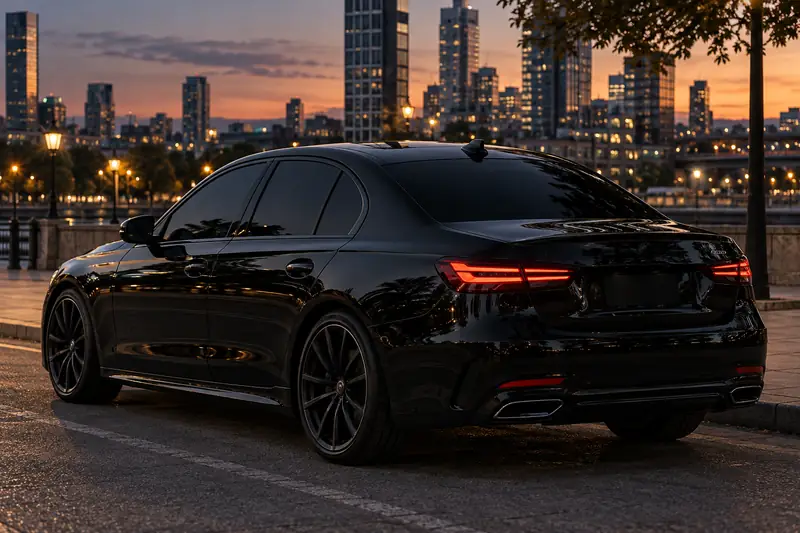
On a car in daylight, 5% tint looks like black glass. You see reflections of the sky and the street on the window surface, but almost nothing of the interior. That is the main reason people choose it: maximum privacy and a uniform blacked-out look that matches black trim or a chrome delete.
How it looks depends on a few things:
- Paint color. On black and dark grey cars, 5 tint all around makes the glasshouse disappear into the body. On white or silver cars it creates a strong contrast that some owners love and others find heavy.
- Film construction. Dyed and carbon films tend to look neutral black or slightly charcoal. Ceramic films at 5% usually look deep neutral black with low reflectivity.
- Lighting. In bright sun with the interior in shade, you see nothing inside. When the cabin lights are on at night, people outside can see more than you might expect, because the inside is now the brighter side.
What does 5 percent tint look like from inside?
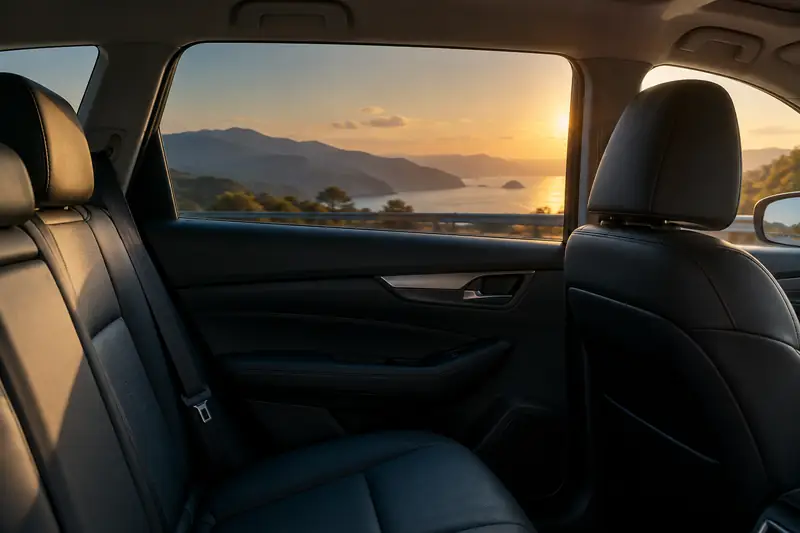
From inside in daylight, 5 percent tint looks like wearing very dark sunglasses. The view is clear and sharp with good film, but colors are muted and the scene is noticeably dimmer. Most drivers adjust within a few minutes on a sunny day.
The problems start as light falls. At dusk, in parking garages, under bridges and on rainy days, 5 tint from inside can make it hard to see pedestrians, cyclists and curbs through the side and rear glass. Backing up is the common complaint: checking over your shoulder through 5% rear glass at night often shows mostly your own reflection. Many drivers who choose 5% on the rear rely heavily on mirrors and a reversing camera.
How dark is 5 tint at night?
At night, 5% tint is very dark from both sides. From inside, streetlights, headlights and lit signs remain visible, but unlit objects such as people in dark clothing, posts and curbs can disappear. From outside, a car with 5 tint all around at night looks completely black unless the interior lights are on.
Can you see through 5 tint at night? Yes, bright objects, but not well enough for many drivers to feel safe on the front side windows. That is a practical reason, separate from the law, why shops often suggest 5% on the rear and a lighter shade such as 20% tint or 35% tint on the fronts.
5 tint vs 20 vs 35: how the darker shades compare
5% is about four times darker in light transmission than 20%, and the difference is easy to see on the car. At 20% you can make out shapes and people inside a car at close range; at 5% you usually cannot.
| Shade | Approx. VLT | Privacy from outside (day) | Visibility from inside at night | Typical use |
|---|---|---|---|---|
| 5% (limo) | ~5% | Near total | Poor | Rear windows, limos, privacy |
| 15% | ~15% | Very high | Limited | Rear windows, dark looks |
| 20% | ~20% | High | Fair | Rear, or fronts where allowed |
| 35% | ~35% | Moderate | Good | Fronts, all-around |
| 50% | ~50% | Low | Very good | Heat control with a light look |
A popular combination is 5% on the rear doors and back glass with 20% or 35% on the front doors. It keeps the rear private while giving the driver better side visibility. Compare the full range in our best window tint for cars guide.
5 tint vs 20: which should you choose?
Choose 5% if privacy and a fully blacked-out look matter most and the windows in question are allowed to be that dark. Choose 20% if you want strong privacy but still need reasonable night visibility, or if you drive mostly in poorly lit areas.
Double 5 tint and triple 5 tint
Double 5 tint means two layers of 5% film on the same window; triple 5 is three layers. Because VLT multiplies rather than adds, two 5% layers give roughly 0.25% VLT, which is effectively blackout. Some people ask for it on show cars or for rear glass in vehicles used to carry equipment.
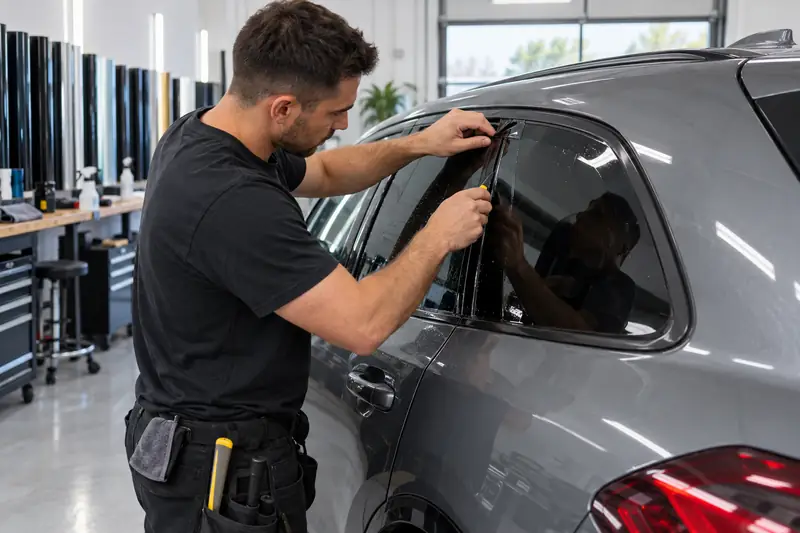
Most professional shops discourage it. Layered film is harder to install cleanly, can trap contamination between layers, is very hard to remove, and makes rear visibility extremely poor. It is also far outside the limits of most road rules. If someone wants more privacy than 5% gives, a better route is usually interior shades or non-road use only.
Is 5% tint legal? Can you have 5 tint on back windows?
Whether 5% tint is legal depends entirely on where the car is registered and which window it is on. Rules typically set separate limits for the windshield, front side windows, rear side windows and back glass. Many places allow darker film on rear windows than on front windows, and some allow any darkness on the rear of certain vehicles, but others restrict the rear too.
General points to keep in mind:
- Front side windows almost always have a stricter limit than the rear, and 5% is usually well below it.
- Rear windows are where 5 tint is most often allowed, sometimes only if the car has two working side mirrors.
- Limits refer to the total VLT of glass plus film, so factory privacy glass counts.
- Medical exemptions exist in some places but have their own paperwork and conditions.
- Rules change, so check the current rules with your local DMV or transport authority before installing.
Our window tint laws guide explains how tint rules are structured and how enforcement works, without listing state-specific numbers that may be out of date.
Ceramic vs dyed 5 tint: does the film type matter?
Yes. At 5% every film looks dark, so the real differences are heat rejection, clarity, color stability and signal compatibility.
- Dyed 5% film is the most affordable. It absorbs light with dye, looks black when new and gives strong privacy, but it rejects less infrared heat and can fade toward purple or brown over years in strong sun.
- Carbon 5% film uses carbon particles for a stable charcoal-black color that does not fade the same way, with better heat rejection than dyed.
- Ceramic 5% film uses nano ceramic particles to block a large share of infrared heat while staying non-metallic, so it does not interfere with phones, GPS or toll tags. It costs more but performs best in hot climates.
Ceramic matters most at lighter shades, where it is the only way to get serious heat rejection without darkness. At 5% even a dyed film blocks most visible glare, but 5 tint ceramic still makes a noticeable difference to infrared heat on the skin and cabin temperature. See ceramic vs carbon vs dyed tint and heat rejection window tint for how those numbers are measured.
Stocking 5% tint rolls for your shop
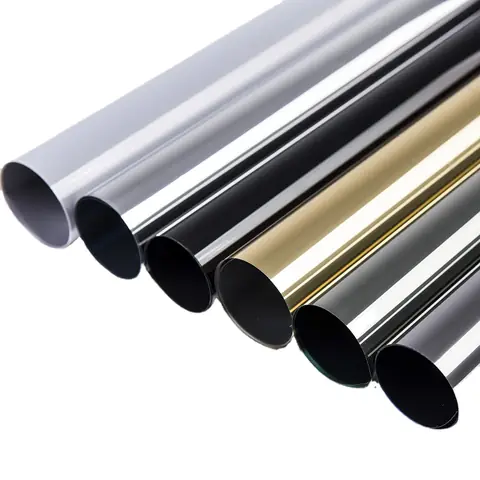
5% is a core shade for most tint shops, alongside 15–20%, 35% and 50–70%. Shops that sell to owners in hot regions usually stock both an economy 5% film for price-sensitive customers and a ceramic 5% for those who want heat rejection.
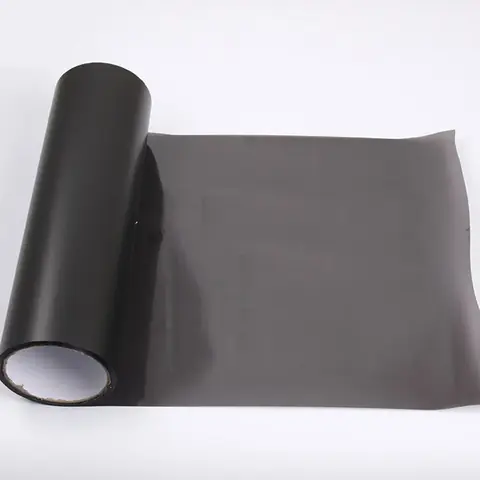
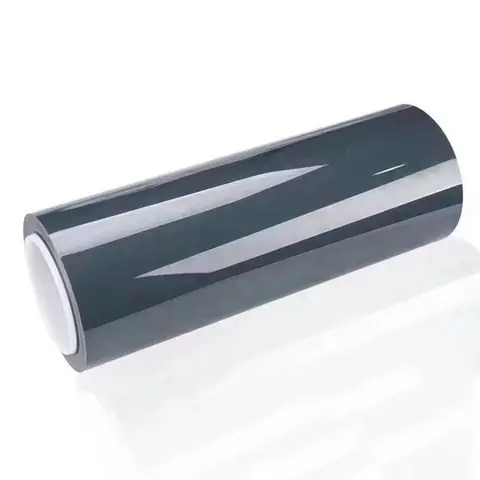
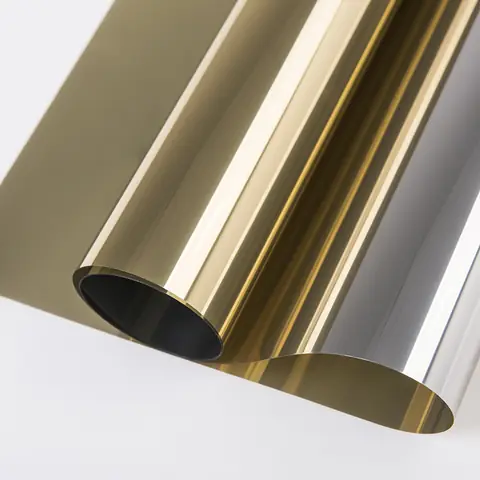
Mars Decorative Film manufactures window and light tint film in a range of VLT shades, supplied as 5 tint rolls from an MOQ of one roll with mixed shades allowed in a single order. In-stock film typically ships in about three business days, and shops building their own label can use our OEM and private label service for boxes and liners. You can request free samples to check color, clarity and shrink behavior on your own glass, and the window tint rolls wholesale guide covers what to compare between suppliers.
Frequently asked questions
What does 5 tint mean?
5 tint means window film with about 5% visible light transmission. Only around 5% of visible light passes through, so it is the darkest standard automotive shade, often called limo tint. The final darkness also depends on the glass it is applied to.
Is 5 window tint dark?
Yes, it is the darkest common shade. In daylight a car with 5% tint looks almost solid black from outside, and people generally cannot see the interior. From inside it feels like very dark sunglasses.
Can you see through 5 tint?
From inside in daylight, yes, clearly. At night or in dim places, you can see lights and bright objects but unlit people, posts and curbs become hard to see, especially through rear glass when reversing. From outside, you usually cannot see in during the day.
Can I have 5 tint on my back windows?
In many places rear side windows and the back glass may be darker than the front windows, and 5% is sometimes allowed there, often with a requirement for two side mirrors. Other places restrict rear glass too. Check the current rules with your local DMV or transport authority before installing.
What does 5 percent tint look like at night?
At night 5 percent tint looks completely black from outside unless the interior lights are on. From inside, visibility is reduced to lit objects and headlights, which is why many drivers keep 5% to the rear and use a lighter film on the front doors.
Is ceramic 5 tint worth it?
Ceramic 5% tint is worth it if heat is your main concern, especially in hot, sunny climates. It blocks much more infrared heat than dyed 5% film and keeps its color for longer. If you only want privacy on a car that sits in mild weather, a carbon or dyed 5% film can be enough.