Window tint · 8 min read
Spray-on window tint vs film: does spray tint work on cars and lights?
Spray on window tint explained: how tint sprays work, why they rarely suit car windows, the legal risks on lights, and when tint film is the better choice.
Short answer: Spray on window tint is a tinted lacquer applied from an aerosol can. It can work on small plastic parts and some tail light lenses, but on car windows it is hard to apply evenly, often looks blotchy, offers little heat rejection and is difficult to remove. Tinting lights is restricted in many places. Window film is usually the better option.
Spray on window tint is a transparent colored coating, usually a lacquer in an aerosol can, that darkens glass or plastic when sprayed on in thin coats. It is sold as a cheap, quick alternative to tint film for car windows, headlights and tail lights. This guide is for car owners weighing a can of tint spray against film, and for shops who get asked about it. It explains how sprayable tint works, where it can and cannot give a good result, the legal risks on lights, and how it compares with film on cost, looks and removal.
Key takeaways
- Spray on tint is a pigmented clear coat; it colors the surface but has no engineered heat or UV rejection layer like film.
- On flat car glass it is hard to get an even, distortion-free finish; runs, dust and blotches are common.
- Spray tint for plastic parts and some tail light lenses is more forgiving, but the finish is permanent until sanded or stripped.
- Tinting headlights and brake lights is restricted in many places because it reduces light output and can change the color.
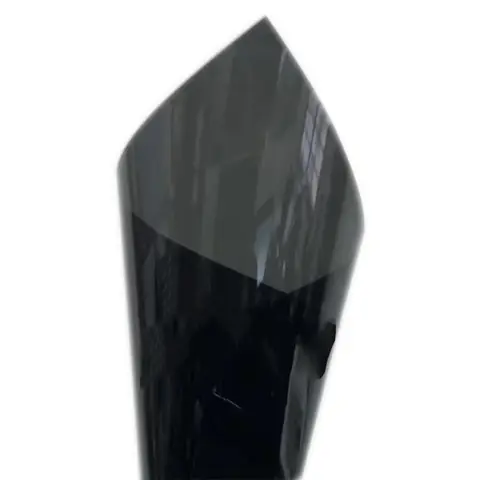
- Window film gives a uniform shade, stated VLT, about 99% UV rejection and clean removal.
- "Spray on paint protection film" is a peelable or hard coating, not a TPU film, and gives far less impact protection.
What is spray on window tint?
Spray on window tint is a tinted transparent paint. Most products are acrylic or similar lacquers with dye or pigment that build darker with each coat. Professional versions exist as tinted clear coats sprayed with a gun, while consumer car tint spray comes in aerosol cans labeled for glass, lenses or plastic.
The idea is simple: mask the area, spray several light coats, let it dry, and the surface looks smoked. The catch is that a coating's darkness depends entirely on how thick you spray it. Film, by contrast, arrives with a fixed VLT (visible light transmission, the share of visible light passing through) set at the factory. Our car window tint guide covers how film types and shades work.
Does spray on tint work on car windows?
It can darken glass, but it rarely gives a result most drivers would accept on side or rear windows. Spray tint car windows and you face several problems at once:
- Uneven shade. Any variation in spray distance, speed or overlap shows as light and dark stripes, especially when the sun shines through.
- Optical distortion. Runs, orange peel texture and dust nibs scatter light, which shows up as haze and glare at night.
- Durability on glass. Paint does not bond to smooth glass as well as it does to primed metal. Roll-down windows rub against seals and felt channels, which can scratch or peel the coating.
- Unknown VLT. Without a meter you do not know how dark the window is, which matters for legality.
- Hard removal. A cured coating has to be scraped and chemically stripped off the glass, and blades cannot be used over rear defroster lines.
Spray on auto window tint also offers little heat control. A coating mainly absorbs visible light; it has no ceramic or carbon layer designed to reject infrared, which is what makes ceramic window tint effective. See our heat rejection window tint guide for why darkness alone does not stop heat.
Spray tint vs window film compared
Here is how a can of glass tint spray compares with automotive window film on the points drivers care about:
| Factor | Spray on tint | Window film |
|---|---|---|
| Material cost | Low (a can or two) | Low to moderate for DIY, higher for pro install |
| Shade consistency | Depends on spray technique | Uniform, factory-set VLT |
| Optical clarity | Often hazy or blotchy on glass | Clear on quality films |
| Heat rejection | Minimal | Moderate (dyed) to high (ceramic) |
| UV rejection | Varies, rarely stated | Typically about 99% |
| Durability on roll-down glass | Prone to scratches and peeling | Scratch-resistant coating, rated for years |
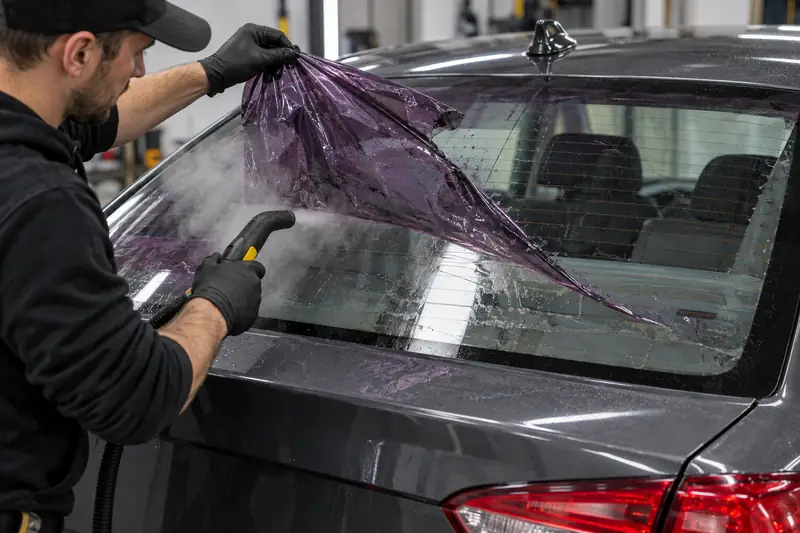
| Removal | Scraping and solvents | Peels off with heat or steam |
| Legal check | VLT unknown | VLT printed on the spec sheet |
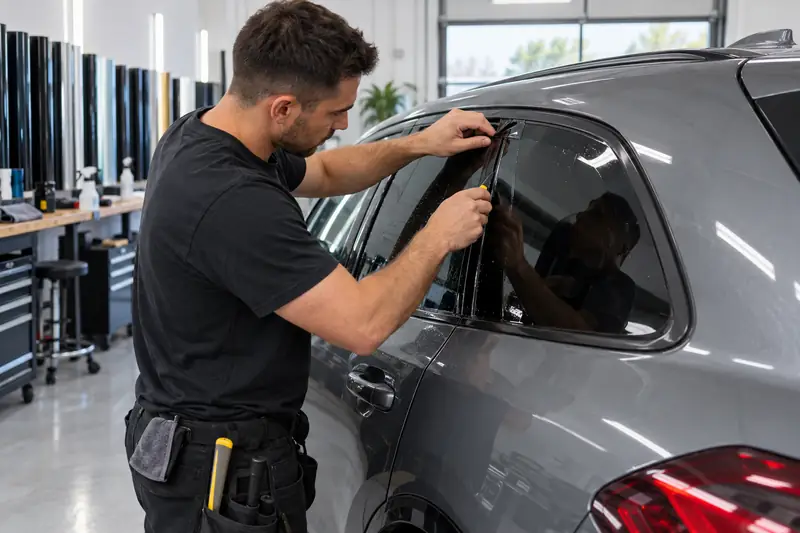
If you want a DIY route on windows, precut window tint kits avoid most of the cutting work, and our guide on how to tint car windows walks through installation.
Headlight tint spray and tail light spray tint
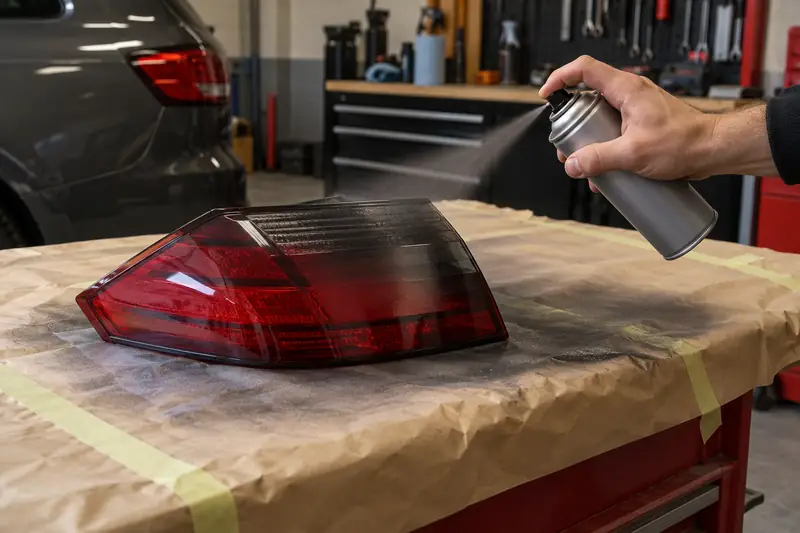
Lights are where tint spray is most often used, because lenses are small, curved plastic parts and the smoked look is popular. The finish can look good on tail lights if the lens is prepared and sprayed carefully. But light tint carries more risk than window tint.
Headlight tint spray reduces the amount of light reaching the road and can scatter the beam pattern. That affects your ability to see and be seen. Many places do not allow any coating on headlights that reduces output or changes color.
Brake light tint spray and tail light spray tint lower the brightness of stop and turn signals. Drivers behind you rely on those lights, especially in daylight and rain. Many regions require lights to be visible from a set distance and to show their standard colors.
Rules vary by state and country and change over time. Treat any light tint as something to check first with your local DMV or transport authority, and see our window tint laws guide for how limits are usually structured.
Light tint film as an alternative
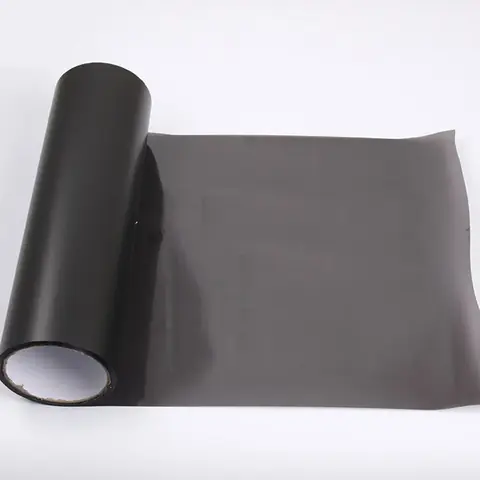
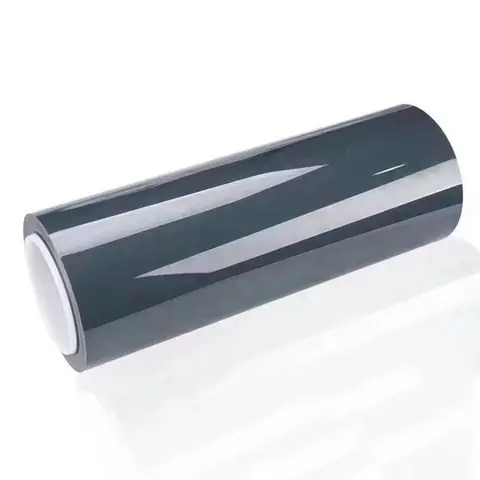
Light tint film is a thin, stretchable vinyl or TPU made for lenses. Compared with spray, it gives a uniform shade, can be removed if you sell the car or fail an inspection, and leaves the lens untouched. The headlight and tail light film guide explains shades and installation. It is subject to the same legal limits as spray, so check rules before installing either.
How spray tint is applied to lenses
If you still choose spray tint for plastic parts like tail lights or trim, the process matters more than the product. The usual sequence is:
- Remove the lens if possible. Spraying on the car invites overspray on paint and seals.
- Clean and lightly scuff. Wash, degrease and lightly sand the lens with very fine paper so the coating can grip.
- Mask carefully. Cover reflectors, edges and any area you do not want tinted.
- Spray thin coats. Hold the can at a steady distance and overlap passes by about half. Several light coats look better than one heavy coat.
- Let it flash between coats. Follow the can's recoat time; spraying too soon causes runs.
- Add a clear coat if the product calls for it. This protects the tint and restores gloss.
- Cure fully before refitting. Many coatings need a day or more to harden.
Test the result at night, from behind and in front of the car, to see how much light the lens still gives.
Is spray on paint protection film the same as PPF?
No. Products sold as spray on paint protection film are either peelable rubber-like coatings or hard liquid coatings. Peelable coatings are closer to liquid wrap: they can protect against light scuffs and are easy to remove, but they are much thinner and softer than PPF. Hard coatings add gloss and chemical resistance but do not absorb stone impacts.
Real PPF is a thick TPU film, typically around 6–8 mil (roughly 150–200 µm), with a self-healing top coat. Read what paint protection film is and our comparison of liquid wrap vs vinyl wrap for the differences.
Removing spray tint
Removing spray on tint from car windows takes more work than peeling film. On glass, the usual approach is a fresh razor blade held flat, plus a solvent the coating maker recommends, with plenty of ventilation. Never use a blade on rear windows with defroster lines; use solvent and a plastic scraper instead. On plastic lenses, solvents can craze or cloud the lens, so many people wet sand and polish instead. Test any chemical on a hidden spot first. For film and glue removal, see how to remove window tint.
Stocking window and light tint film
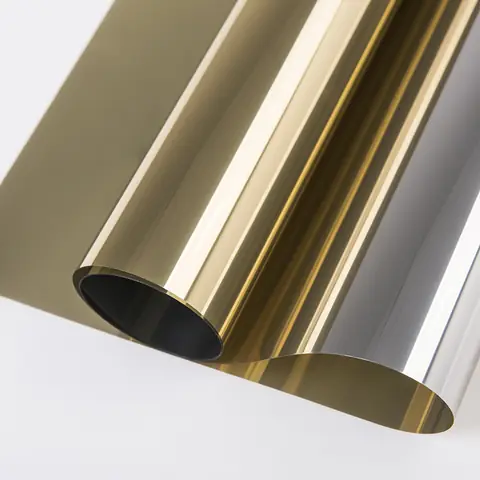
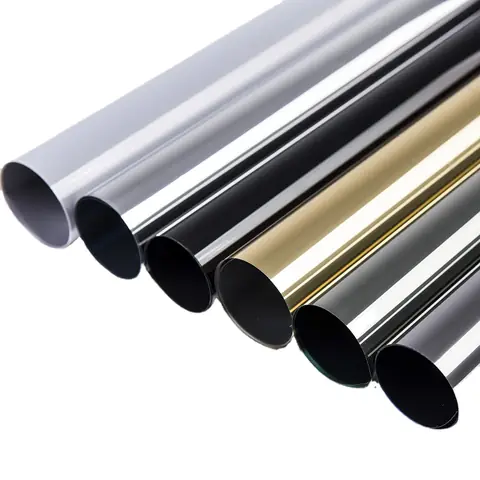
For tint and detailing shops, film is the product that answers most spray tint questions: customers get a clean shade, a known VLT and a removable result. Mars Decorative Film does not make spray tint, but we manufacture window and light tint film in 1.52 m wide rolls, with an MOQ of one roll and mixed shades in one order. You can request free A4 samples to compare shades on lenses and glass before stocking.
Frequently asked questions
Does spray on window tint work?
It darkens glass, but results on car windows are usually poor. Getting an even, clear finish on large glass is difficult, the coating can scratch on roll-down windows, and it gives little heat rejection. Window film is more consistent and easier to remove.
Is spray tint good for tail lights?
Spray tint can look good on tail lights when the lens is properly prepared and sprayed in thin coats. It is hard to reverse, though, and darker lenses reduce brake and signal light output, which is restricted in many places. Check local rules first.
Is headlight tint spray legal?
In many places it is not, because any coating that reduces headlight output or changes its color can break lighting rules. Laws vary by state and country and change over time, so check with your local DMV or transport authority before tinting headlights.
Can you spray tint on car windows yourself?
You can, but expect a noticeably uneven result unless you have spray experience and a dust-free space. Most DIYers get better results with precut film, which comes in a set shade and can be removed if something goes wrong.
How do you remove spray tint from glass?
Use a solvent recommended by the coating maker and a fresh razor blade held flat on side glass, working in a ventilated area. On rear windows with defroster lines, use solvent and a plastic scraper instead of a blade to avoid cutting the lines.
Is spray on PPF as good as film?
No. Spray coatings sold as paint protection are much thinner than TPU film and do not absorb stone chips the same way. They can help against light scuffs or add gloss, but they are not a replacement for real paint protection film.