Window tint · 8 min read
Automatic tinting windows for cars: photochromic, electrochromic and smart film
Automatic tinting explained: how photochromic, electrochromic, PDLC and SPD smart tint work, what electric tint for cars really costs, and its legal limits.
Short answer: Automatic tinting covers glass or film that changes shade by itself or at the push of a button. Photochromic film darkens in UV light, electrochromic glass darkens with a small voltage, PDLC film switches between frosted and clear, and SPD glass dims variably. For cars, most options are costly, factory-fitted or limited, and conventional tint is still the practical choice.
Automatic tinting is any window technology that changes from light to dark, or from clear to frosted, without swapping film: it reacts to sunlight or to an electric switch. Drivers search for it because they want dark windows when parked and clear glass at night. This guide is for curious car owners and for tint shops fielding questions about electric window tint. It explains the four main technologies, what each can and cannot do in a car, typical costs, legal issues, and why conventional film is still what most shops install.
Key takeaways
- There are four main smart tint technologies: photochromic, electrochromic, PDLC and SPD.
- Photochromic (transition) film darkens under UV, but car glass blocks much of the UV it needs, so it reacts weakly and slowly inside a car.
- Electrochromic and SPD glass dim smoothly with low voltage and appear mainly as factory options on some roofs and premium models.
- Aftermarket electric tint for cars is usually PDLC film, which switches between frosted and clear rather than light and dark.
- Smart window tint for cars typically costs several times more than conventional film and needs wiring through door panels.
- Many places restrict obscured or frosted front windows while driving; check your local DMV or transport authority.
What is automatic tinting?
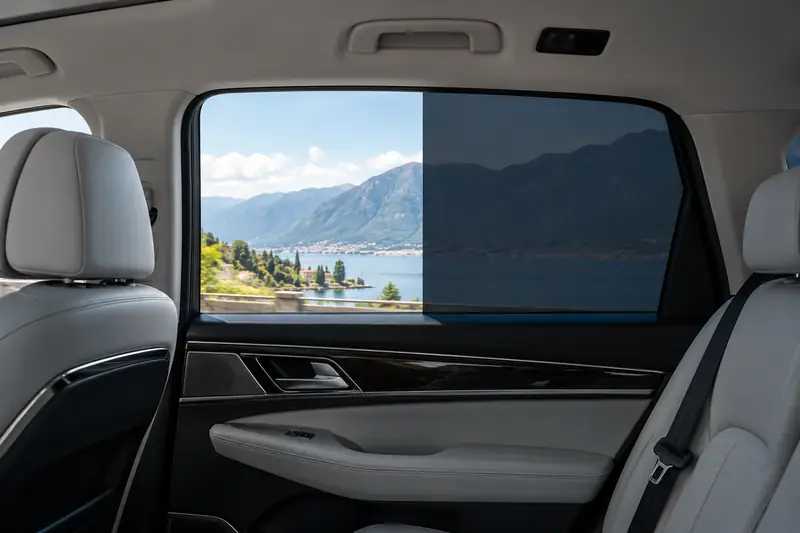
Automatic tinting describes glass or film whose light transmission changes in use. Some versions are passive and respond to sunlight, like photochromic eyeglass lenses. Others are active: they use electricity to change the film's state when you press a button or when a sensor triggers it. The terms smart window tint, electric tint, electronic window tint, adjustable window tint and smart glass tint are used loosely for all of them, even though they work very differently.
Conventional window tint, by contrast, has a fixed VLT (visible light transmission, the share of visible light that passes through). A 20% film stays 20% day and night. If you are new to fixed shades, start with the car window tint guide.
Photochromic, electrochromic, PDLC and SPD compared
The four technologies differ in how they switch, what the glass looks like, and whether they suit cars.
| Technology | How it switches | Looks like | Switching speed | Car availability |
|---|---|---|---|---|
| Photochromic film | UV light triggers molecules to darken | Light to medium tint | Minutes, slower in cold | Limited aftermarket film |
| Electrochromic glass | Low DC voltage moves ions in a layer | Clear to dark blue-grey | Seconds to minutes | Factory roofs, some premium models |
| PDLC film | AC voltage aligns liquid crystals | Milky white (off) to clear (on) | Near instant | Aftermarket installs, specialist shops |
| SPD glass | Voltage aligns suspended particles | Variable dark to light | Seconds | Factory roofs on some luxury models |
Photochromic window tint (transition tint)
Photochromic window film contains molecules that change shape when hit by ultraviolet light, which makes them absorb more visible light. When UV drops, they relax and the film clears. Transition window tint for cars sounds ideal, but it has three practical problems:
- Car glass blocks the trigger. Laminated windshields block most UV, and side glass blocks part of it. Film applied on the inside of the glass receives less UV, so it darkens less than a lens worn outdoors.
- Temperature affects it. Photochromic materials often darken more in cold weather and less in heat, which is the opposite of what drivers want.
- It reacts slowly. Clearing can take minutes, so driving from bright sun into a tunnel or garage leaves the glass darker than needed.
Photochromic film can work on building glass and sunroofs, but for side windows the effect is often modest.
Electrochromic window tint
Electrochromic glass contains a thin layer stack that darkens when a small DC voltage drives ions into it, and clears when the voltage reverses. It holds its state with little or no power and dims smoothly through several levels. It is used in some aircraft windows, building glass and factory panoramic roofs. For cars, electrochromic window tint is almost always a factory glass option, not a film you can retrofit to existing windows.
PDLC smart film
PDLC (polymer dispersed liquid crystal) film is the most common aftermarket smart film window tint. With no power, liquid crystal droplets scatter light and the film looks frosted white. Apply AC voltage, usually through a small inverter, and the crystals line up so the film turns clear. Reverse-mode versions are clear when off.
PDLC gives instant privacy, but it does not make glass dark. Frosted means people cannot see in, and you cannot see out either. Some suppliers sell tinted or black PDLC for a darker "off" state, sometimes marketed as switchable blackout window film, but heat rejection is generally modest compared with a good ceramic tint.
SPD smart glass
SPD (suspended particle device) glass holds tiny particles in a liquid layer. Without power they scatter randomly and block light; with voltage they align and let light through. SPD can be dimmed continuously and switches in seconds. It has appeared mainly as factory roof glass on some high-end vehicles and is rarely an aftermarket option.
Can you get electric window tint for cars?
Yes, but with limits. Electric window tint for cars is available mainly as PDLC film installed by specialist shops, or as factory electrochromic or SPD glass on certain new models. There is no simple aftermarket kit that turns ordinary side windows into dimmable dark glass on demand.
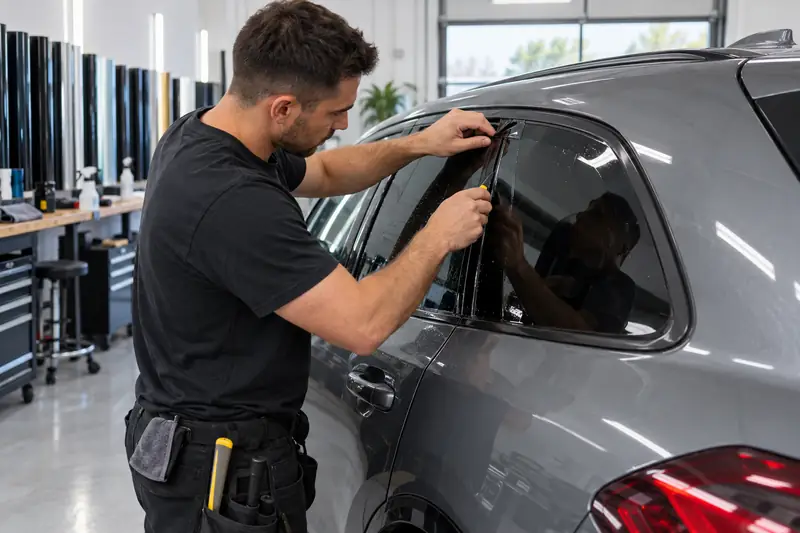
An aftermarket PDLC install typically involves:
- Cutting the film precisely to each window, often from a template.
- Applying it to the inside of the glass with adhesive, leaving clean edges for the bus bars.
- Running thin wires from each window through the door, past the window regulator, to a power supply.
- Adding an inverter or controller, plus a switch or remote.
Wiring roll-down windows is the hard part. The film moves with the glass, so cables must flex every time the window goes up or down. Fixed rear quarter glass, rear windshields and partitions in limousines and vans are easier to equip.
How much does electric tint cost for a car?
Smart car tint costs far more than ordinary film. Prices vary widely by market, film and shop, but a set of PDLC windows on a car commonly lands in the low thousands of USD, compared with a few hundred for a conventional ceramic tint job. Factory electrochromic or SPD glass is usually bundled into premium trim packages or options.
| Option | Rough cost level (USD) | Notes |
|---|---|---|
| Conventional dyed or carbon tint, full car | Low hundreds | Fixed shade |
| Conventional ceramic tint, full car | Mid to high hundreds | Fixed shade, best heat rejection |
| PDLC smart film, several windows | Low thousands or more | Frosted/clear, wiring needed |
| Factory electrochromic or SPD roof | Part of vehicle option price | Not retrofittable |
For a detailed breakdown of standard tint pricing, see how much it costs to tint car windows.
Is smart tint legal on cars?
Rules differ, and smart tint raises questions that fixed tint does not. Many places set minimum VLT for front side windows and restrict anything that obscures the driver's view. A PDLC window in its frosted state blocks the view entirely, so using it on front windows while driving may break visibility rules even if the clear state is legal. Some areas also judge a window by its darkest possible setting.
Treat this as general guidance only. Laws vary by state and country and change over time; read our window tint laws guide and confirm with your local DMV or transport authority before installing any adjustable automotive window tint.
Smart tint vs conventional tint: which makes sense?
For most drivers, a good conventional film delivers more of what they actually want. Here is how they compare on daily use:
- Heat. A ceramic window tint rejects a large share of infrared all the time. Most PDLC film does little for heat; see heat rejection window tint for how heat is measured.
- UV. Quality conventional films block about 99% of UV. Smart films vary.
- Night driving. A lighter legal shade on the front, such as 35% tint, keeps visibility good with no electronics. The window tint VLT guide compares every common shade.
- Reliability. Fixed film has no wires, inverters or connectors to fail.
- Cost. Conventional ceramic tint costs a fraction of a smart film install.
Smart film makes sense for show cars, limousine partitions, camper vans, and buyers who value on-demand privacy above heat control and cost.
Sourcing tint for your shop
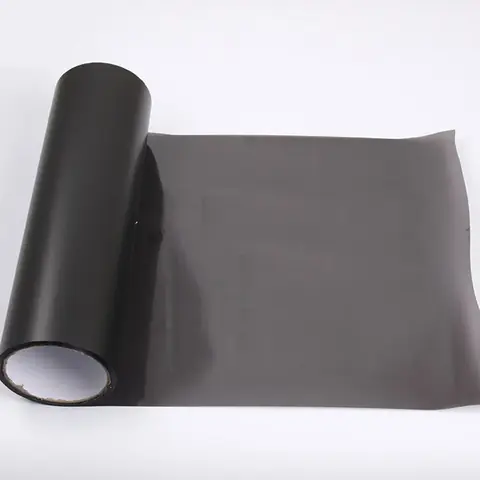
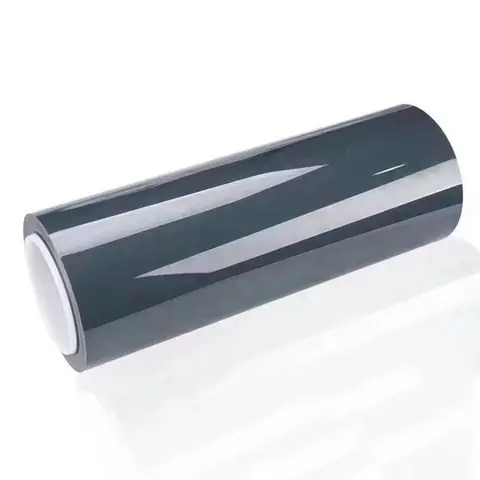
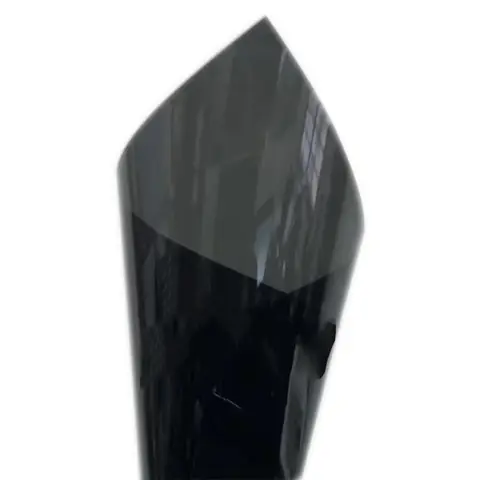
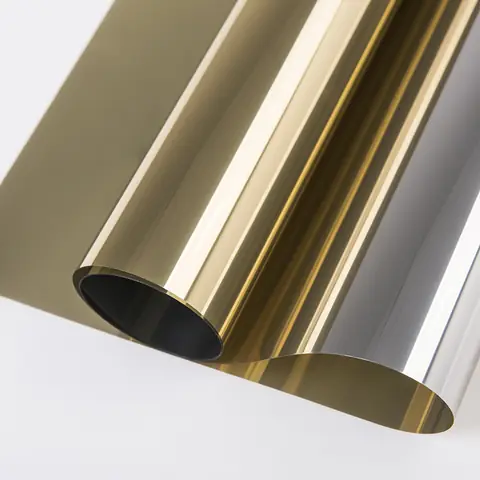
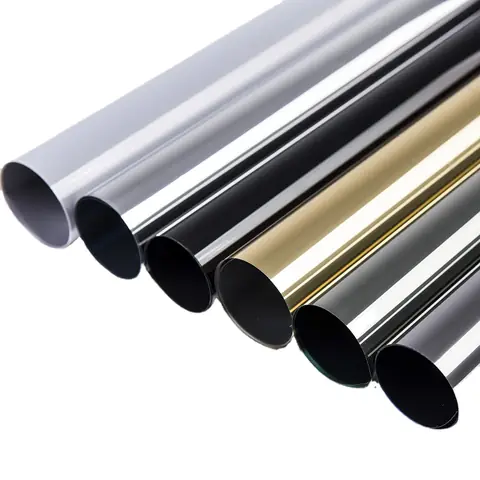
Mars Decorative Film does not make smart, electrochromic or PDLC film. If customers ask your shop about automatic tinting, the practical answer for most of them is a high-quality ceramic or carbon film, which we do make; our ceramic vs carbon vs dyed tint comparison helps explain the difference. Our window and light tint film comes in 1.52 m wide rolls with a one-roll MOQ and mixed shades per order. You can request free A4 samples to show customers how different shades and film types compare.
Frequently asked questions
What is automatic window tint?
Automatic window tint is glass or film that changes its shade on its own or at the push of a button. It includes photochromic film that reacts to UV light and electrically switched technologies such as electrochromic glass, PDLC film and SPD glass.
Does photochromic window film work on car windows?
It works, but usually weakly. Car glass blocks much of the UV light that triggers photochromic film, especially behind a laminated windshield, and the film darkens less in hot weather. It also clears slowly when you move into shade or a tunnel.
How does electric tint work on cars?
Most aftermarket electric tint for cars uses PDLC film. With no power the liquid crystals scatter light and the window looks frosted; with power from an inverter they line up and the window turns clear. Factory systems may use electrochromic or SPD glass that dims smoothly.
Can I install smart tint on roll-down windows?
It is possible but difficult. The wiring must run through the door and flex every time the window moves, which adds labor and failure risk. Fixed glass, such as rear quarter windows and partitions, is much easier to equip.
Does smart film block heat?
Most PDLC smart film blocks UV but rejects relatively little infrared heat compared with a quality ceramic tint. Electrochromic and SPD glass reduce more solar heat in their dark state. If heat is your main concern, a fixed ceramic film usually performs better for less money.
Is electric window tint legal?
It depends on where you drive. Many places require front windows to meet a minimum light transmission and to stay see-through while driving, which a frosted PDLC window does not. Rules vary and change, so check with your local DMV or transport authority.